Anthropic Pre-IPO: Founders Retain 14% Equity, 50.1% Voting Power
MissedBlock Desk · Sep 27, 2026 · 4 min read
Updated Sep 27, 2026
Founders Seek Majority Control at Anthropic IPO
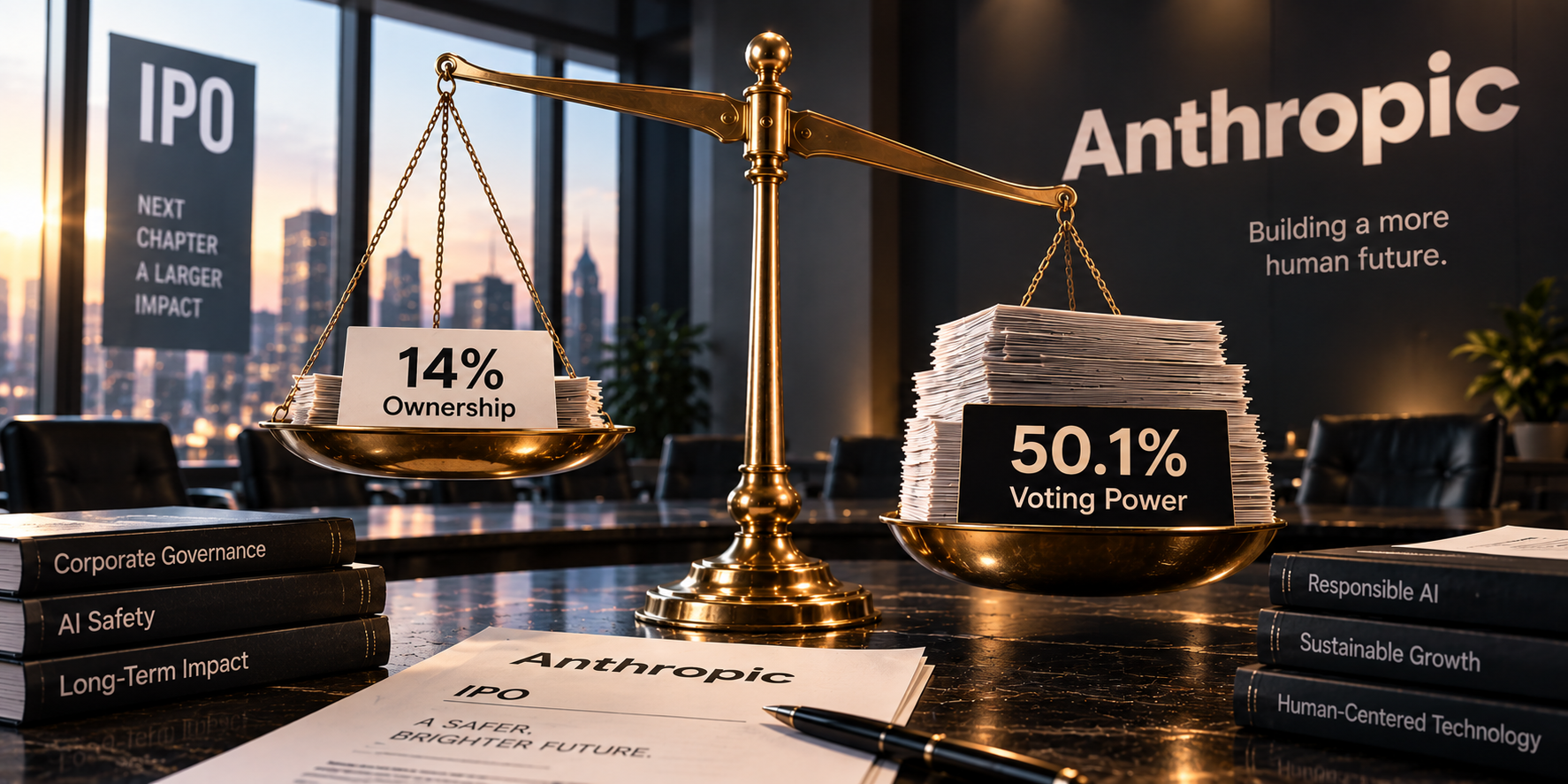
San Francisco, CA – Artificial intelligence startup Anthropic is reportedly seeking to implement a new corporate governance structure ahead of its planned initial public offering, aiming to grant its seven co-founders majority voting control despite a relatively small equity stake. The proposed design, which mirrors aspects of Palantir’s founder-led control model, would give the co-founders 50.1% of the voting power through a special class of stock, while the majority of board seats would remain under the purview of a long-term benefit trust.
The unique structure, detailed in a report by The Information citing sources familiar with the matter, would allow CEO Dario Amodei and his six co-founders to hold a special class of shares. These shares would confer significant voting rights on most company matters, even though the founders collectively would own only about 14% of the company. Crucially, these super-voting shares would not carry any additional economic value beyond that of ordinary shares.
The arrangement would remain in effect as long as at least three of the seven co-founders maintain a minimum, undisclosed shareholding threshold. This provision means that even if a majority of the founders depart or sell their stakes, the remaining three could still wield majority voting power. The co-founders would hold these special shares collectively through an independent limited liability company (LLC).
Super-voting shares, where one share can carry multiple votes, are not uncommon in Silicon Valley. However, Anthropic’s approach of distributing this control among seven co-founders is a departure from the more typical model of a single founder concentrating voting power, as seen with Mark Zuckerberg at Meta and Evan Spiegel at Snap.
A significant exception to the founders’ voting control is the election of the board of directors. Anthropic’s Long-Term Benefit Trust will continue to appoint the majority of the board’s seven seats. The founders currently hold two board seats, which are slated to increase to three. Additionally, Anthropic plans to issue a special class of stock to employees that could act as a tie-breaker on certain company issues.
The Information likened Anthropic’s proposed governance to Palantir’s voting control structure. In 2020, Palantir’s founders utilized a founder voting trust to hold Class F shares, which fixed their voting power at 49.999999% of the total, contingent on maintaining a certain ownership threshold. This structure drew criticism from governance experts at the time for potentially enabling perpetual control.
A key distinction between the two models lies in the precise voting threshold. Palantir’s structure required external votes to achieve a true majority, whereas Anthropic is aiming for a direct 50.1% majority, independent of outside support.
The financial implications of this structure are substantial. With an estimated valuation of $965 billion as of May, each co-founder’s stake of approximately 2% would be worth around $19 billion. If the valuation reaches the $1.5 trillion mark seen in the secondary market in August, their individual net worth could approach $30 billion.
This concentration of power comes despite a significant philanthropic commitment. In January, CEO Dario Amodei stated that all Anthropic co-founders had pledged to donate 80% of their wealth. After such donations, their direct economic interest in the company would be reduced to roughly 0.4% each, yet their collective voting power would remain dominant through the special shares.
The proposed governance structure may face scrutiny from public market investors who are prepared to invest trillions of dollars and may balk at the prospect of having limited decision-making power on most company matters. This potential “governance discount” could impact the IPO’s pricing. The requirement for at least three founders to maintain a minimum shareholding also suggests a robust control mechanism, designed to endure even with team turnover.
The precise division of power between the founders’ control over most matters, the trust’s role in board appointments, and the employees’ tie-breaking shares remains to be fully detailed. These specifics are expected to be disclosed in the official S-1 filing. The potential for dramatic governance shifts in AI companies was highlighted by the upheaval at OpenAI in November 2023, when its board ousted and then reinstated Sam Altman.
Anthropic has not immediately responded to requests for comment. Reports earlier this month suggested that the IPO might be postponed until after the November midterm elections, though the elections themselves are not expected to significantly impact the offering.
While shareholders are expected to vote on the new structure in the coming days, the true test will come with the public listing. Anthropic confidentially filed a draft S-1 registration statement in June, with market expectations for a final valuation potentially reaching $2 trillion, surpassing SpaceX’s $1.77 trillion IPO valuation in June and positioning it as one of the largest public debuts in history.