Binance Hack: US Recovers $1.1 Billion, But Payouts Unclear
Published
Nearly four weeks after a significant hack on the cryptocurrency exchange Binance, U.S.
MissedBlock Desk · 5 min read
US Authorities Seek Over $1.1 Billion in USDC Linked to Binance Hack
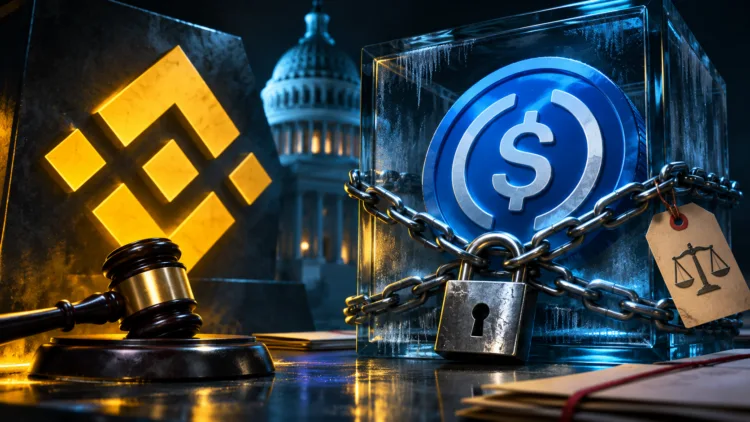
Nearly four weeks after a significant hack on the cryptocurrency exchange Binance, U.S. authorities have filed a civil forfeiture complaint seeking more than $1.1 billion in USD Coin (USDC) tied to the October 29th theft. The funds are already under restriction, but the latest court filings highlight a critical challenge: while freezing stolen cryptocurrency is achievable, its actual recovery and return present a more complex legal and technical hurdle.
The complaint, lodged on November 23rd in the U.S. District Court for the District of Columbia, targets USDC associated with 36 cryptocurrency addresses across 18 different blockchains. Federal investigators have attributed the October 29th attack to North Korean hacking groups, including the notorious Lazarus Group. The initial theft was valued at approximately $6 billion. For Binance, this legal action offers another avenue to recoup a portion of its substantial losses. For the broader cryptocurrency industry, however, the case raises pertinent questions about the power stablecoin issuers wield over digital assets and the implications of government intervention.
Binance Hack Recovery Enters New Legal Phase
The assets targeted by U.S. authorities are not entirely new. Earlier this month, reports indicated that Circle, the issuer of USDC, had frozen approximately $1.1 billion in USDC linked to the Binance hack, following cooperation with law enforcement. The significant development now is the government’s effort to establish a legal framework for taking possession of these assets.
Court documents reveal that U.S. authorities secured a temporary restraining order on November 12th. Prosecutors subsequently requested that these restrictions remain in effect throughout the civil forfeiture proceedings. Both Binance and Circle consented to the initial restraining order and its extension, according to the government’s November 23rd filing. While this agreement removes an immediate obstacle to preserving the funds, it does not resolve the ultimate question of ownership or distribution.
Civil forfeiture proceedings are initiated against property believed to be connected to criminal activity. Interested parties can legally assert claims to such property. In this instance, prosecutors are seeking forfeiture of the assets to the United States, which is distinct from a court ordering their immediate return to Binance.
Circle Cannot Simply Return Frozen USDC
A notable disclosure within the complaint concerns Circle’s role. While the stablecoin issuer possesses the authority to restrict transactions involving USDC at specific blockchain addresses, this power does not grant Circle direct control over the wallets holding those tokens. The complaint states that Circle “does not have the technical ability to transfer the Defendant Property from the blocklisted Subject Addresses to the United States.”
Instead, Circle has agreed to issue an equivalent amount of replacement USDC and transfer these new tokens to U.S. authorities once a forfeiture order is issued by the court. This proposed arrangement highlights an unusual aspect of centralized stablecoins: an issuer can prevent tokens from circulating without holding the private keys necessary to move them. It also introduces an accounting consideration. If replacement tokens are issued, the fate of the original frozen USDC and how Circle will accurately reflect the treatment of these balances in its outstanding supply and reserve reporting warrants close examination. The issuance of replacement tokens would not inherently indicate undercollateralization of USDC. However, transparency in its implementation is crucial for a stablecoin whose credibility relies on confidence in its backing. The primary concern is not Circle’s ability to create new tokens, but rather the independent accountability of the entire recovery process.
The $1.1 Billion Is Not Yet Back With Binance
While the Justice Department’s announcement might tempt one to view it as a billion-dollar recovery, this assessment is premature. The process involves three distinct stages: restricting access to stolen assets, obtaining legal authority over them, and finally, determining their ultimate distribution. The November 23rd filings advance the second stage, but do not confirm the completion of the third.
Adding a layer of complexity, an Abu Dhabi court issued an order on November 18th directing several cryptocurrency companies, including Circle, to preserve digital assets linked to the Binance theft. The involvement of authorities in both the United States and the United Arab Emirates underscores how a single cryptocurrency theft can trigger legal proceedings across multiple jurisdictions. While blockchain transactions can easily cross international borders, establishing ownership rights over the involved assets is a far more intricate undertaking. This does not necessarily imply a conflict between the U.S. and UAE proceedings, but the final disposition of the funds will require more than official pronouncements from either government. For investors evaluating Binance’s financial standing, the distinction between frozen assets and recovered capital is critical; restricted cryptocurrency should not be automatically equated with funds returned to the exchange.
Binance Hack Tests the Case for Centralized Stablecoins
For years, the ability of stablecoin issuers to freeze tokens has been a point of contention for proponents of decentralized finance. The Binance case, however, illustrates the counterargument. Without Circle’s capacity to restrict transactions, preserving such a substantial amount of cryptocurrency for potential recovery would have been significantly more challenging. In this specific instance, centralized control has provided a mechanism that may prevent suspected criminals from profiting from stolen assets.
The underlying question is whether the cryptocurrency industry can benefit from this authority while simultaneously demanding robust safeguards against its potential misuse. Transparency is key to this balance. Token holders should be able to understand the reasons for asset freezes, the legal basis for ongoing restrictions, and the processes for resolving ownership disputes. This standard of transparency should apply equally to exchanges, stablecoin issuers, and government entities.
The next significant development in the Binance case will be the court’s ruling on the forfeiture claim and any competing claims to the assets. Circle’s proposed issuance of replacement USDC will also require scrutiny if it proceeds. Until then, the $1.1 billion should be understood as assets subject to an ongoing recovery effort, not as a completed repayment. For a cryptocurrency industry that often celebrates the speed of transactions, the Binance hack serves as a stark reminder that recovering stolen funds is an entirely different and more arduous endeavor.