BIS Economists Suggest Banks Can Influence Stablecoin Adoption Via Deposit Rates
MissedBlock Desk · · 3 min read
Updated
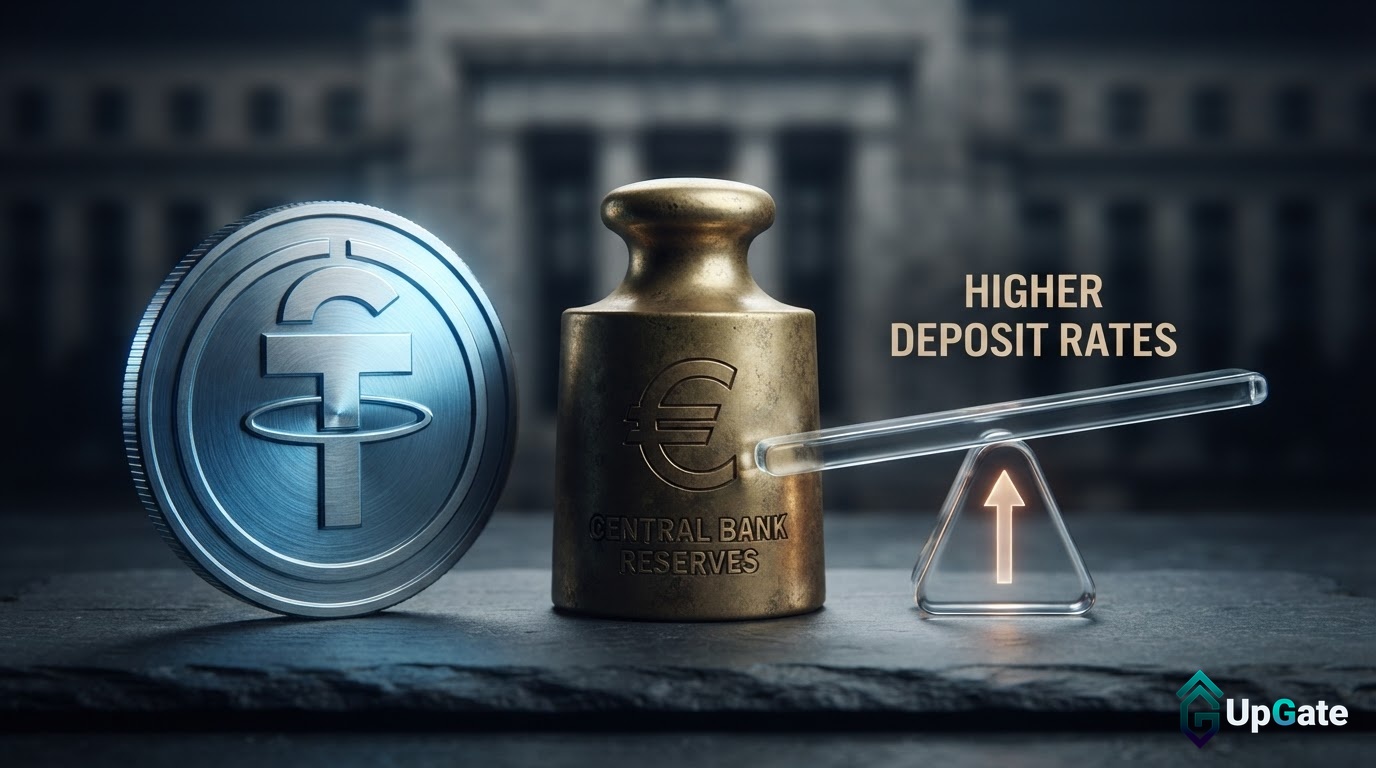
Banks may possess a tool to influence the adoption of stablecoins: the interest rates offered on savings accounts. Economists from the Bank for International Settlements (BIS) suggest in a working paper that adjustments to these rates can correlate with changes in stablecoin market capitalization growth. This analysis, which examined U.S. data from January 2019 through June 2025, indicates that banks can exert some influence over the pace of stablecoin adoption through their deposit pricing strategies.
BIS Working Paper Details
The BIS working paper, authored by Iñaki Aldasoro and Rashad Ahmed, found that an increase in bank deposit interest rates was associated with a slowdown in stablecoin market capitalization growth. Over a typical 10-week span in the sample period, stablecoin market capitalization grew by approximately 15%. According to the authors’ baseline estimate, a one-basis-point increase in deposit rates cut this growth to about 12%. A second estimation method suggested that a similar one-basis-point bump in deposit rates reduced stablecoin growth to around 6%.
The paper also noted that banks tend to significantly raise savings rates only after the federal funds rate surpasses approximately 3%. The observed link between deposit rates and stablecoin growth was found to be stronger for USDC than for USDT, a difference the authors attribute to USDC’s closer ties to U.S. users.
Caveats and Context
However, the authors caution that working papers reflect their views and not necessarily those of the BIS. Furthermore, the sample period encompasses a single high-rate cycle during which stablecoins did not offer interest to holders.
These findings emerge within a dynamic regulatory environment in the United States. The GENIUS Act, signed into law by President Donald Trump in July of last year, is set to take effect in January, having legalized stablecoins and established rules for their issuance, use, and custody. Currently, the Office of the Comptroller of the Currency (OCC), the Federal Deposit Insurance Corporation (FDIC), and the Treasury are developing rules to implement this legislation. This legislative push follows previous efforts, such as the Clarity Act, which failed a Senate vote, and reflects ongoing debates about stablecoin regulation. Banks have reportedly lobbied to prevent stablecoin issuers from offering yield.
The BIS has previously expressed scrutiny regarding stablecoins. In 2021, the institution argued that the proliferation of blockchain-based digital dollars underscored the urgency for central bank digital currencies. A 2023 BIS survey further warned that stablecoins could pose a threat to financial stability if they were to achieve widespread adoption.
Policy Implications
The authors of the working paper suggest that regulators should consider whether stablecoin issuers should be permitted to pay yield to holders, alongside the potential trade-offs associated with requiring issuers to maintain a portion of their reserves in bank deposits. These considerations are part of a broader discussion about the integration and regulation of digital assets within the traditional financial system.
Why This Matters
The materials describe a narrow update: A working paper by BIS economists suggests that an increase in bank deposit interest rates correlates with a slowdown in stablecoin market capitalization growth. Whether stablecoin issuers may pay holders yield.
Broader Context
Source materials place the market analysis in this context: The findings come with caveats.