China Stablecoin Wallet Users Surge 43x in Two Years, Transactions Triple Global Average
MissedBlock Desk · · 4 min read
Updated
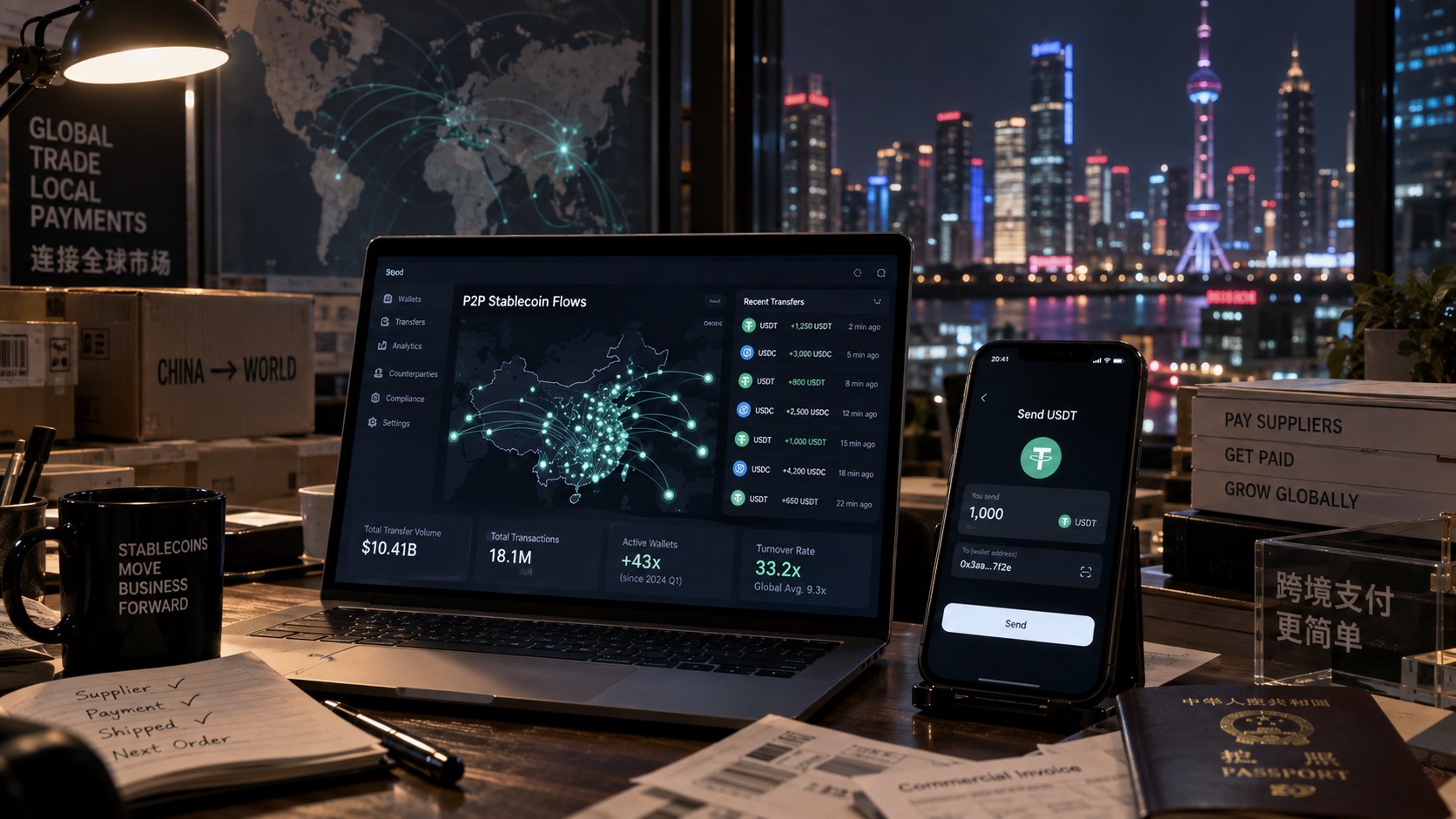
China Sees Explosive Growth in P2P Stablecoin Transactions Amidst Strict Regulations
New data from blockchain analytics firm Chainalysis reveals a dramatic surge in peer-to-peer (P2P) stablecoin transactions originating from China, with the number of active wallets increasing 43-fold between the first quarter of 2024 and the second quarter of 2026.
Over the past year, China recorded 18.1 million self-custodied stablecoin-related transfers totaling $104.1 billion. The annual turnover rate for stablecoins held in these wallets reached 33.2 times, more than triple the global average of 9.3 times.
P2P Stablecoin Activity Skyrockets
According to a report by Cointelegraph on October 5, citing Chainalysis, the number of independent wallets sending P2P stablecoin transactions in China multiplied 43 times over a period of just over two years, comparing Q1 2024 to Q2 2026. P2P transactions are defined as direct transfers between individual wallets, bypassing exchanges or other platforms.
The annual statistical period covered by the report, from July 2025 to June 2026, saw 18.1 million transfers involving self-custodied stablecoins in China, amounting to $104.1 billion. This averages out to approximately $5,750 per transaction.
High Turnover Suggests Working Capital Use
The annual turnover rate for stablecoins held in Chinese self-custodied wallets was 33.2 times, significantly higher than the global average of 9.3 times. This implies that stablecoins held by Chinese users are exchanged on average every 11 days. Chainalysis suggests this rapid turnover rate is consistent with users employing stablecoins as working capital.
China’s Crypto Economy Valued at $176 Billion
The report estimates China’s crypto economy to be at least $176 billion. Within this, domestic P2P activity accounts for 59.1%, a 3.5-fold increase from the previous reporting period. Over half of China’s crypto activity occurs between wallets.
Regional Comparisons
The same report also provided comparisons with other East Asian markets. South Korea emerged as the largest crypto economy in East Asia, valued at $449.1 billion, a 12.3% increase from the previous period. South Korean retail investors show a preference for AI-related tokens.
In Hong Kong, institutional platforms accounted for 16% of service inflows, nearly triple that of any neighboring market, with inter-enterprise inflows reaching nearly $24 billion. Decentralized exchanges (DEXs) in Japan represent about 35% of service activity, with 65.7% of DEX trades falling between $10 and $1,000 per transaction.
Regulatory Landscape
China has maintained a comprehensive ban on virtual currency exchange and trading businesses within its borders since 2021. On February 6 of this year, the People’s Bank of China and seven other departments issued a new notice reiterating the prohibition of virtual currency exchanges within the country. Furthermore, stablecoins pegged to the RMB are not permitted to be issued offshore without the approval of relevant authorities. Cointelegraph noted that these new regulations also target tokenized real-world assets (RWAs).
In Chainalysis’s Global Crypto Adoption Index released on September 23, China’s domestic P2P segment ranked second globally. Following the new regulations in February, China’s domestic stablecoin transfer volume saw a substantial increase of $4.9 billion in March 2026, marking the largest monthly surge depicted in the report’s charts.
Key Figures: China’s P2P Stablecoin Growth
Chainalysis data indicates that the number of independent wallets sending P2P stablecoin transactions in China grew 43-fold between Q1 2024 and Q2 2026, with $104.1 billion in transfers recorded over the past year.
Reasons for High Stablecoin Turnover in China
Chinese users exhibit a stablecoin turnover rate of 33.2 times annually, compared to the global average of 9.3 times. Chainalysis posits this aligns with users treating stablecoins as working capital.