Coin Center Flags Potential Ambiguities in Proposed U.S. Stablecoin Regulations
MissedBlock Desk · · 4 min read
Updated
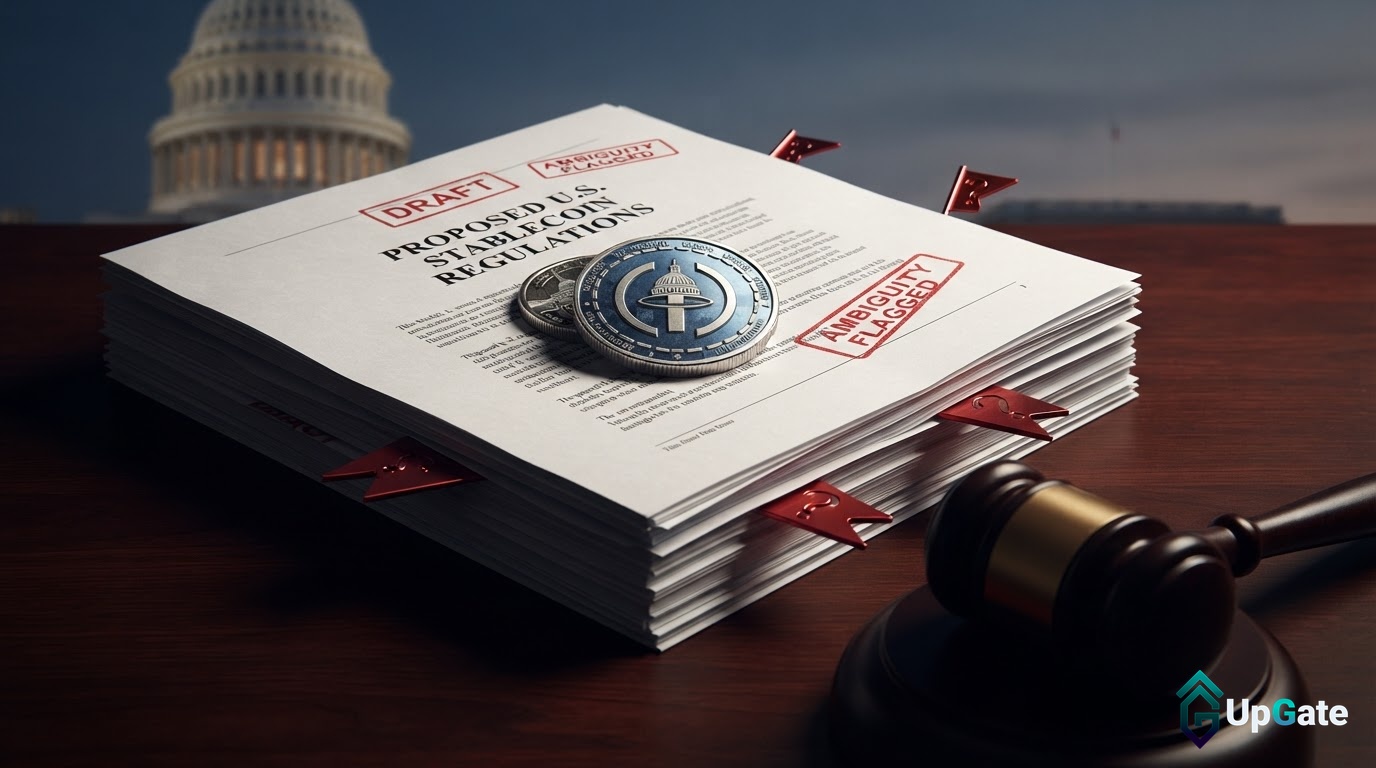
Coin Center, a nonprofit research and advocacy organization focused on cryptocurrency technologies, has submitted comments to the U.S. Department of the Treasury regarding proposed regulations for payment stablecoin issuance under the GENIUS Act. The organization has highlighted potential ambiguities in the proposed rules that could inadvertently impact routine technical activities and independent liquidity provision within the blockchain ecosystem.
The core of Coin Center’s feedback addresses proposed sections of the regulations, specifically § 1523.2(d), which identifies activities that could be construed as participation in an unlawful issuance of payment stablecoins. The GENIUS Act makes it unlawful for any entity other than a permitted payment stablecoin issuer (PPSI) to issue a payment stablecoin in the United States, with criminal penalties for knowing participation in violations.
Potential Ambiguity in Defining ‘Participation’
Coin Center argues that proposed § 1523.2(d)(2) and (3) may be interpreted too broadly, potentially ensnaring activities that are typically excluded from the definition of a digital asset service provider (DASP) under 12 U.S.C. § 5901(7)(B). The organization points to the term “coordinates” in proposed § 1523.2(d)(2), suggesting it could be interpreted more widely than intended without a clear and narrow definition. Similarly, the lack of definition for “market maker” and the broad language surrounding secondary market trading in the context of proposed § 1523.2(d)(3) raise concerns.
According to Coin Center, an unaffiliated person who creates an automated market maker (AMM) pool and supplies liquidity without a specific agreement with an issuer could potentially be treated as participating in an unlawful issuance. Such activities are common in the cryptocurrency market and facilitate trading and liquidity for various digital assets, including stablecoins.
Coin Center’s Proposed Clarifications
To address these potential ambiguities, Coin Center recommends specific clarifications. The organization proposes that the Treasury explicitly state that activities described in 12 U.S.C. § 5901(7)(B), when standing alone, do not constitute participation in an unlawful issuance. They advocate for requiring a clear connection to the issuer and purposeful, material assistance to an unlawful issuance.
Coin Center further proposes specific language for the final rule. For proposed § 1523.2(d)(2), they suggest clarifying that “coordinates with the issuer” should require an agreement and the purpose of materially facilitating key steps in the issuance. For proposed § 1523.2(d)(3), Coin Center recommends clarifying that it applies only when a person acts pursuant to an agreement with the issuer and for the purpose of materially assisting the issuer’s initial distribution. This aims to distinguish between direct involvement in an unlawful issuance and independent market activities.
The organization also notes that the Treasury’s preamble indicates that § 1523.2(d)(3) is intended to cover “substantial assistance” provided “at or around the point of issuance,” generally excluding secondary market trading without a close temporal link to the initial issuance. However, Coin Center seeks codification of these limitations to ensure clarity.
Support for Exempt Transactions
Additionally, Coin Center supports the Treasury’s implementation of 12 U.S.C. § 5902(h)(1) regarding exempt transactions, indicating a willingness to support aspects of the proposed regulatory framework that provide clear safe harbors.
The comments from Coin Center highlight a critical tension in regulatory drafting: balancing the need to prevent illicit stablecoin issuance with the risk of stifling innovation and inadvertently penalizing legitimate market participants and infrastructure providers. Coin Center’s feedback aims to ensure that the final regulations provide clear boundaries, distinguishing between direct participation in unlawful issuance and the independent listing, trading, or liquidity provision that is vital to a functioning market.
Why This Matters
Coin Center has provided feedback on proposed regulations concerning the issuance, offer, and sale of payment stablecoins, focusing on provisions that could inadvertently criminalize routine technical activities and independent liquidity provision. A key uncertainty is whether proposed § 1523.2(d)(2) and (3) could be read to reach activities of the kind Congress excluded from the definition of a digital asset service provider (DASP) in 12 U.S.C. § 5901(7)(B).
Broader Context
Coin Center is an independent nonprofit research and advocacy center focused on the public policy issues facing cryptocurrency technologies such as Bitcoin and Ethereum.