DBS Bank and Circle Expand Partnership for Institutional USDC Minting and Redemption
Published
DBS Bank and Circle have expanded their partnership, enabling eligible institutional clients to directly mint and redeem USD Coin (USDC) through the bank's channels, according to DBS Bank.
MissedBlock Desk · 3 min read
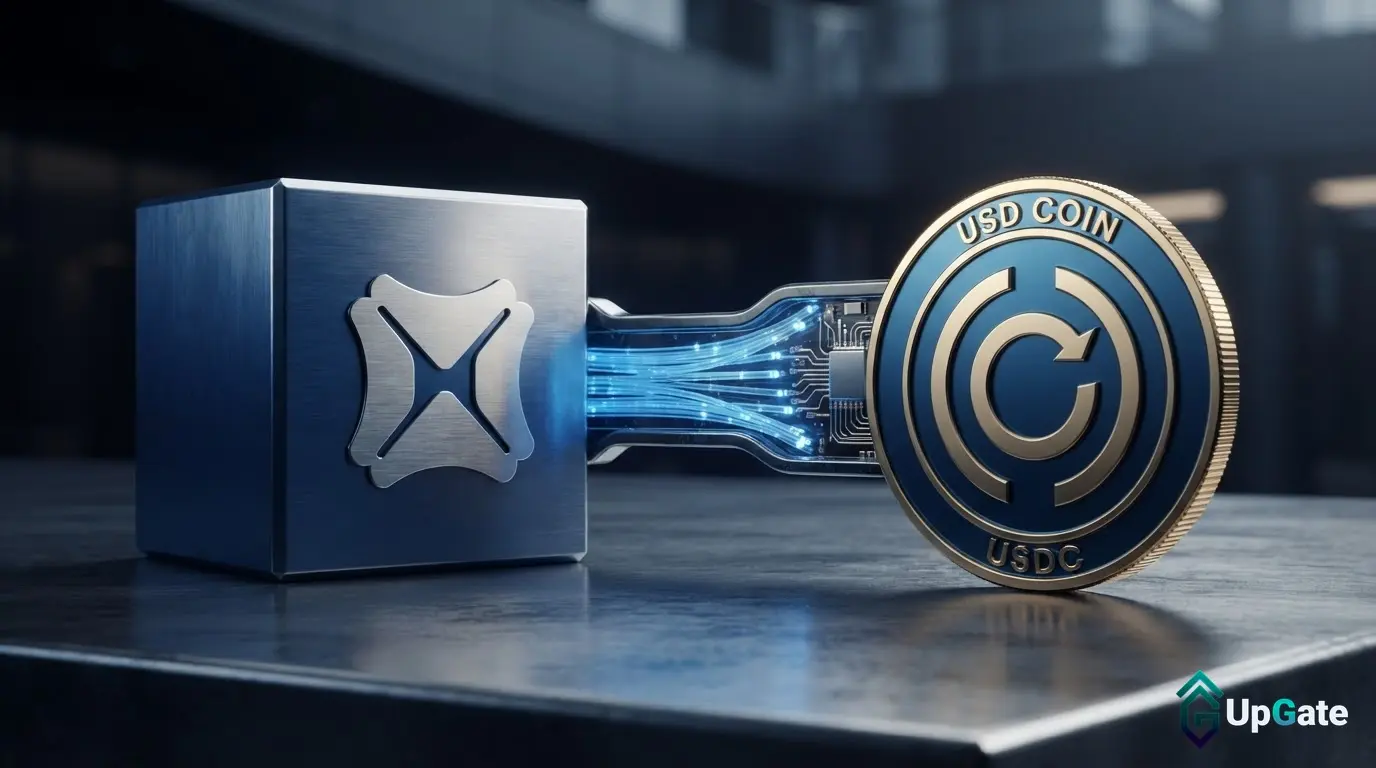
DBS Bank and Circle have expanded their partnership, enabling eligible institutional clients to directly mint and redeem USD Coin (USDC) through the bank’s channels, according to DBS Bank. This integration allows for instant, 24/7 settlement, bypassing the need to use cryptocurrency exchanges.
The service is designed to keep funds within the banking system, aligning with banks’ interests in maintaining customer funds on their balance sheets. This collaboration focuses on institutions requiring bank involvement before holding stablecoins on-chain, rather than targeting existing stablecoin holders.
For institutional clients, this direct integration offers benefits such as reduced price slippage and counterparty risk, alongside the flexibility of round-the-clock fund scheduling. Circle gains a banking channel for institutional fund inflows and outflows outside of cryptocurrency exchanges, facilitated by DBS Bank.
This partnership is viewed as a step for Circle to advance USDC within the Asian institutional market, though a significant surge in USDC circulation is not immediately anticipated. The primary impact is on how institutional funds enter and exit the stablecoin ecosystem, rather than on retail demand.
This development occurs amid growing institutional interest in tokenized assets and stablecoins across Asia. A DBS survey revealed that 88% of surveyed large enterprises are adopting or piloting tokenized currency, with over 60% having adopted or planning to adopt stablecoins, indicating a rising institutional appetite for digital assets.
Regional regulatory approaches to stablecoins and tokenized deposits vary. In Singapore, the Monetary Authority of Singapore (MAS) is promoting a tokenized deposit pilot program involving DBS Bank, J.P. Morgan, and UOB, and is seeking opinions on stablecoin regulatory amendments to include issuance and reserve requirements in payment service regulations. This suggests an integration of digital assets within existing financial frameworks.
Concurrently, the Hong Kong Monetary Authority (HKMA) is collaborating with SWIFT to test cross-border transfers using tokenized bank deposits, aiming to enhance settlement speeds within the current correspondent banking framework.
Taiwan, however, has adopted a more cautious approach. Its Financial Supervisory Commission (FSC) announced draft regulations for stablecoin issuance in November, opting to establish comprehensive rules before market entry. These draft regulations stipulate a minimum paid-in capital of 300 million NTD for non-bank issuers and a 1:1 peg for issuance.
Several uncertainties persist regarding the future of stablecoins and tokenized assets in Asia. It remains to be seen if the DBS model will be replicated in other Asian markets. Key points to monitor include the final draft of Taiwan’s subsidiary laws and any potential loosening of capital and reserve requirements for non-bank issuers. Additionally, the convergence of Singapore’s and Hong Kong’s regulatory paths as tokenized deposits and stablecoins gain cross-border settlement capabilities is uncertain. Regulators also face open questions regarding the ultimate reserve assets and AML standards.
It is important to note that DBS Bank has not officially approved USDC, and USDC is not a fully regulated currency in Singapore. Similarly, Taiwan has not fully legalized stablecoins. The current circulation of USDC stands at approximately $69.2 billion, while USDT’s circulation is around $175.2 billion.
Why This Matters
The materials describe a narrow update: DBS Bank and Circle have expanded their partnership, enabling eligible institutional clients to directly mint and redeem USDC via the bank’s channels. Will the DBS model be replicated in other Asian markets like Japan, South Korea, or Taiwan?.
Broader Context
Source materials place the factual news in this context: While Asian banks are busy building their own tokenized deposit payment networks, MAS is reserving wholesale settlement for tokenized deposits, and the Hong Kong Monetary Authority is testing cross-border transfers with SWIFT.