Democrats Win: Crypto Regulation Faces Uncertainty
Published
The recent midterm elections on November 3, 2026, have dramatically shifted the balance of power in Washington, with Democrats securing control of both the U.S.
MissedBlock Desk · 4 min read
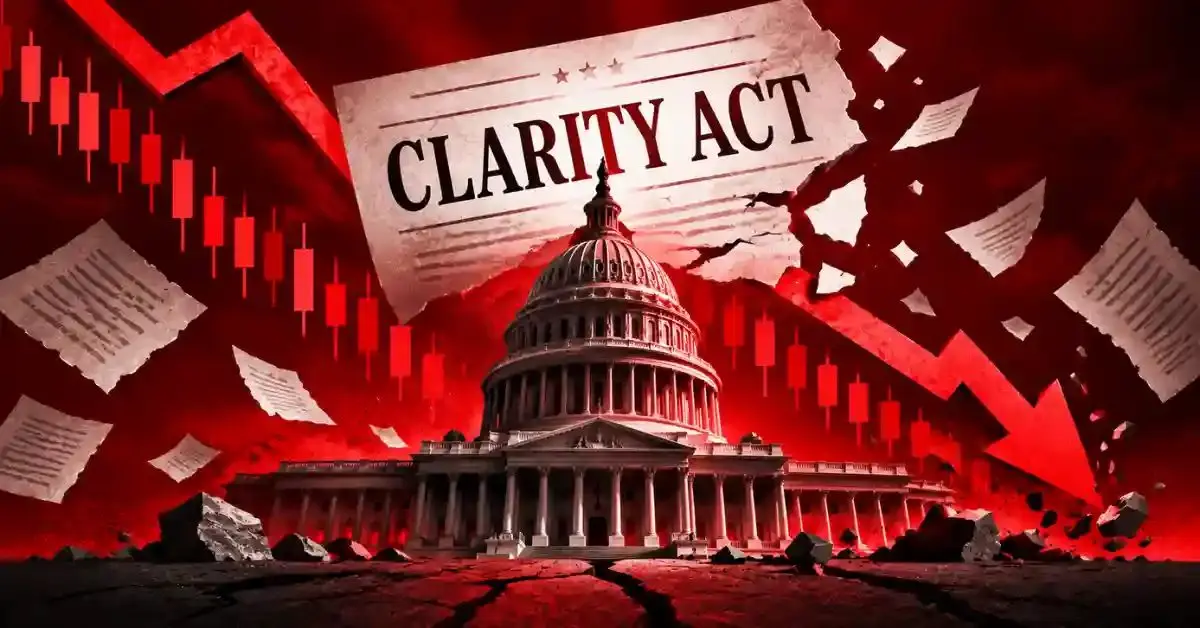
Democrats Gain Control, Reshaping Crypto Regulation Landscape
The recent midterm elections on November 3, 2026, have dramatically shifted the balance of power in Washington, with Democrats securing control of both the U.S. Senate and the House of Representatives. This victory grants them increased leverage over legislative processes, government oversight, and the future trajectory of cryptocurrency regulation.
CLARITY Act Faces Uncertain Future Amidst Political Shift
The CLARITY Act, a significant piece of proposed legislation concerning crypto regulation, now faces an uncertain path. Democrats, who largely opposed several crypto initiatives while in the minority, are poised to influence whether the bill advances or if stricter rules will be implemented.
Democrats have clinched 54 seats in the Senate, a gain of seven, and are projected to win between 225 and 228 seats in the House, surpassing the 218 needed for a majority. This electoral success arrives at a critical juncture for the CLARITY Act, which narrowly failed to advance in the Senate on September 15, falling short of the 60 votes required for the next stage with a 49-50 tally.
Lame-Duck Session Offers Final Opportunity for Outgoing Congress
Despite the election results, the outgoing Republican-led Congress retains control and has a window of opportunity during the post-election “lame-duck” session to attempt to move the CLARITY Act forward. If sufficient support can be garnered, the Senate could pass the bill before January 3, 2027, after which it would require House approval before reaching the president.
However, securing Democratic backing remains a significant hurdle. Several senators who previously engaged in negotiations have voiced objections, citing concerns over ethics rules, illicit finance, and consumer protection. Without consensus on these critical issues, any renewed attempt could encounter the same obstacles. Should these efforts prove unsuccessful, the bill would likely need to be reintroduced in the new Congress.
Key Democrats Poised to Influence Crypto Policy
Several prominent Democrats are expected to play pivotal roles in shaping future crypto policy. Senator Elizabeth Warren, a vocal advocate for stricter cryptocurrency regulation, could ascend to the chairmanship of the Senate Banking Committee. Warren has consistently argued that the CLARITY Act, as proposed, did not adequately protect consumers or national security, stating, “We need crypto regulation—but not a crypto bill written by the crypto industry.” She has also warned that the legislation could benefit powerful industry interests and has previously characterized crypto as a “lousy investment” and a “haven for illegal activity.”
The election also delivered a blow to the crypto industry’s lobbying efforts in Ohio, with former Senator Sherrod Brown defeating incumbent Republican Jon Husted. Brown, who previously chaired the Senate Banking Committee, has a history of scrutinizing the risks associated with cryptocurrencies and stablecoins. He has argued that digital assets are not a viable alternative to traditional banking, stating, “Stablecoins and crypto markets aren’t actually an alternative to our banking system. They’re a mirror of the same broken system, with even less accountability, and no rules at all.”
In the House, the Democratic victory places Representative Maxine Waters in a strong position to reassert her influence over financial legislation. Waters has expressed concerns about conflicts of interest between government officials and crypto businesses. Her “Stop TRUMP in Crypto Act,” introduced in 2025, aims to restrict certain crypto activities for elected officials and their families. She has also called for enhanced investor protections prior to the advancement of the CLARITY Act.
Leadership Changes in House Committees
The election has also led to significant leadership changes in key House committees overseeing digital assets. Republican Representative Bryan Steil, who led the Digital Assets Subcommittee, lost his reelection bid, meaning the subcommittee will have a new chair in January 2027. Representative Bill Huizenga, vice chair of the House Financial Services Committee and a member of its digital asset panel, was also trailing his Democratic opponent in early returns. These shifts could lead to changes in committee leadership and priorities, impacting the review process for future crypto legislation, including the CLARITY Act.
Market Reaction and Timeline
Following the election results, Bitcoin experienced a dip to a six-week low of approximately $75,783 before recovering to around $78,554. The new Congress is scheduled to convene on January 3, 2027, leaving the current Congress a limited timeframe to address the CLARITY Act.