Google's Quantum Error Correction Advances: A Long-Term Perspective on Bitcoin Security
MissedBlock Desk · · 4 min read
Updated
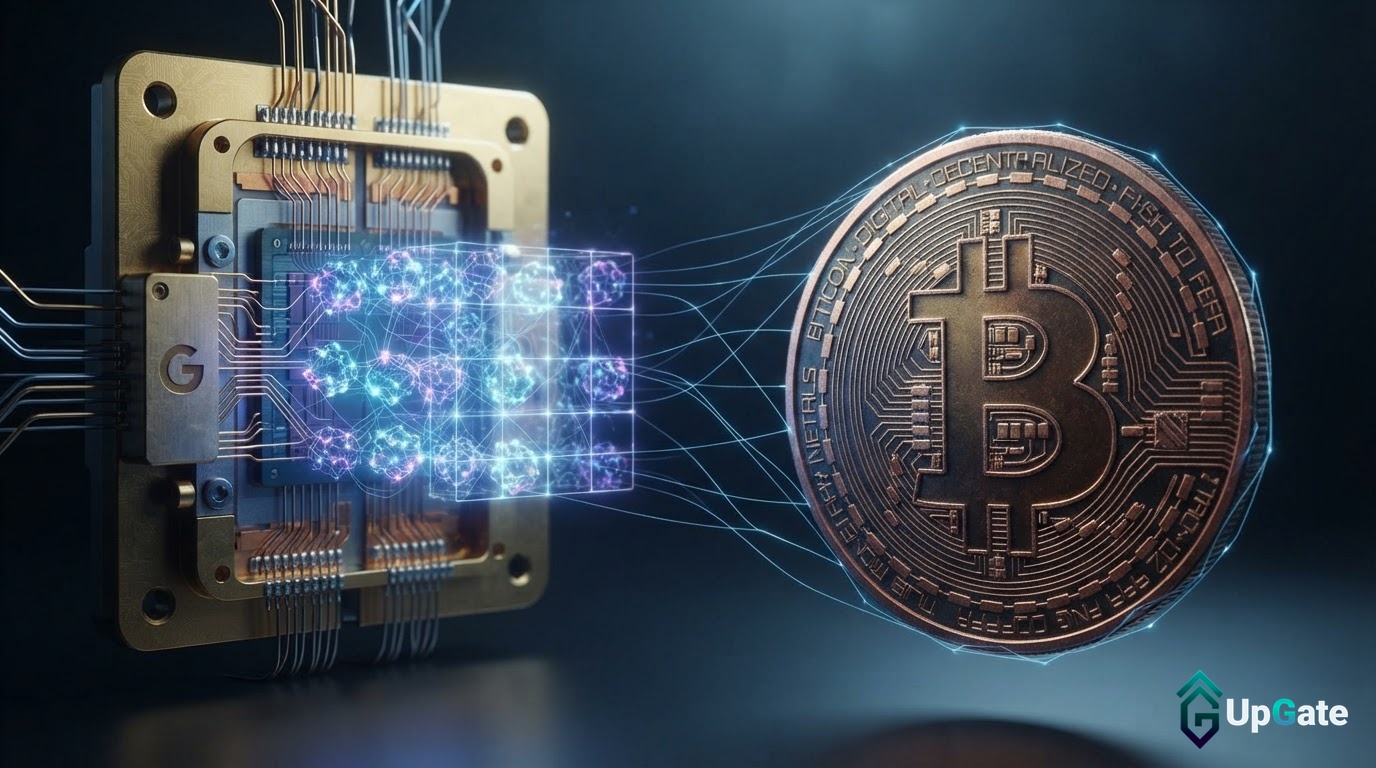
Recent reports indicate Google has made significant progress in quantum computing error correction, reportedly reducing error rates by a factor of 40 and achieving 99.9% accuracy. While this advancement is a notable step in quantum computing research, it does not pose an immediate impact on Bitcoin’s cryptography. The practical application of such technology to break current encryption standards remains distant due to substantial scale and capability requirements. Uncertainty remains regarding the scale at which Google’s quantum error correction method can be demonstrated.
Google’s reported technique, utilizing its Willow chip and a method called ‘magic state cultivation,’ addresses a critical component for building fault-tolerant quantum systems. Magic states are essential for quantum computation but typically consume a large portion of a quantum computer’s capacity. Improving their reliability and production could ease a major bottleneck in developing more powerful quantum machines.
Why This Matters
The materials describe a narrow update: Google has reportedly developed a quantum computing technique that reduces error rates by a factor of 40 and achieves 99.9% accuracy. The scale at which Google’s quantum error correction method can be demonstrated remains a key uncertainty.
Broader Context
Source materials place the factual news in this context: Google’s latest quantum computing technique reportedly cuts relevant error rates by a factor of 40 and reaches 99.9% accuracy, advancing a field whose eventual capabilities could impact Bitcoin cryptography.
The Bitcoin Cryptography Challenge: Scale and Requirements
The leap from laboratory milestones to systems capable of impacting cryptography like that used by Bitcoin is substantial. A Google white paper, published in March, estimated that breaking Bitcoin’s security would require between 1,200 and 1,450 logical qubits. Logical qubits are error-corrected units necessary for reliable computation, distinct from the physical qubits found in current processors. For comparison, Google’s Willow chip has 105 qubits, while IBM has reported 70 logical qubits, and QuEra has executed algorithms using up to 96 logical qubits. IBM’s roadmap targets 200 logical qubits by 2029 and 2,000 by 2033, indicating that the necessary scale is still years away.
Bridging the Gap: Current Limitations and Future Uncertainty
Furthermore, the potential impact on Bitcoin’s cryptography is conditional. It depends on future quantum machines becoming capable of deriving private keys from exposed public keys, a scenario that requires not only immense computational power but also the revelation of public keys. Experts, such as Jameson Lopp, co-founder and chief security officer of Casa, suggest that a machine powerful enough to decode a Bitcoin public key could be at least another decade away. The practical exposure would also depend on whether a public key is revealed. The exact timeline for the development of quantum computers capable of breaking Bitcoin’s cryptography remains uncertain.
Long-Term Preparation: The Imperative for Post-Quantum Security
Despite the distant nature of the potential impact, Google’s progress in error correction reinforces the importance of long-term preparation for a post-quantum future. The primary report estimates that approximately 6.26 million BTC are currently held in quantum-vulnerable addresses. While the immediate network impact remains unchanged, the advancement makes the longer-term possibility harder to dismiss as purely theoretical. This underscores the need for Bitcoin’s ecosystem to consider migration paths to quantum-resistant cryptographic arrangements well before a credible attack-capable machine emerges.
Market probabilities reflect the long-term, uncertain nature of this potential impact. As reported in the source article, Polymarket assigned a 1% chance to the relevant possibility by the end of the current year and an 11% chance by the end of 2027. This indicates that while the possibility is acknowledged, it is not considered an immediate event.
In conclusion, Google’s reported advancements in quantum error correction represent a significant development in the field of quantum computing. However, they do not establish an immediate security event or a sell signal for Bitcoin. Instead, this progress adds weight to the long-dated tail risk, highlighting that while error correction is advancing, the transition from laboratory milestones to reliable Bitcoin-breaking systems requires scale, fault tolerance, and sustained computation that current machines have not yet demonstrated. The durable implication is that Bitcoin’s post-quantum migration challenge needs to be considered and planned for well in advance of any credible quantum impact.