Indian Authorities Search Crypto Exchanges CoinDCX, Delta Exchange Over Foreign Exchange Law Allegations
Published
Indian authorities have searched the offices of cryptocurrency exchanges CoinDCX and Delta Exchange India in Bengaluru, alleging violations of the Foreign Exchange Management Act (FEMA).
MissedBlock Desk · 4 min read
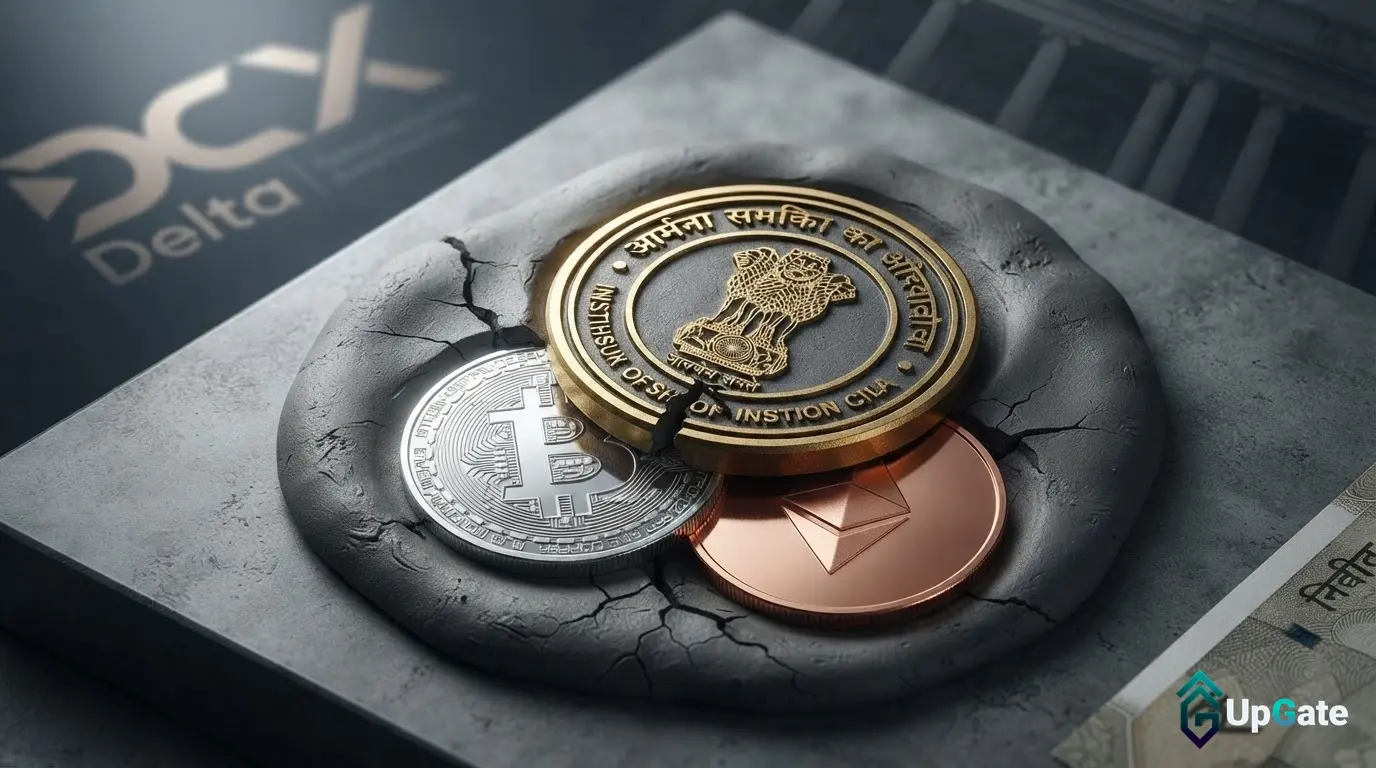
Indian authorities have searched the offices of cryptocurrency exchanges CoinDCX and Delta Exchange India in Bengaluru, alleging violations of the Foreign Exchange Management Act (FEMA). The Enforcement Directorate (ED) conducted searches at three locations on November 4-5 as part of an inquiry into the exchanges’ alleged facilitation of customer fund transfers abroad via USDT to trade overseas stocks and derivatives.
The ED claims that CoinDCX and Delta Exchange India used USDT (Tether) to move customer funds offshore, enabling the replication of customer positions on foreign platforms. This practice, according to the ED, allowed users to trade overseas stocks and derivatives without proper authorization and circumvented India’s cross-border remittance reporting frameworks. The ED estimates the scale of these alleged transactions to be in the tens of billions of rupees, potentially exceeding $200 million USD.
CoinDCX’s operating company is Neblio Technologies, while Delta Exchange India operates under Excelium Technologies. The ED also indicated potential violations of the Securities Contracts (Regulation) Act, 1956, the SEBI Act, 1992, and the RBI Act, 1934.
CoinDCX stated that ED officials conducted a routine inquiry and that the company fully cooperated. The exchange asserted that it strictly adheres to all Indian regulations, including FEMA 1999, and fulfills Know Your Customer (KYC), Anti-Money Laundering (AML), and reporting obligations. CoinDCX emphasized that its trading, deposit, and withdrawal services are operating normally.
Delta Exchange India responded that its business is operating as usual and that customer funds remain in local Indian banks. The exchange clarified that its business does not involve any form of cross-border transfer of virtual digital assets. Delta Exchange India has been registered as a reporting entity with the Indian Financial Intelligence Unit (FIU) since 2023.
The ED’s allegations suggest that certain trades were conducted through a shell company in Costa Rica and that CoinDCX used APIs to place orders directly on foreign platforms, mirroring customer positions on exchanges such as Binance, KuCoin, Bybit, and Gate.io. The ED also claims CoinDCX offered tokenized stocks of companies like Apple, Google, and Tesla as derivatives on the Hyperliquid platform. Furthermore, the ED alleges that CoinDCX paid billions of rupees in fees to offshore platforms using USDT, classifying these as operating expenses. The ED is also investigating Delta Exchange India for allegedly remitting billions of rupees to overseas related entities.
This regulatory action occurs within a challenging environment for Indian crypto exchanges, where a 30% capital gains tax on crypto profits and a 1% Tax Deducted at Source (TDS) on transactions have reportedly driven approximately 95% of India’s crypto trading volume to offshore platforms since 2023. The ED’s approach in this case appears to focus on tracking money flows, mirrored positions, and fee payment currencies, framing the issue as a foreign exchange problem rather than a debate over whether the crypto products themselves are securities.
FEMA cases are typically penalized based on the amount involved, suggesting that potential fines could be substantial. The ED’s actions highlight a structural challenge for Indian exchanges caught between high domestic taxes and the need to retain customers by offering access to offshore liquidity. The regulatory approach, focusing on money flows and foreign exchange violations, may influence how other Asian markets regulate crypto derivatives and tokenized assets.
Uncertainties remain regarding the final penalties to be imposed on CoinDCX and Delta Exchange India, whether formal charges will be filed, and the exact nature and extent of violations under other relevant acts. The long-term impact of this regulatory action on the Indian crypto market and the viability of local exchanges is also yet to be determined. It is important to note that these are allegations, and the exchanges have stated their commitment to compliance and normal operations.
Why This Matters
The materials describe a narrow update: The Enforcement Directorate (ED) of India searched three locations of CoinDCX and Delta Exchange India in Bengaluru on November 4-5, alleging violations of the Foreign Exchange Management Act (FEMA). The final amount of penalties to be imposed on CoinDCX and Delta Exchange India.
Broader Context
Source materials place the factual news in this context: India imposes a 30% capital gains tax on crypto profits and a 1% Tax Deducted at Source (TDS) on transactions, which has reportedly driven 95% of trading volume to offshore platforms since 2023.