Justin Sun Bets Against Bitcoin: AI May Crack Private Keys Within 18 Months
MissedBlock Desk · · 4 min read
Updated
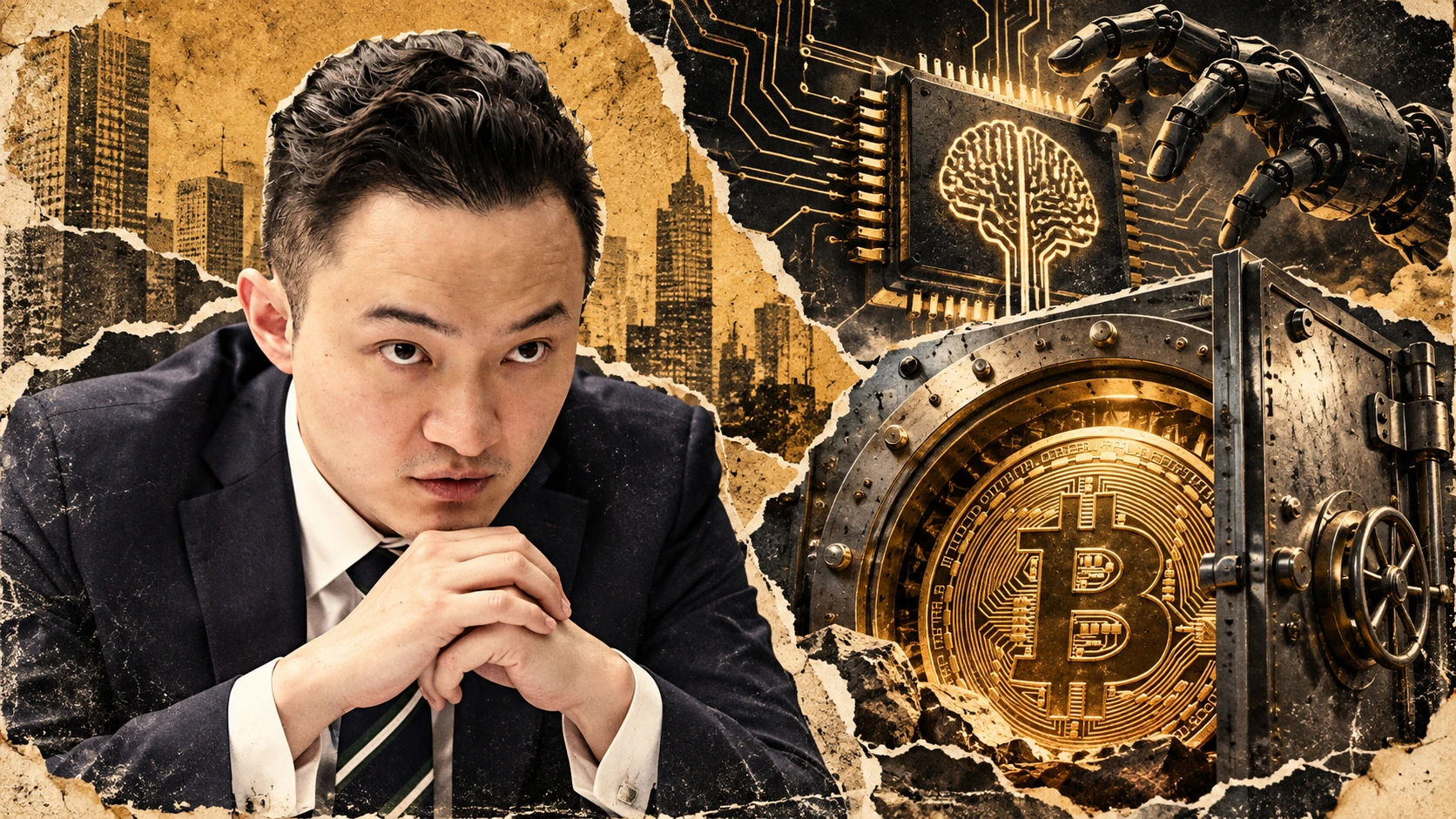
Sun Yuchen Takes Rare Bearish Stance on Bitcoin, Citing AI Threat to Early Private Keys
In a rare departure from his typically bullish outlook on Bitcoin, Justin Sun, founder of TRON, has expressed significant concerns about the cryptocurrency’s future, warning that advancements in artificial intelligence and quantum computing could pose an existential threat. Sun believes the market is underestimating the potential impact, particularly on early Bitcoin holdings.
AI Algorithms Could Crack Early Private Keys Within a Year
Sun highlighted the dual threat of AI algorithms and quantum computing (QD), suggesting that Bitcoin may not emerge unscathed. He pointed out that while Bitcoin has matured into an ETF product, with institutions like BlackRock holding substantial amounts, they may not fully grasp the implications of quantum computing, leading to an inaccurate market valuation. Sun further cautioned that breakthroughs in AI, even without fully mature quantum computers, could enable the cracking of unprotected early wallets or private keys within one to 1.5 years.
Millions in Dormant Bitcoin at Risk of Becoming Sell Pressure
According to Sun, Bitcoin’s only defense lies in proactive measures, such as the development of quantum-resistant addresses that allow users to migrate their assets. However, he noted that the original Satoshi Nakamoto address, holding approximately one million BTC, and numerous other historical addresses with lost private keys remain vulnerable. If these are compromised, it could unleash a massive sell-off of over two million BTC onto the market. Given Bitcoin’s high degree of decentralization, Sun believes it would be nearly impossible for the community and miners to reach a consensus on freezing these assets through a hard fork.
A Global Cryptographic Crisis on Par with Y2K
Sun emphasized that this is not merely a problem for the cryptocurrency space but a challenge for the entire internet and financial system. He drew a parallel to the Y2K crisis, stating that the mathematical foundations of critical infrastructure, including Google’s SSL certificates, major banks like China Merchants Bank and Bank of America, and the New York Stock Exchange, all rely on asymmetric encryption.
Sun Yuchen’s “Bunker Mode” Strategy
Facing these potential risks, Sun revealed his personal strategy:
- Asset Isolation: He has initiated what he calls “bunker mode” to isolate his assets.
- ETH Sell-off: Sun has liquidated 80-90% of his Ethereum holdings.
- Shift to US Equities: He has redirected these funds into U.S. stocks.
Macroeconomic Outlook: Stronger Yuan, Resilient US Debt
Sun also shared his broader macroeconomic views, predicting a strengthening of the Chinese Yuan. He believes the market is overly concerned about a US debt crisis, arguing that US Treasury debt is essentially a perpetual instrument, capable of being rolled over indefinitely as long as the United States maintains its technological and military dominance. He likened it to the Monkey King being unable to escape the Buddha’s palm, suggesting that as long as the US controls the AI supply chain, there will always be buyers for its debt.
AI Investment Divergence and Focus on Real-World Applications
Sun is heavily invested in US tech stocks, including Nvidia, but holds a cautious short-term view on the Nasdaq and AI-centric assets. He expressed a lack of confidence in the current overconcentration of funds in general large language models and hardware, citing the relatively high risk-free yield of US Treasuries. He anticipates a divergence in AI investments, with a particular focus on applications that integrate AI into real-life scenarios, such as AI-powered health management. He envisions a future where data from devices like Oura Ring is analyzed by AI to provide health recommendations, augmented by expert second opinions, thereby transforming the healthcare and insurance industries.
TRON’s Role in Stablecoin Infrastructure and Future Plans
Sun revealed that TRON has become a core transfer infrastructure for global USD stablecoins. The platform plans to introduce high-quality US equity assets, such as QQQ and S&P 500 ETFs, onto the blockchain by November of the current year, enabling users in developing countries to easily access dollar-denominated equity assets. Addressing past fee controversies, he stated that users can transfer assets for free through TRX staking and that transaction fees were reduced by 60% last year. He indicated that TRON will continue to reward users with value-added services like US stock RWA (Real World Assets).
A Shift in Market Logic
In conclusion, Sun’s recent statements mark a significant departure from his historical image as a staunch Bitcoin advocate. His adoption of “bunker mode” and substantial reduction in Ethereum holdings signal a tangible hedging strategy by a top-tier investor against the cryptographic risks he foresees. If AI’s ability to crack these cryptographic vulnerabilities materializes within the 1.5-year timeframe he suggests, the fundamental logic of the entire cryptocurrency market’s valuation could be profoundly reshaped.