Ledger Enhances Solana Security with Clear Signing for Transactions
Published
Ledger has introduced a "clear signing" feature for its hardware wallets on the Solana network, enabling users to review human-readable transaction details before approval.
MissedBlock Desk · 3 min read
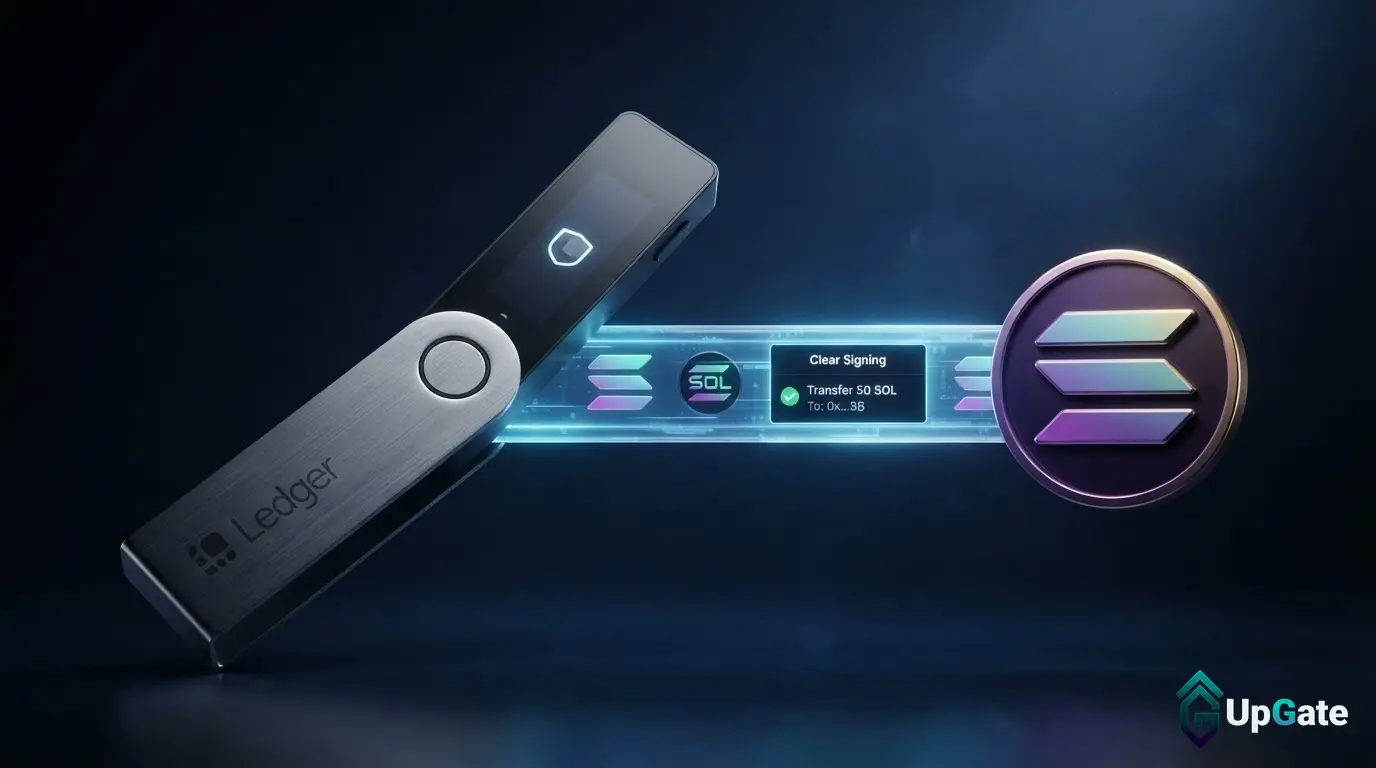
Ledger has introduced a “clear signing” feature for its hardware wallets on the Solana network, enabling users to review human-readable transaction details before approval. This significant security enhancement aims to mitigate the risks associated with “blind signing,” a practice previously common in Solana’s decentralized finance (DeFi) ecosystem.
Previously, Solana users interacting with DeFi applications on Ledger hardware wallets often had to approve transactions presented as unreadable data. This “blind signing” posed a security risk, as users could unknowingly approve malicious transactions. Ian Rogers, Ledger’s chief human agency officer, likened the practice to “signing a blank check,” highlighting the potential for users to approve unintended actions.
Clear Signing Improves User Experience and Security
The new clear signing feature provides users with a plain-language summary of transaction details, such as the assets being sent and received. For instance, a swap transaction on the Jupiter decentralized exchange aggregator, which previously required navigating through 13 hard-to-read screens on a Ledger device, can now be verified in just three screens. This improved clarity allows users to suggest the specifics of their transactions before final approval.
According to Ledger, the clear signing feature is initially supported for nine Solana applications, including Jupiter and Kamino. It covers 18 of the 22 most common user actions on the network. The development was undertaken in collaboration with the Solana Foundation and Anza, a Solana validator client.
Broader Security Context
This initiative aligns with Ledger’s broader commitment to user security and control, emphasizing that users always hold their keys. Ledger has also introduced Agent Intents, a system designed to queue approval requests for AI agents, and has partnered with Pay.sh to enable AI agents to pay for APIs on Solana. Additionally, Ledger has been developing new hardware, such as the Ledger Atom, a touch-screen device based on Android’s open-source code, which integrates with the Seeker platform offering over 1,500 apps.
In the context of Ledger’s ongoing security focus, the introduction of clear signing comes weeks after the company investigated a suspected $87 million drain of user funds. Ledger later reported that, in all verified cases, the drain was tied to a reseller named Cryptobilis. Ledger has also collaborated with MoonPay on tools to manage AI agents’ cryptocurrency spending.
The clear signing feature represents a significant step in enhancing the security and user experience for Solana DeFi participants using Ledger hardware wallets, directly addressing a long-standing vulnerability in the ecosystem.
Why This Matters
The materials describe a narrow update: Ledger has introduced a ‘clear signing’ feature for its hardware wallets on the Solana network. Blind signing, in which users approve transactions displayed as unreadable data, has long been a weak point for hardware wallet users, since it leaves them unable to spot a malicious request.
Broader Context
Source materials place the factual news in this context: Ledger has previously teamed up with MoonPay on tools to let users control AI agents’ crypto spending with its hardware wallets.