MARA Sells 13.6K Bitcoin to Repay Loans, Posts $634M Q3 Profit
Published
MARA Holdings (Nasdaq: MARA), a publicly traded Bitcoin mining company, announced its third-quarter financial results, revealing a net profit of $634.4 million.
MissedBlock Desk · 5 min read
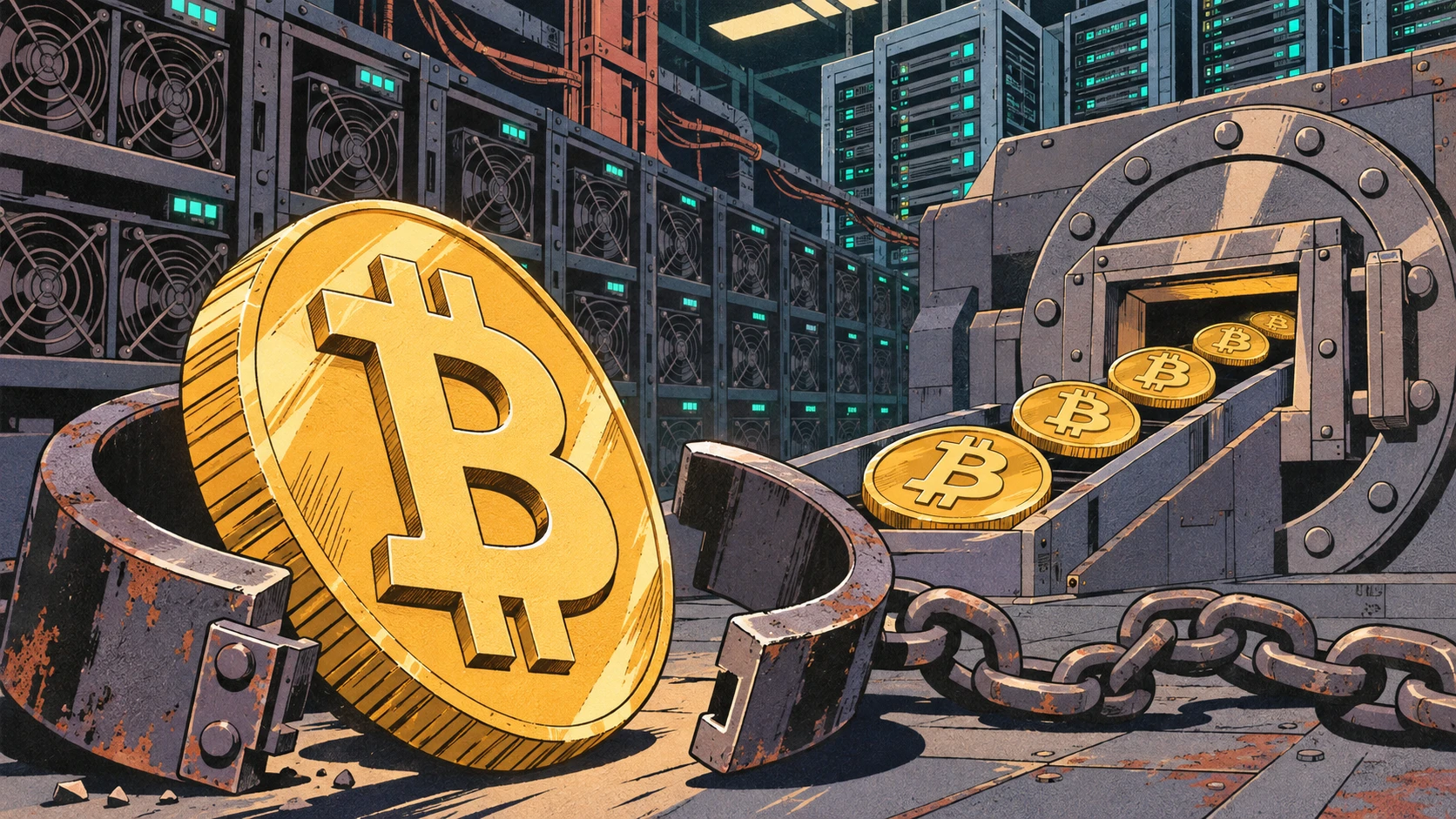
MARA Holdings Reports Strong Third Quarter Net Profit Driven by Bitcoin Appreciation
MARA Holdings (Nasdaq: MARA), a publicly traded Bitcoin mining company, announced its third-quarter financial results, revealing a net profit of $634.4 million. This figure significantly surpasses the $123.1 million reported in the same period last year. However, the substantial profit was not primarily generated from the company’s core mining operations but rather from the accounting recognition of unrealized gains on its Bitcoin holdings.
The company’s revenue for the quarter declined by 35% year-over-year to $164.2 million, a decrease from $174.9 million in the second quarter.
Bitcoin Appreciation Fuels Profitability, Mining Operations Lag
Regulatory filings indicate that MARA recognized nearly $885 million in fair value gains on its digital assets and Bitcoin receivables during the third quarter, serving as the primary driver for the doubled net profit. In contrast, the mining business experienced a 37% year-over-year decrease in block reward income, which was the main reason for the weaker revenue performance this quarter. Essentially, the impressive profit on paper reflects the positive impact of Bitcoin’s price surge on the company’s balance sheet, rather than an improvement in mining efficiency.
Strategic Debt Reduction and Bitcoin Sales
Following the close of the third quarter, MARA executed a significant financial maneuver. Regulatory filings revealed that the company sold 13,597 Bitcoin, generating approximately $1.1 billion in cash. Of this amount, $750 million was used to fully repay Bitcoin-backed loans. These loans were previously secured by the company’s Bitcoin holdings. The repayment has removed a significant source of pressure related to mandatory repayments tied to Bitcoin’s price fluctuations from the company’s balance sheet.
Shift Towards AI Infrastructure and Cloud Solutions
MARA, once one of the world’s largest public Bitcoin miners, has been progressively shifting its business focus from pure mining towards AI infrastructure, expanding its high-performance computing (HPC) operations. The company currently ranks fifth in terms of its Bitcoin treasury size, having been recently surpassed by Strive. CEO Fred Thiel stated in a quarterly shareholder letter that MARA’s future lies not in simply monetizing electricity but in extracting greater value from the same power as the company evolves from electricity to infrastructure, then to computing power, and ultimately to comprehensive cloud solutions.
Evolving Strategy and Debt Management
The company’s strategic priorities have also been adjusted. MARA will no longer prioritize the expansion of its infrastructure platform but will instead concentrate on securing customer leases and generating free cash flow. The company aims to achieve higher returns from its power assets through mining, its energy portfolio, and strategic partnerships. Financially, MARA has reduced its total debt by 37% year-to-date, bringing it down to $1.4 billion. Thiel added that the current responsibility is to execute with discipline and demonstrate the returns these assets can generate for investors.
Market Reaction and Future Outlook
The market’s reaction to the news was relatively subdued. MARA’s stock price saw a modest increase of over 4.5% during regular trading hours but remained largely flat in after-hours trading. This suggests that investors are still evaluating the implications of the company’s “sell Bitcoin to repay debt” strategy and its pivot towards AI, without rushing to assign a definitive valuation.
Deeper Analysis of Financial Performance
A closer examination of the financial report reveals a nuanced picture. While the reported net profit of $634 million appears strong, it is crucial to note that this figure includes the $885 million in fair value gains. Excluding this unrealized gain, the core mining operations would have incurred a loss, with revenue down 35% year-over-year and block reward income falling by 37%. This indicates that MARA’s cash flow remains highly dependent on Bitcoin’s price rather than actual revenue generated from its data center or cloud businesses.
The Trade-off of Debt Repayment
The decision to sell Bitcoin and repay debt should be viewed within this context. By eliminating its Bitcoin-backed loans, the company has reduced the risk of margin calls and improved its financial flexibility. However, this came at the cost of exchanging appreciated Bitcoin holdings for debt relief, effectively trading potential future gains for immediate financial security. This strategy is not uncommon among mining companies. Riot Platforms, for instance, sold 20,264 Bitcoin in the first three quarters, raising $1.5 billion for AI data center investments, while Hut 8 sold over 3,000 Bitcoin to repurchase its own stock. The common challenge for mining companies is the compression of mining profits due to halving events and increasing difficulty, coupled with the substantial capital expenditure required for AI transitions.
Key Areas to Watch
Investors will be closely monitoring three key developments moving forward. Firstly, whether MARA continues to sell Bitcoin in the fourth quarter. A renewed wave of selling, particularly if Bitcoin’s price declines, could further discount the valuation of mining companies that rely on their treasury holdings. Secondly, the signing of HPC and AI leases and their actual revenue contribution will be the sole hard metric to gauge the success of the company’s transformation. Finally, the maturity structure of the $1.4 billion in debt is important. If cash flow does not keep pace, the company may face a repeat of the sell-Bitcoin-to-repay-debt scenario.