Moscow Exchange to Launch Bitcoin, Ether, USDT Trading in December
Published
Moscow Exchange is set to launch trading in Bitcoin, Ether, and Tether's USDT on December 1, establishing what it describes as Russia's inaugural organized digital currency market.
MissedBlock Desk · 3 min read
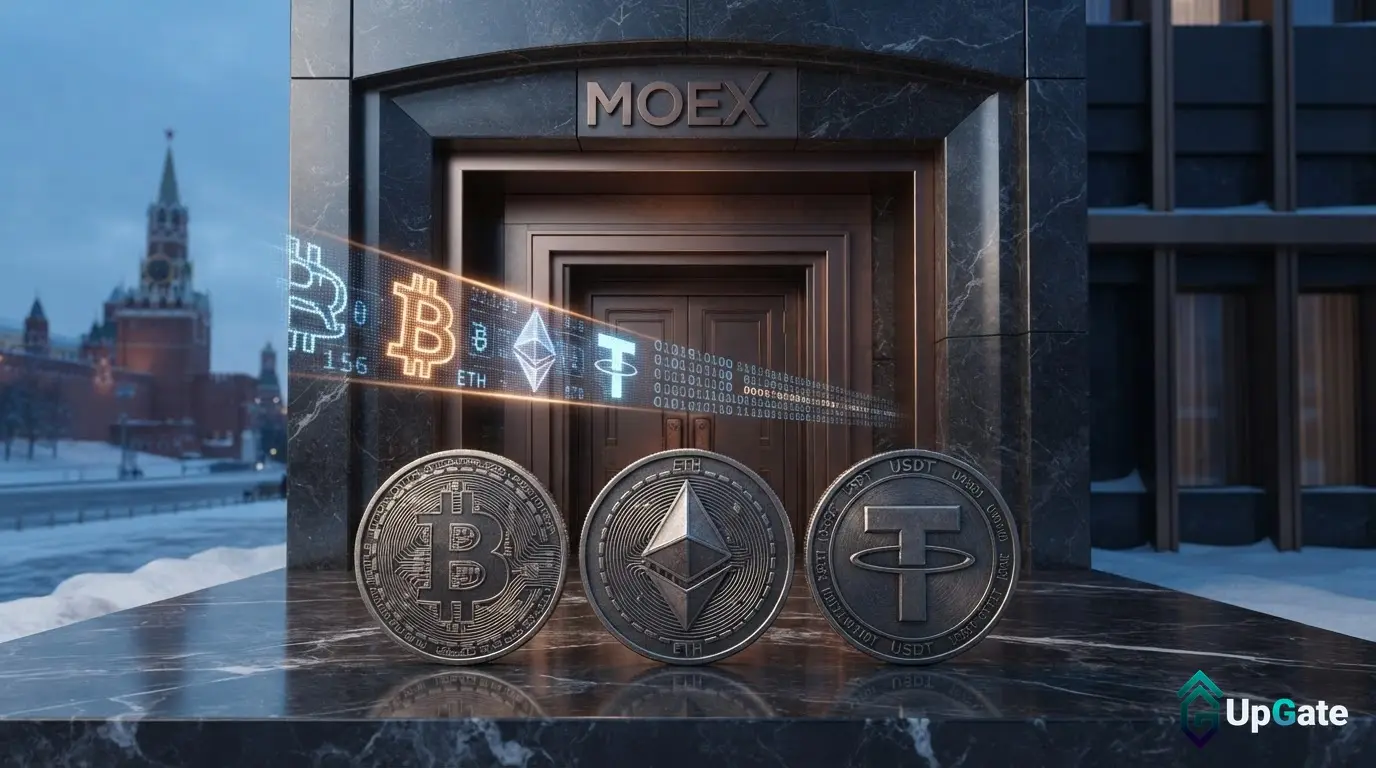
Moscow Exchange to Launch Crypto Trading December 1
Moscow Exchange is set to launch trading in Bitcoin, Ether, and Tether’s USDT on December 1, establishing what it describes as Russia’s inaugural organized digital currency market. The move comes as the country navigates its new cryptocurrency legislation.
Pilot Trades and Infrastructure
The exchange announced Monday that pilot trades would commence as participants integrate with the platform. These operations will leverage the exchange’s existing stock market infrastructure and be processed through the National Clearing Center (NCC). Trading hours are scheduled from 6:50 am to 11:50 pm Moscow time.
Investor Limits and New Law
The platform will initially support same-day and next-day settlement, alongside swap transactions. Under the new regulations, non-qualified investors will be required to pass a test before acquiring cryptocurrencies. Furthermore, they will face an annual purchase limit of 300,000 rubles (approximately $3,700) per broker, according to the exchange.
This launch follows the implementation of Russia’s new crypto law, with its primary provisions taking effect on September 1. The legislation permits regulated trading but upholds a ban on using cryptocurrencies for payments for goods and services within Russia.
Sanctions and Market Doubts
Moscow Exchange and the NCC have been subject to U.S. sanctions since June 2024, with the United Kingdom also imposing sanctions on the exchange in the same year. The European Union added the exchange to its sanctions list in July 2026.
Sergey Mendeleev, founder of the Russian cross-border payments platform Exved, expressed skepticism regarding the proposed market’s ability to attract significant demand. “Neither the global nor the local market will notice anything at all,” Mendeleev told Cointelegraph, questioning the appeal of trading on a sanctioned exchange. Mendeleev himself was sanctioned by the UK on May 26.
Mendeleev also predicted uncompetitive trading conditions, drawing a parallel to precious metals accounts offered by Russian lender Sberbank, where customers trade account balances rather than physical assets. He warned that investors could encounter “absolutely outrageous spreads,” referring to the disparity between buying and selling prices. “For ordinary non-qualified investors, this is an entirely unattractive and unprofitable proposition,” he stated.
While acknowledging the potential for the platform to facilitate cross-border payments, Mendeleev questioned the competitiveness of adding another intermediary in a market where traders often negotiate price differences as small as 0.05%. “I hope this will mark a genuine breakthrough for foreign trade,” he added.