Nvidia CEO's "Spygate": How Affair Rocked $4.25 Trillion AI Empire
Published
Nvidia, the titan of the artificial intelligence industry, finds itself at the center of an unprecedented national security storm following revelations of an extramarital affair between CEO Jensen Huang and a woman U.S.
MissedBlock Desk · 8 min read
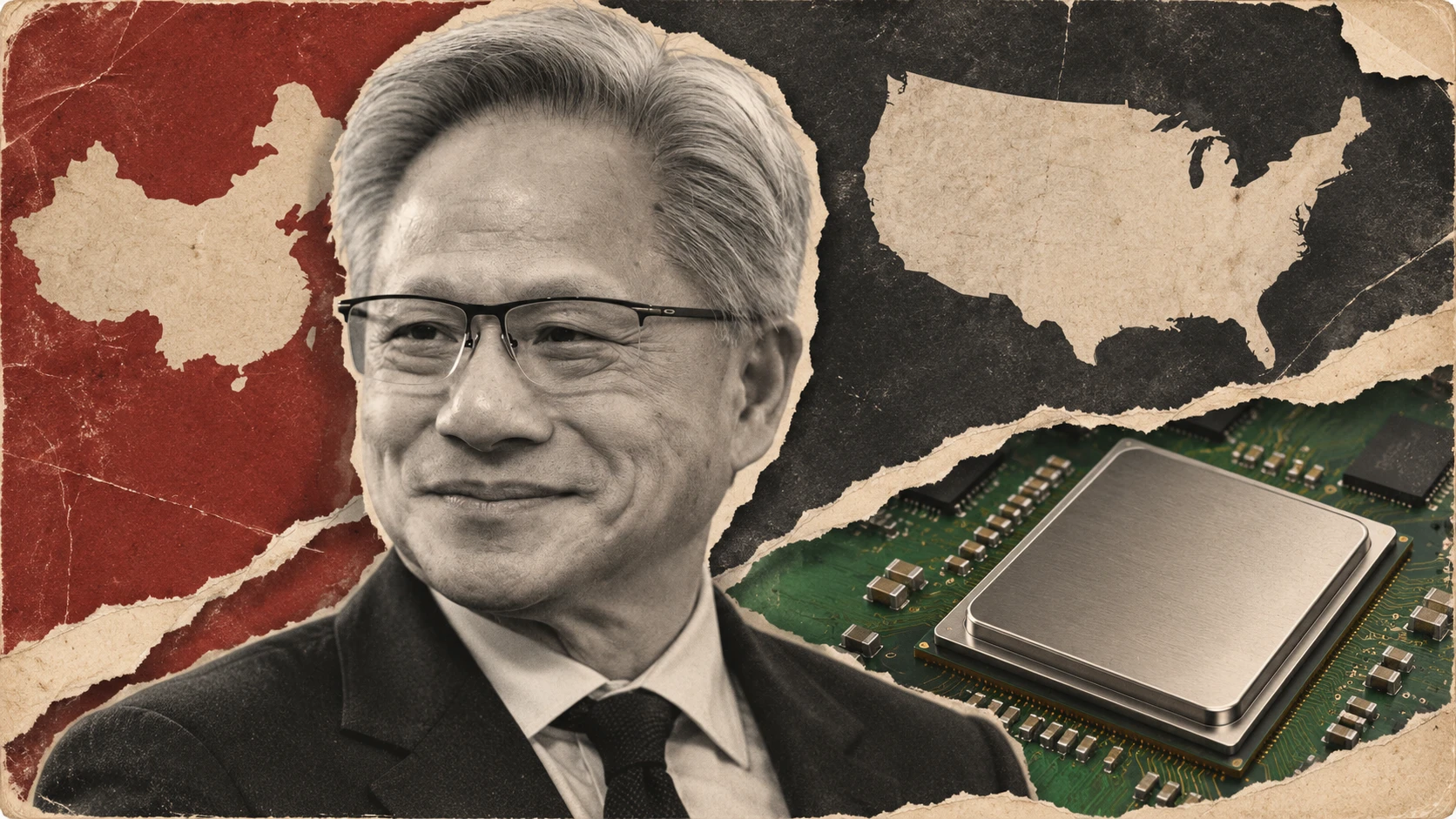
Nvidia CEO Jensen Huang Embroiled in National Security Scandal Over Alleged Affair with Chinese Operative
Nvidia, the titan of the artificial intelligence industry, finds itself at the center of an unprecedented national security storm following revelations of an extramarital affair between CEO Jensen Huang and a woman U.S. intelligence officials suspect of being a Chinese operative. The scandal, which has moved from the personal to the geopolitical, is testing the foundations of the $4.25 trillion AI empire.
Allegations of Espionage and Chip Smuggling
A report by The Verge details the affair between Huang and Alice Huang, a senior executive at Singapore-based cloud services provider Megaspeed. U.S. intelligence officials have identified Alice Huang as a foreign intelligence agent who allegedly funneled critical information directly to the Chinese government. This development has thrust Huang’s lobbying efforts against U.S. AI chip export controls into the geopolitical spotlight.
The situation has drawn scrutiny, with one social media post from November 10, 2026, by user @sntrader_01, stating: “JUST IN: 🇺🇸🇨🇳 US investigation into Megaspeed over suspected AI chip smuggling to China halted after Nvidia $NVDA intervened. CEO Jensen Huang had an affair with former Megaspeed executive Alice Huang, who has been accused of being a Chinese spy.”
Another post from November 9, 2026, by user @verummultum, referencing The New York Times, claimed: “The arrangement reported by [The New York Times] is an unprecedented quid-pro-quo export agreement brokered directly by the Trump administration and Nvidia CEO [Jensen Huang]. Under this deal, the U.S. government receives a 15%…”
Nvidia’s Central Role in the AI Race
In the global race for artificial intelligence dominance, Nvidia’s chips have become the bedrock of America’s cutting-edge AI development. For years, demand has consistently outstripped supply. As co-founder and long-time leader of Nvidia, Huang not only controls the global supply of computing power but has also made significant equity investments in AI startups, new cloud service providers, and underlying infrastructure, reportedly approaching $99 billion in recent years.
These factors have made Huang a high-value target for foreign entities seeking access to the U.S. AI industry. Hanna Dohmen, a senior research analyst at the Georgetown University Center for Security and Emerging Technology (CSET), stated in an interview that it is unsurprising for the head of “arguably the most important (if not the only most important) AI chip giant” to become a target for intelligence gathering by countries like China.
Megaspeed and Suspected Chinese Connections
At the heart of the matter is Alice Huang’s role at Megaspeed, a key Nvidia customer. U.S. officials have identified her as a foreign intelligence agent who allegedly transmitted crucial information to the Chinese government. Officials also indicated that Megaspeed is linked to a complex network of Chinese corporate affiliations that allegedly collaborated to acquire chips in large quantities, potentially through illicit channels into China. Trade data from ImportGenius shows that between June 2024 and February 2026, a Megaspeed affiliate in Malaysia spent over $4.8 billion on Nvidia chips and related technology, a figure far exceeding what a company of its apparent size would typically procure during a period of extreme chip scarcity.
Nvidia has previously responded to the allegations, with a spokesperson stating that Huang’s relationship with the Megaspeed executive was purely professional and “entirely appropriate and expected,” emphasizing that “meetings with customers are part of the CEO’s job.” However, reports suggest the relationship ultimately crossed professional boundaries.
Photographic evidence from June 2024, shortly before Megaspeed officially became an Nvidia customer, shows Huang and the executive at a bar with other AI industry leaders after Computex in Taipei. The following year, they were seen together at a business dinner in Taipei. U.S. intelligence agencies had reportedly been monitoring the executive for an extended period, leading to the discovery of their close contact.
Lobbying Efforts and Export Control Debates
The scandal has gained significant traction due to Huang’s extensive lobbying efforts with the Trump administration and Congress to ease restrictions on advanced semiconductor exports to China. Culper Research, a firm that shorted Nvidia stock earlier this year, noted that Huang’s dinner with Alice Huang in Taiwan in May 2025 coincided with a peak period for Nvidia’s lobbying activities. This occurred shortly after Nvidia informed the Trump administration of a new round of restrictions on its H20 chip, designed specifically for the Chinese market, in April 2025.
Two months after the Taiwan dinner, Huang met with then-President Trump in the Oval Office in July 2025 to advocate for easing export controls on advanced semiconductors. Days after this meeting, Nvidia announced that the Trump administration had officially approved the sale of H20 chips to China.
Huang’s core argument to the White House was that promoting U.S. chips in China would help establish American technology as the global standard, thereby hindering the growth of China’s domestic chip ecosystem. Following setbacks in export policy during Trump’s first term, Huang maintained frequent communication with David Sacks, who was then responsible for AI affairs at the White House. Sacks subsequently became a key proponent within the administration for the argument that selling U.S. chips to China was ultimately beneficial.
By October 2025, ahead of a meeting between Trump and Chinese leadership, Huang again lobbied Trump to allow Nvidia to sell higher-performance advanced chips to China. However, Trump ultimately decided against proceeding at that time. Several months later, in December, the Trump administration adjusted its policy, permitting Nvidia to sell H20 chips to “designated customers” in China, subject to a whitelist approval process, with the condition that the U.S. government would receive a 25% share of the sales revenue. Trump later stated on Truth Social that this revenue-sharing and approval framework would apply to all other U.S. chip manufacturers.
Intelligence Briefings and Presidential Awareness
In the spring of this year, prior to Trump’s visit to China in May, a classified memorandum personally overseen by Secretary of State Marco Rubio was circulated among senior White House officials. This memo explicitly warned that the Megaspeed executive was suspected of engaging in intelligence activities on behalf of China’s Ministry of State Security, with the primary objective of probing U.S. advanced AI chip technology and facilitating large-scale supply of computing chips to China.
When asked at a press conference on Monday if he was aware of this memo, Trump responded, “I will check with the intelligence agencies. This may have been mentioned, but it clearly didn’t have a major impact on me.” The report also indicated that Trump had received intelligence briefings about a year prior, informing him that the executive was considered an intelligence operative in close contact with a U.S. citizen, but Trump chose not to act at that time. Notably, Huang was not initially on the list for Trump’s delegation to China but was later added at Trump’s personal request.
Nvidia’s Response and Market Uncertainty
As of now, these allegations have not shaken Huang’s leadership position at Nvidia. Following the exposure of the scandal, Trump publicly supported him, stating, “I think he’s a decent and honorable person, and he may have his own explanation, and people should hear his side of the story.” Huang issued an internal letter to all Nvidia employees on Sunday, stating: “I owe my family, and I owe all of you, a sincere apology. I was unfaithful to my wife, and my actions have deeply hurt her and our children. There is no excuse for my behavior, and I am deeply pained and regretful.” He also emphasized to the board, partners, and shareholders that he is “fully committed” to continuing to lead the company and will do everything in his power to regain trust.
Nvidia’s board of directors initiated an independent investigation into the national security allegations over the weekend, with Huang having no authority to interfere with or control the investigators. Nvidia stated, “The company has no reason to believe that national security secrets or Nvidia’s core technology secrets have been compromised.” In a report on Monday, Brian Colello, a senior equity analyst at Morningstar, noted that given Huang has been Nvidia’s “sole CEO since its inception,” the possibility of the investigation eventually fading and Nvidia returning to normal operations cannot be ruled out. He also warned that the cost of capital for future investments could significantly increase if the most influential business leader in AI is no longer personally coordinating efforts. Morningstar currently maintains a “highly uncertain” rating for Nvidia and believes the U.S. government may revoke the H20 sales license to China in the future, with Nvidia itself facing potential sanctions compliance risks.