NYSE Eyes Solana Validator as Network Enters New Era
Published
Solana is attracting significant attention from Wall Street, moving beyond simple token purchases to potentially influencing its price trajectory.
MissedBlock Desk · 4 min read
Wall Street’s Growing Interest in Solana Signals Potential Price Shift
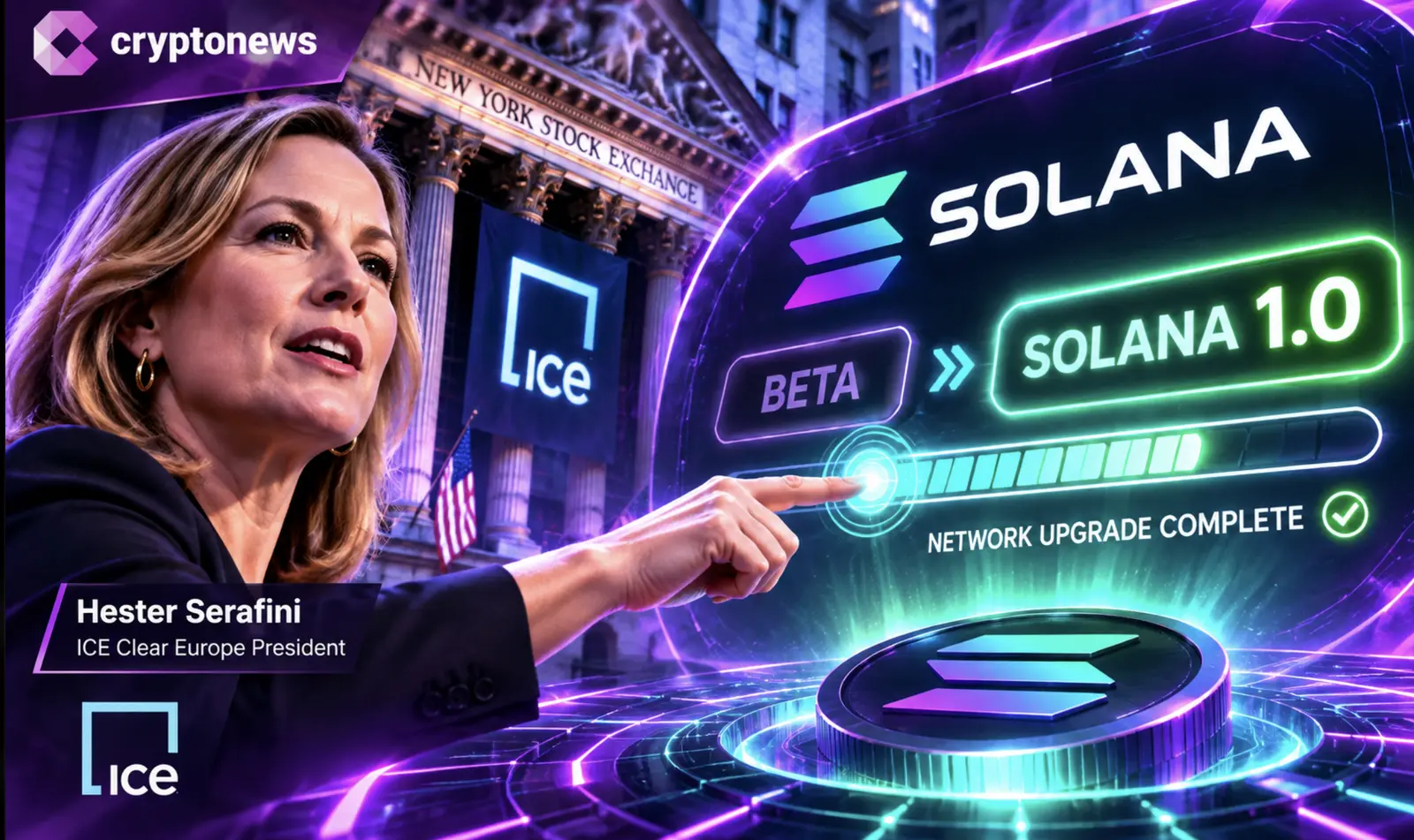
Solana is attracting significant attention from Wall Street, moving beyond simple token purchases to potentially influencing its price trajectory. Intercontinental Exchange (ICE), the parent company of the New York Stock Exchange, is reportedly exploring the possibility of operating a Solana validator. This development coincides with Solana’s official transition out of its Mainnet Beta phase.
Despite this institutional interest, holders of the SOL token are not yet celebrating. The cryptocurrency remains in a significant correction, having fallen from its September peak of $125. With Wall Street’s engagement increasing, SOL holders face a critical question: Will a recovery to $90 materialize, or is another sharp decline toward $60 imminent?
Hester Serafini, President of ICE Clear Europe, indicated at the Solana Breakpoint conference in London that ICE is considering operating a Solana validator. Validators play a crucial role in securing Solana’s network by participating in transaction processing and maintaining consensus. The involvement of a major financial market operator like ICE could significantly bolster Solana’s credibility among institutions.
ICE is already laying the groundwork for a deeper integration with the blockchain. Its planned tokenized securities trading infrastructure is designed to accommodate tokens issued on the Solana network. While ICE has not yet confirmed the launch of a validator, this potential move firmly places Solana on Wall Street’s radar.
The announcement from ICE follows the Depository Trust and Clearing Corporation’s (DTCC) own plans, revealed on November 12, to integrate its tokenization service with Solana in the latter half of 2027. The DTCC is central to U.S. securities settlement, making this development another key institutional milestone for the blockchain.
Solana is also undergoing significant internal upgrades. The Solana Foundation announced that the network has officially graduated from its Mainnet Beta designation, ushering in Solana 1.0. This transition signifies years of development aimed at establishing a more robust production environment. The network’s Alpenglow upgrade targets 150-millisecond transaction finality, and the Firedancer project introduces an independently developed validator client.
Essentially, Solana is no longer solely focused on transaction speed. It is positioning itself as a foundational infrastructure for financial markets that demand reliability and stability, rather than the rapid, often volatile, pace of internet trends.
Bitcoin Hyper Aims to Bring Solana’s Speed to Bitcoin
Meanwhile, another project, Bitcoin Hyper ($HYPER), is attempting to leverage Solana’s speed for the Bitcoin network without compromising Bitcoin’s existing liquidity. Bitcoin Hyper is developing a Bitcoin Layer 2 solution powered by the Solana Virtual Machine (SVM), aiming to combine high-speed transaction execution with access to Bitcoin-based liquidity.
The project has reportedly raised over $33.2 million, with HYPER tokens currently priced at $0.0136877. The presale is scheduled to conclude on November 26. With less than 10 days remaining, the project is nearing a significant milestone as its testnet ecosystem expands.
Bitcoin Hyper also offers staking incentives, providing a 35% APY for participants who lock their tokens through its buy-and-stake option. While Solana focuses on institutional adoption, Bitcoin Hyper is pursuing an opportunity to integrate Solana-like execution capabilities into Bitcoin’s vast liquidity ecosystem. With substantial funding already secured and the presale countdown underway, HYPER is positioning itself for attention ahead of its planned launch.
SOL Price Outlook Amidst Institutional Developments
Despite the positive institutional news, SOL’s price performance remains considerably weaker than its September levels. The token has fallen from $125, with buyers struggling to defend the $70 support level.
The daily Relative Strength Index (RSI) has entered deeply oversold territory, suggesting that selling momentum may be waning. This could set the stage for a potential relief rally.
The immediate resistance lies around the $74-$75 range. A successful reclaim of this area could pave the way for a move towards $80. Bulls will need to achieve a convincing breakout at $80 before targeting the $89-$90 zone. A recovery to $90 would signify a meaningful reversal from recent lows and could indicate that institutional adoption is beginning to influence market sentiment.
However, bearish pressures remain. A break below the $70 support level could trigger another wave of selling, with the next significant downside target at $60, which could further erode investor confidence.
The institutional narrative provides Solana with a strong long-term outlook. ICE’s potential validator participation, the DTCC’s tokenization plans, and the network’s recent upgrade all enhance its position in the competition for blockchain-based financial infrastructure. Nevertheless, for a bullish price prediction to be fully realized, the market will need to see tangible financial inflows into Solana.