Paraguay Bank Collapse: Stablecoins Offer Limited Lifeline
Published
The abrupt collapse of Paraguay's digital lender Ueno Bank last week has thrown the nation's financial system into disarray, leaving nearly three million customers – approximately 60% of the adult population – locked out of their accounts.
MissedBlock Desk · 5 min read
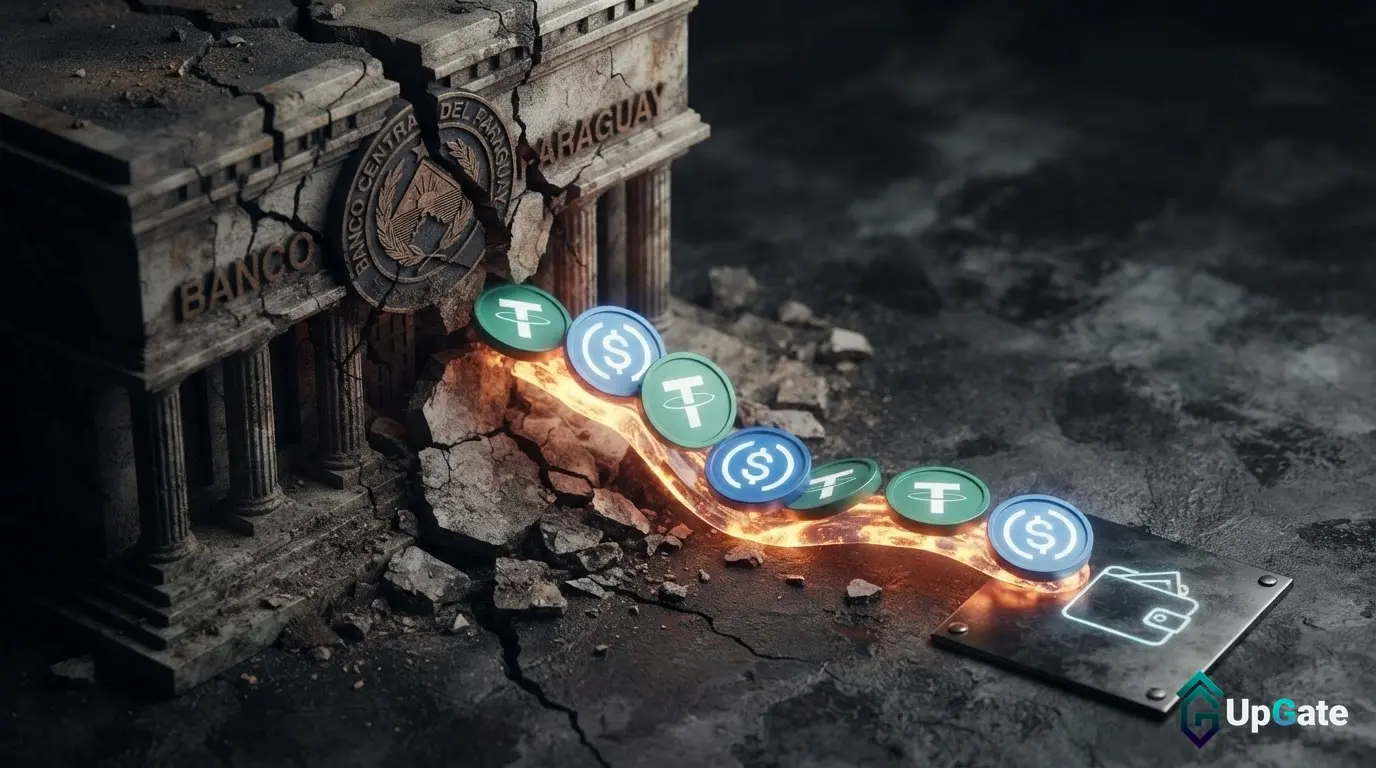
Ueno Collapse Exposes Digital Banking Fragility, Stablecoins Emerge as Lifeline
The abrupt collapse of Paraguay’s digital lender Ueno Bank last week has thrown the nation’s financial system into disarray, leaving nearly three million customers – approximately 60% of the adult population – locked out of their accounts. The crisis has underscored the inherent vulnerabilities within digital banking and highlighted the growing role of stablecoins as a crucial alternative during times of financial turmoil.
Regulatory Intervention and Political Fallout
Paraguay’s Central Bank intervened on November 3, placing Ueno into resolution after its solvency ratio plummeted to less than half the legally mandated minimum. Investigations subsequently revealed questionable lending practices, along with significant deficiencies in credit documentation and accounting procedures.
The financial crisis quickly escalated into a political one. Thousands of citizens took to the streets in protest, and President Santiago Peña reportedly attempted to resign. He now faces impeachment and arrest on charges of breach of trust and leveraging his office for personal gain.
Stablecoins Offer a Refuge Amidst Currency Devaluation
The immediate aftermath of Ueno’s collapse saw Paraguay’s peer-to-peer cryptocurrency market react sharply. Some sellers began demanding a premium of up to 13% for USDt (Tether), a dollar-pegged stablecoin. Paolo Ardoino, CEO of Tether, commented that “USDt is a lifeline for hundreds of millions of people in the world.”
For many Paraguayan citizens, the incident has fueled deep uncertainty regarding their savings, wages, and ability to cover daily expenses. The local currency, the guaraní (PYG), experienced a significant depreciation of 12.3% within a single week. In response, a portion of the population turned to stablecoins to preserve the value of their funds or simply to facilitate ongoing payments.
David Eisenmann, founder and CEO of Paraguayan crypto exchange X4T, emphasized the critical timing of the intervention. “The intervention came in the first days of the month,” he explained, “exactly when salaries, rent and supplier invoices are due.” This left many business owners unable to meet payroll obligations. For some, USDt became “suddenly the most liquid money” available.
Beyond Self-Custody: Stablecoins as a Liquidity Alternative
Beyond reinforcing the benefits of self-custody in traditional finance, Ueno’s failure highlights the increasing importance of dollar-pegged stablecoins as a vital source of liquidity when conventional banking systems falter.
Eisenmann noted that X4T processed over $10 million in local on-ramp volume in the 30 days leading up to early November, though some of this activity predated Ueno’s collapse. “The dollar began recovering against the guaraní in October,” he stated, “and the Ueno news sped up a move that was already underway.”
The activity, he added, “runs in both directions.” While some customers sold crypto for guaraníes or dollars to cover payments they could no longer make through Ueno, “demand for USDt and USDC as a dollar store of value has risen sharply.”
Rebuilding Confidence Amidst Lingering Uncertainty
As of November 9, Paraguay’s Central Bank reported that 93.1% of Ueno depositors had been repaid. Despite these assurances, confidence in the financial system has been shaken. X4T continues to observe a high volume of online inquiries for dollar-denominated stablecoins, with Eisenmann noting that the level of interest “has not changed significantly” since the week of the collapse.
Rhys Hicks, an associate analyst at data and analytics firm GlobalData, commented that the digital bank’s failure illustrates “how much can go wrong when governance does not keep pace with growth.” However, he has not seen evidence of a mass exodus from Paraguayan banks into stablecoins, as other institutions have reportedly “picked up the slack.” Public sentiment, he observed, appears to be “angrier” with the government than with the banks.
“Some consumers will look for different ways to keep their money safe, but I do not see an overwhelming shift to stablecoins yet,” Hicks concluded.
Historical Precedents and Future Considerations
The impulse to seek dollars during periods of domestic banking instability is not new. Argentina’s 2001 financial crisis saw the government impose the “corralito,” restricting cash withdrawals, following a run on deposits. Subsequent government actions converted dollar-denominated deposits into pesos, significantly eroding savings and further damaging trust in the nation’s banking system.
However, stablecoins are not inherently decentralized and remain connected to the broader financial system. During the March 2023 collapse of Silicon Valley Bank, stablecoin issuer Circle disclosed that a significant portion of its USDC reserves were held by the failing lender, causing USDC to briefly depeg.
A paper by the Bank for International Settlements (BIS) has warned that the widespread adoption of dollar-backed tokens could pose challenges to monetary sovereignty in emerging markets. Hicks acknowledged that stablecoins can offer an alternative during political instability and “low trust in the local system” due to their peg to more stable currencies like the US dollar.
Nevertheless, he stressed the need for regulators to address “transparency” and “consumer protection,” as stablecoin holders lack the deposit guarantees afforded to bank customers and have no central bank to provide recourse.
Eisenmann anticipates that the Ueno incident will encourage greater “diversification,” with individuals “spreading their money across banks, cash and digital assets” rather than concentrating it in a single institution. “How quickly trust in the banks returns will depend on how quickly and transparently the authorities handle the resolution,” he added.