Protesters Arrested at Microsoft Data Center Site Amid Growing European Opposition
Published
Hundreds of protesters entered a Microsoft data center construction site in Amsterdam on November 6, resulting in the arrest of an estimated 150 to 200 individuals.
MissedBlock Desk · 4 min read
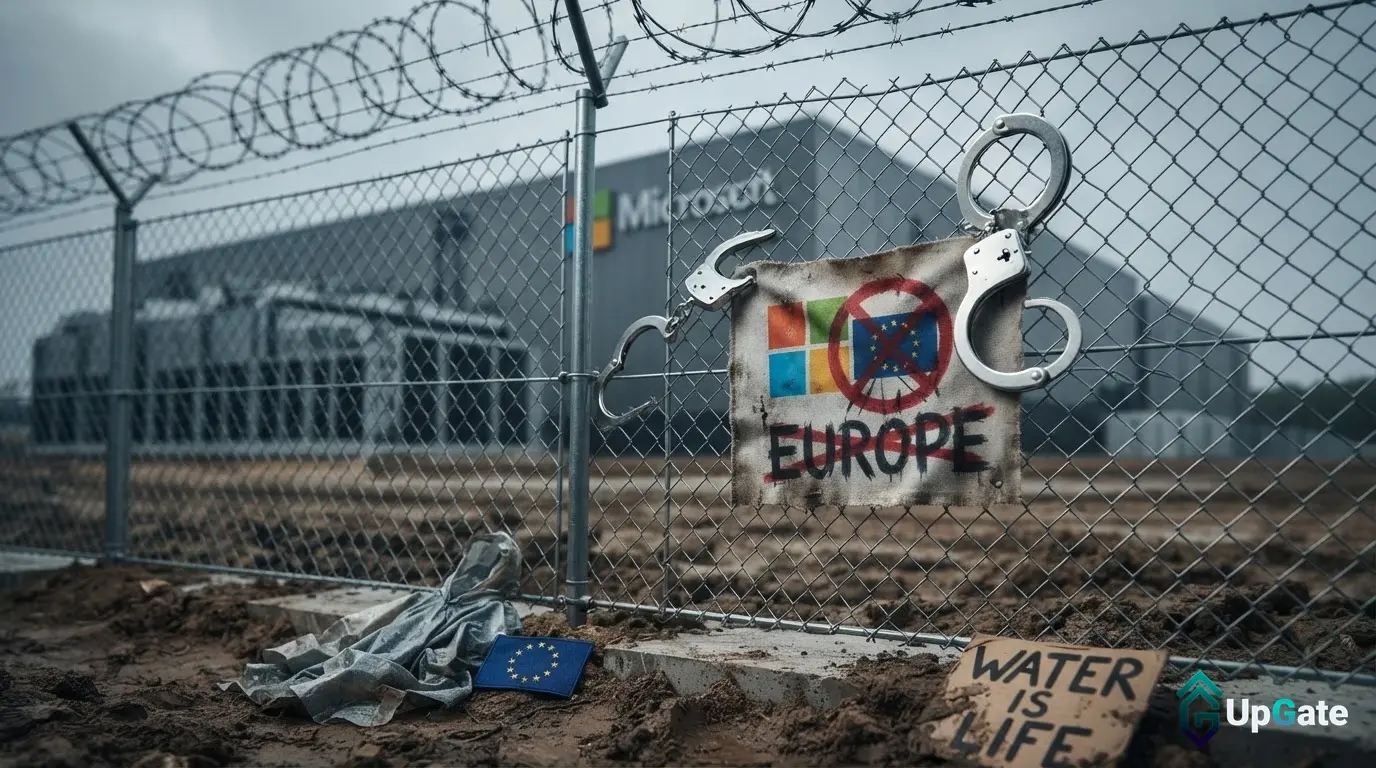
Hundreds of protesters entered a Microsoft data center construction site in Amsterdam on November 6, resulting in the arrest of an estimated 150 to 200 individuals. This incident is part of a broader wave of European protests against new data center construction, driven by a complex mix of environmental, economic, and ethical concerns.
The demonstration, organized by the group Geef Tegengas, saw protesters climbing cranes and the roof of the facility and setting off flares. Amsterdam Police intervened to clear the site and make arrests for trespassing. According to The Guardian, some protesters carried Palestinian flags and banners with messages such as “Microsoft is genocide.”
Roos Molenaar, an activist with Geef Tegengas, told The Guardian that the group “will not accept Amsterdam being used to generate AI garbage content and assist genocide.” The protest is linked to a wider European movement against data center construction, with over 100 groups participating in actions on November 6-7.
The facility in question is a 78 MW data center being built by Pure Data Centres for Microsoft in Amsterdam’s Westpoort area. Although the Netherlands has banned new “super-large” data centers since 2022—defined by power capacity above 70 MW and land area above 10 hectares—Microsoft’s facility circumvents this. It has a 78 MW capacity but occupies approximately 2.3 hectares, thus not meeting the land area criterion. The facility is planned as three separate 85-meter-tall towers, which were permitted individually. Amsterdam city council had previously halted new data center construction, but six projects in late stages, including Microsoft’s, were unaffected.
A spokesperson for Microsoft stated that the company respects peaceful expression but does not condone illegal or unsafe acts. A spokesperson for Pure DC called the intrusion illegal and dangerous.
Wider European Context
The Amsterdam protest mirrors similar concerns across Europe. On November 6, smaller protests occurred in Bristol, Berlin, Warsaw, and Zagreb. In Ireland, Friends of the Earth organized a protest in Dublin on November 7, marking the country’s first national anti-data center march. A report suggests that data center energy use in Ireland may increase average household electricity bills by approximately €360 between 2015 and 2023.
These actions highlight a growing public backlash against the rapid expansion of data centers, partly fueled by the demand for artificial intelligence. Activists point to significant energy consumption; the planned Microsoft facility’s full operational power consumption is estimated to be equivalent to the total annual consumption of households in Haarlem. Environmental concerns are also prominent, with a report mentioning Google’s data center in Finland cutting down 530 hectares of forest. In the United States, 40 out of 41 local referendums related to data centers on November 3 resulted in outcomes favoring opposition.
European governments are reportedly supporting AI data center construction to boost tax revenue and compete with the US and China in computing power. However, data centers have become a focal point for various grievances, including electricity costs, environmental impact, and human rights issues.
Uncertainties remain regarding potential changes to Dutch regulations and the precise impact of the data center’s water and energy consumption on local communities. The situation underscores the increasing tension between technological development and public concerns over its societal and environmental footprint.
Why This Matters
The materials describe a narrow update: Hundreds of protesters entered a Microsoft data center construction site in Amsterdam, with some climbing cranes and the roof and setting off flares. Whether the new Dutch cabinet will change the definition of ‘super-large’ data centers.
Broader Context
Source materials place the factual news in this context: The article mentions previous incidents, including protesters throwing acidic water balloons at the Microsoft data center construction site, accelerating steel rebar corrosion.