PS5 Jailbreak Tool Relapse Goes Open Source Amidst Sony's "You Don't Own Games" Claim
MissedBlock Desk · · 5 min read
Updated
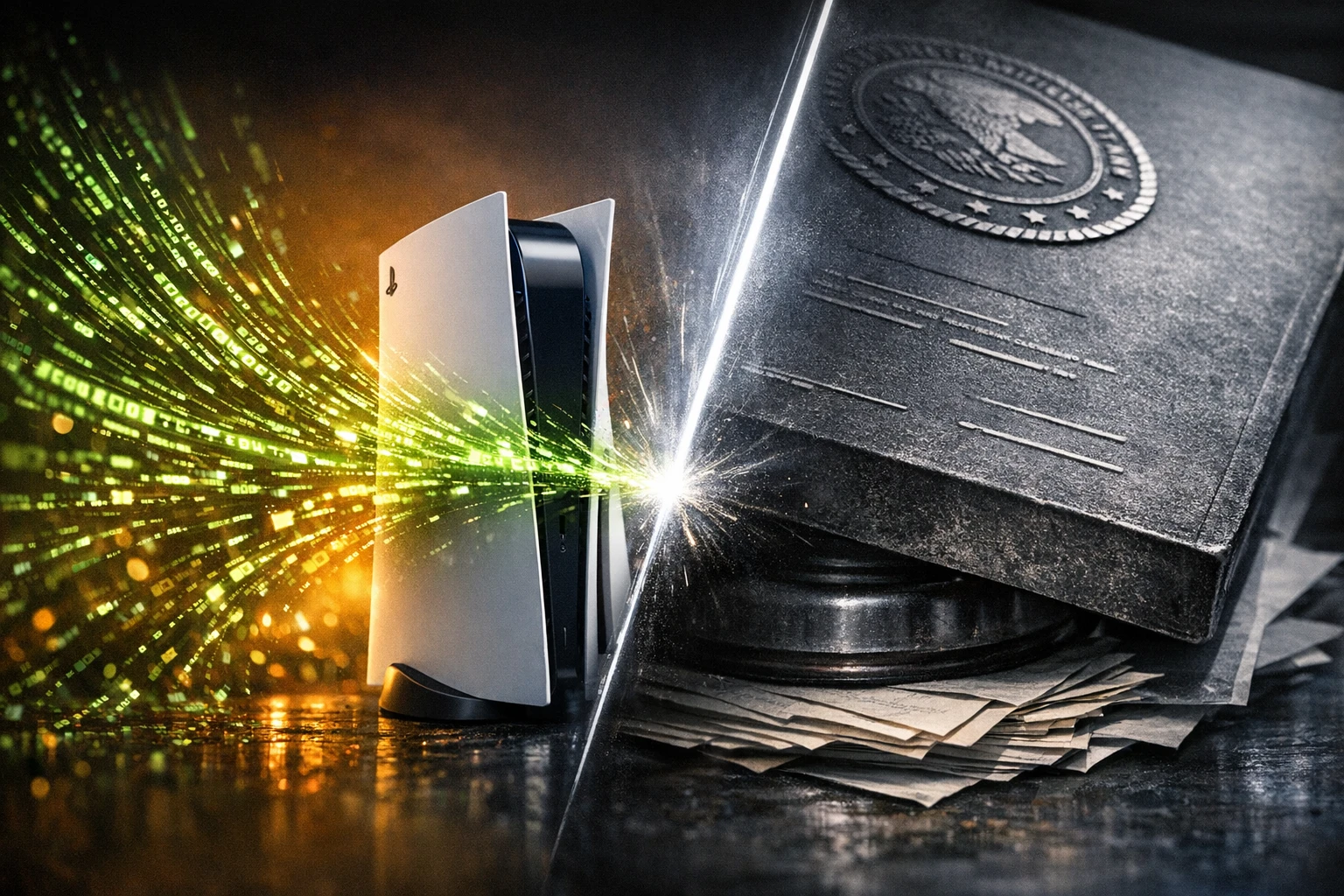
PS5 Jailbreak Exploit Chain Surfaces on GitHub Amidst Sony’s Digital Ownership Battle
A chain of exploits for the PlayStation 5, compatible with firmware versions 7.00 through 13.60, has been publicly released on GitHub, rapidly gaining traction with 1,469 stars and 353 forks within two weeks. Concurrently, Sony is arguing in a California court that players possess only a revocable license, not ownership, of digital games. The company cited the case of two players purchasing the same game just 11 days apart as evidence. The temporary nature of the jailbreak, rendering it inoperable after a firmware update, inadvertently reinforces the platform holder’s assertion that ultimate control remains with the console manufacturer.
Relapse Exploit Code Published
The source code for the jailbreak tool, named Relapse, was made public on the GitHub repository ntfargo/Relapse-Exploit. It supports PS5 firmware versions 7.00 to 13.60 and was created on September 17, 2026. As of October 1, it had garnered 1,469 stars and 353 forks. During the same period, Sony Interactive Entertainment filed a motion in the case of Heycock v. Sony Corporation of America, stating, “In the digital age, it is unreasonable for a consumer to mistakenly believe they have obtained ‘ownership’ of a digital game.” These two events unfolded within the same month.
Relapse is not a simple unlock code but a complete exploit chain. According to its README file, the browser-stage exploit utilizes JavaScriptCore information leaks and exploits a structured clone object pool mismatch to corrupt typed arrays. The kernel-stage exploit combines address leaks with a use-after-free race condition in the aiomultiwait function to gain kernel read/write privileges. Upon successful execution, the default payload is located in the payloads directory, with an ELF loader listening on port 9021. The README cautions that the WebKit stage might require multiple attempts and that a hang necessitates a reload. The kernel stage could potentially cause the console to crash or panic, requiring a reboot to retry. Credits are attributed to Sonic_Iso for the kernel exploit, Jordy for WebKit and kernel vulnerabilities, ntfargo and ufm42 for development, and Dr. Yenyen for testing, with an additional nine researchers acknowledged.
How to Use the Exploit and Its Limitations
Nathan Fargo (GitHub handle ntfargo, founder of Linear Fox), the publisher, outlined the operational steps on X: change the PS5’s primary DNS to 45.56.67.85, open the console’s built-in “User’s Guide,” and enter the exploit page address in the URL bar. The process reportedly takes only a few seconds. Community reports indicate the entire procedure can be completed within seconds, enabling the loading of payloads like etaHEN, which in turn allows for the execution of homebrew applications, cross-platform emulators, and game backups. Both standard and Pro versions of the PS5 are compatible. However, this exploit chain is not persistent; the entire process must be repeated after each reboot. Consoles with firmware upgraded to 14.00, released after September 16, 2026, are completely incompatible, effectively meaning Sony closed this door before the vulnerability was publicly disclosed. The README’s disclaimer explicitly states the exploit is for educational and security research purposes only, does not support piracy or unauthorized access, and users assume all risks of system instability, data loss, and account bans.
Sony’s Legal Stance on Digital Ownership
Shifting focus back to the legal proceedings, the case (Case No. 3:26-cv-06016, U.S. District Court for the Northern District of California) was initiated by four PlayStation players on June 18, alleging that the “Buy Now” button on the PlayStation Store created a false impression of permanent usage rights, when in reality, only a revocable software license was granted. The plaintiffs withdrew their claims against Sony Corporation of America on August 20, leaving only Sony Interactive Entertainment as the defendant. On August 21, Sony filed a motion to compel arbitration or dismiss the lawsuit, attaching terms of service and license agreements that state, “The software is licensed to you, not sold to you.” The company cited the example of two plaintiffs who each purchased the same game, “Resident Evil Requiem,” for $69.99, 11 days apart in February 2026, to argue against the notion of “exclusive ownership.” A hearing originally scheduled for October 1 has been rescheduled to October 29.
The Interplay Between Exploits and Legal Battles
Viewing these two developments together highlights a stark contradiction. Sony is asserting in court that players receive a license, not ownership, while the community’s response is to bypass the licensing mechanism through exploits, effectively reclaiming control over their consoles. However, the temporary nature of the jailbreak paradoxically supports Sony’s argument: its lack of persistence, its failure after reboots, its incompatibility with firmware 14.00, and the risk of PSN account bans all underscore that ultimate control remains with the platform holder. Players are merely operating within the limited windows of opportunity it provides. The October 29 hearing is the next critical juncture; if the court sides with Sony’s motion, the assertion of “no digital ownership” could transition from a statement in a lawsuit to a legally recognized reality.
Will Relapse Brick PS5s or Lead to Account Bans?
The README’s disclaimer clearly states the exploit is for educational and security research purposes. The kernel stage may cause the console to crash or panic, requiring a reboot to retry. Users are solely responsible for any system instability, data loss, and potential PSN account bans. No guarantees are provided.
What’s Next for the Sony v. Players Lawsuit?
Sony has filed a motion to compel arbitration or dismiss the lawsuit, arguing that players agreed to a license rather than a sale before purchasing. The hearing, originally set for October 1, has been moved to October 29, at which point the court’s stance will be a key indicator.