Russia Allows Retail Crypto Trading, Exchange Eyes December Launch
Published
Moscow, Russia – The Central Bank of Russia has officially designated Bitcoin (BTC), Ether (ETH), and the USD-backed stablecoin Tether (USDT) as cryptocurrencies accessible to non-qualified investors.
MissedBlock Desk · 3 min read
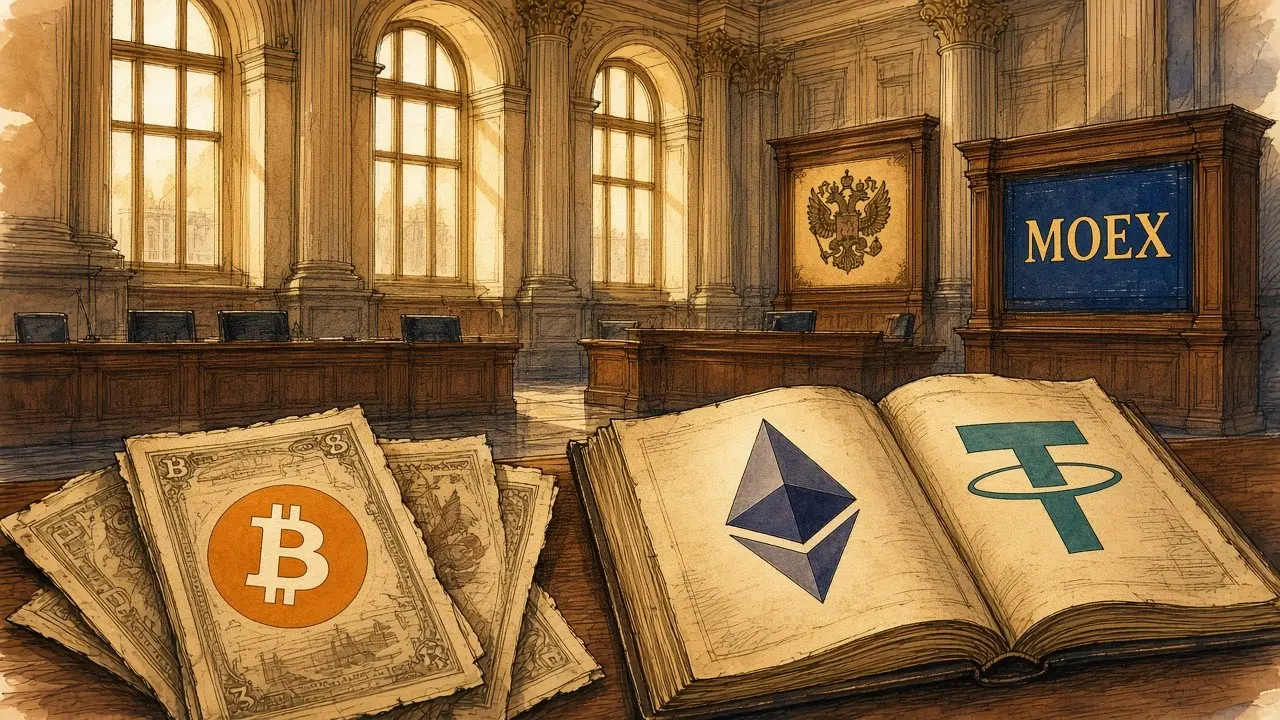
Russia Approves Bitcoin, Ether, and USDT for Retail Investors
Moscow, Russia – The Central Bank of Russia has officially designated Bitcoin (BTC), Ether (ETH), and the USD-backed stablecoin Tether (USDT) as cryptocurrencies accessible to non-qualified investors. The directive, which takes effect on November 17, paves the way for these assets to be traded on domestic exchanges.
The Moscow Exchange has announced plans to launch trading for these three cryptocurrencies on December 1. For retail investors, an annual purchase limit of 300,000 rubles (approximately $3,400 USD) will be imposed through a single intermediary.
New Regulations Open Doors for Retail Crypto Trading
The central bank’s decision, formalized on November 6, marks a significant step in integrating cryptocurrencies into Russia’s financial landscape. The new regulations allow domestic exchanges to list BTC, ETH, and USDT for public trading, providing a regulated channel for ordinary investors to engage with these digital assets.
Non-qualified investors will be able to purchase these cryptocurrencies through brokers, asset managers, or cryptocurrency exchanges, with transactions facilitated on both exchange and over-the-counter (OTC) markets. However, the annual purchase cap of 300,000 rubles per intermediary will apply. Qualified investors, on the other hand, will not face this limit and will be able to trade any cryptocurrency.
Investor Safeguards and Asset Selection Criteria
Before any transaction, all investors, regardless of their qualification status, will be required to pass a test and acknowledge the risks associated with cryptocurrency investments. The central bank’s approach prioritizes providing retail investors access to more liquid assets rather than a broad, unrestricted market.
The selection criteria for the initial list of tradable assets included market capitalization, average daily trading volume, and at least five years of quotation history on overseas trading platforms. These thresholds were established by the central bank to govern the scope of assets available to retail investors, and do not negate the inherent price volatility risks associated with these assets.
Moscow Exchange to Launch Digital Asset Trading
The Moscow Exchange confirmed its intention to commence digital currency trading on December 1, with BTC, ETH, and USDT as the initial offerings. The exchange stated it aims to establish Russia’s first organized digital currency market.
Trading sessions will align with local stock market hours, running from 11:50 AM to 4:50 AM the following day, Moscow time. The exchange will leverage existing stock market infrastructure and utilize the National Clearing Center (NCC) for unified clearing.
Settlements can be made on the same day or the next day, with swap tools available for liquidity management. The launch will begin with pilot trading, with participating institutions onboarding gradually based on their readiness. Therefore, the central bank’s directive taking effect does not guarantee that all trading platforms will list these assets simultaneously on November 17.
Legal Framework and Future Implications
The core provisions of Russia’s “Digital Currencies and Digital Rights” law, enacted on September 1, brought exchanges, brokerage, and custody services under the central bank’s supervision. The law also empowered the central bank to determine which cryptocurrencies could be admitted to organized markets. The central bank’s previously proposed list of BTC, ETH, and USDT has now been formally adopted as the rule for exchanges.
For ordinary investors, the key change is the availability of these three assets on regulated domestic platforms, with trading, clearing, and settlement integrated into existing financial market facilities. However, the annual purchase limit and pre-transaction testing requirements remain in place. The prohibition on using cryptocurrencies for domestic payments for goods and services also remains unchanged.