Russia Deploys Cyborg Pigeon Drones for Hire
Published
A Russian neurotechnology company, Neiry, has begun accepting orders for aerial photography services utilizing live pigeons equipped with brain implants, according to a report by Forbes Russia.
MissedBlock Desk · 3 min read
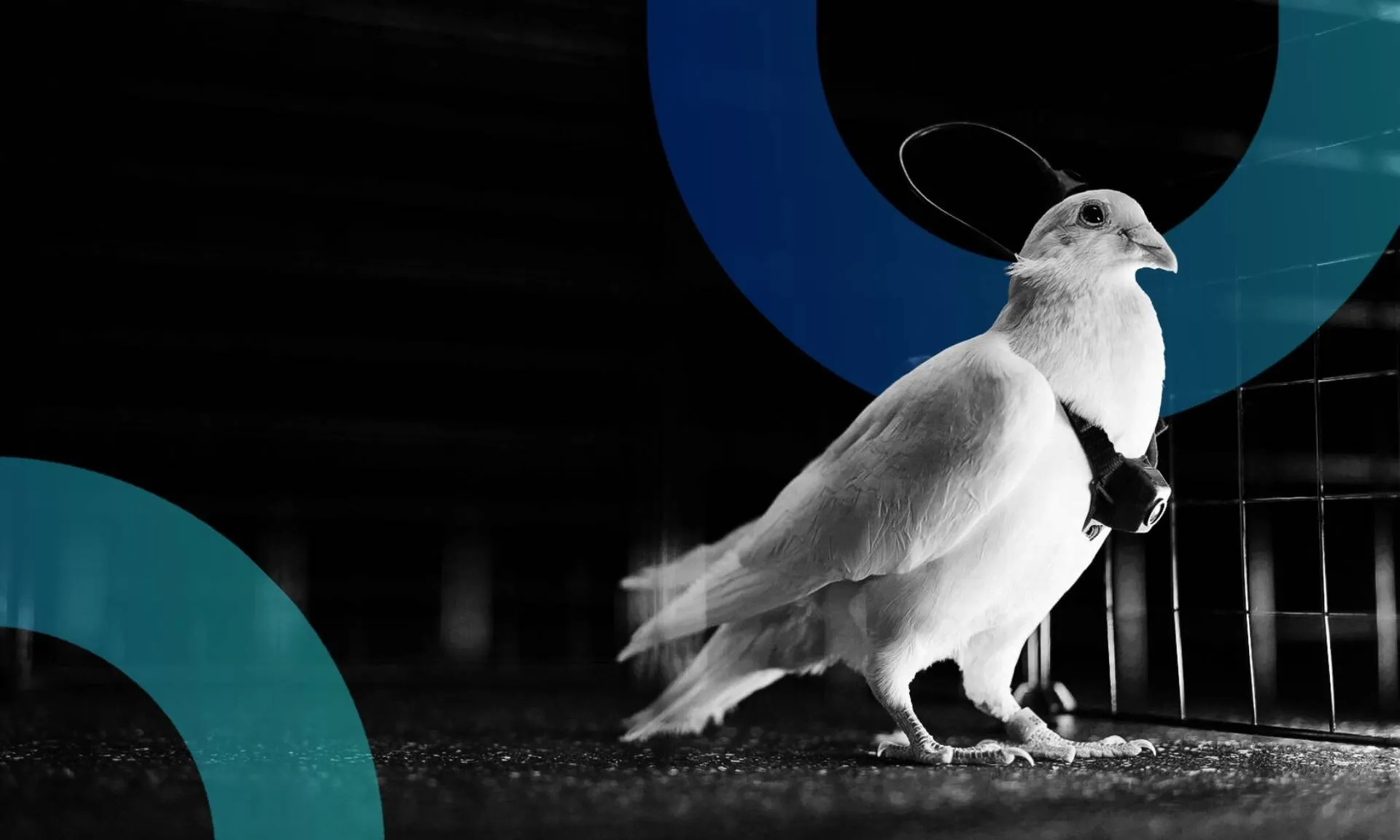
Russian Firm Develops “Biodrones” Using Pigeons with Brain Implants
A Russian neurotechnology company, Neiry, has begun accepting orders for aerial photography services utilizing live pigeons equipped with brain implants, according to a report by Forbes Russia. The company refers to these augmented birds as “biodrones” and conducted its initial outdoor flight trials in November 2025.
Service Details and Capabilities
The service is currently in a beta phase and exclusively available within Russia. Prices begin at 300,000 rubles, approximately $3,800, per square kilometer, as reported by Notebookcheck. Neiry’s setup involves surgically implanted electrodes, a lightweight controller, solar panels, and a camera. Electrical stimulation is used to guide the birds in desired directions while preserving their natural flight patterns. Operators have the option to remotely control the pigeons or upload pre-programmed flight routes. Neiry claims the system has been tested in Russia and other Commonwealth of Independent States countries, with the birds capable of covering up to 400 kilometers (249 miles) in a single day without rest.
Potential Applications and Concerns
Neiry founder Alexander Panov indicated that while pigeons are the current focus, other species could be employed depending on the operational environment or required payload. The company states its longest trial exceeded 10 hours, with operators guiding birds from distances greater than 62 miles. Neiry also claims over 100 flights conducted outside laboratory settings and more than 1,000 photographs captured.
Unlike conventional drones, these biodrones can autonomously navigate around obstacles and do not require batteries for propulsion. However, their onboard electronics still necessitate a power source. Neiry suggests that these pigeons can access locations where traditional drones face restrictions. Their inconspicuous nature also raises potential concerns regarding surveillance and espionage, as noted by BalkanWeb.
The company is targeting infrastructure inspections and environmental monitoring, with potential applications in search and rescue operations. Neiry states it uses AI to blur faces in images before delivering them to clients. Brazil and India have been identified as potential future markets.
Historical Precedents and Ethical Considerations
The concept of using birds for aerial photography is not new. During the Cold War, the CIA developed cameras for pigeons for low-altitude reconnaissance, though the program was ultimately discontinued due to unreliable targeting. In 2021, South Korean researchers published a study on the effects of electrical brain stimulation on pigeon flight trajectories.
Neiry has a history of unconventional brain-computer interface experiments. Forbes Russia reported on the company’s collaboration with researchers in 2024 to connect a rat’s brain to an AI system and its 2025 announcement of plans for neural implants in cows to enhance milk production.
Animal welfare remains a point of consideration. Neiry asserts adherence to an approved ethical protocol, but independent verification of the long-term effects of the implants on pigeons is not yet available. The company states its researchers are working towards a 100% survival rate during surgery, though this is described as a goal rather than a consistently achieved outcome.