SEC's Temporary Exemption for Tokenized Securities: A Controlled Test Amid Growth and Regulatory Uncertainty
MissedBlock Desk · · 4 min read
Updated
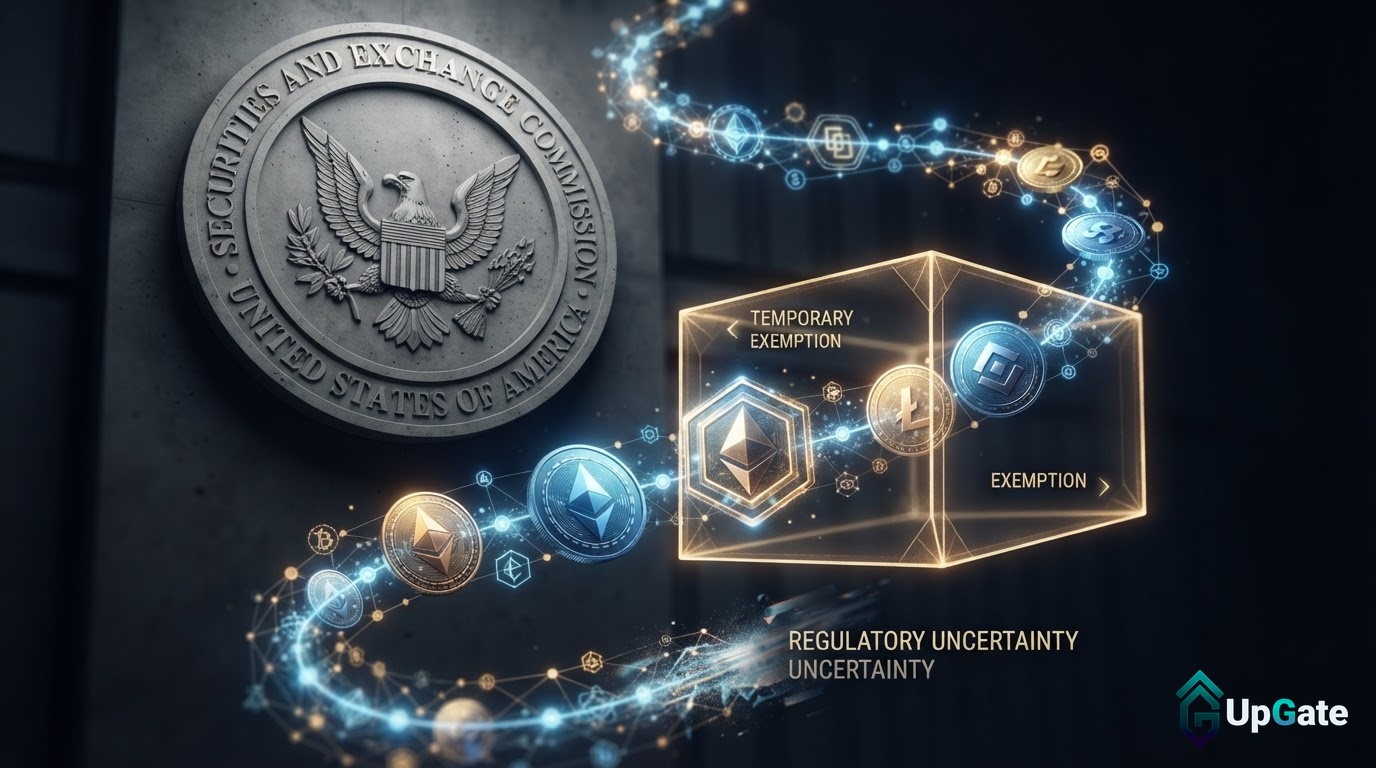
The U.S. Securities and Exchange Commission (SEC) has issued a temporary, five-year Innovation Exemption for certain Tokenized Securities Venues, establishing a controlled environment to observe the trading of tokenized stocks on-chain. This regulatory step, effective September 17, 2026, provides conditional relief from standard exchange registration requirements, aiming to facilitate a deeper understanding of this rapidly growing market segment before potential longer-term rulemaking.
SEC’s Innovation Exemption: A Temporary Framework
The exemption allows qualifying venues to operate without being classified as exchanges, provided they adhere to specific conditions. According to the SEC, these include ensuring that tokenized shares grant holders the same rights as traditional shares and requiring venues to notify issuers before listing third-party tokenized shares. The agency has framed this measure as a bridge toward future regulatory clarity rather than a permanent market structure change. Additionally, certain liquidity providers have received temporary relief from dealer-registration requirements.
Tokenized Equities: Rapid Growth and Market Dynamics
The market for tokenized stocks has experienced significant growth. The total market cap of onchain tokenized stocks has reached $3.5 billion, representing a 33% increase in the current month and an 860% surge year-over-year, as reported by Dune. Equities are identified as the fastest-growing and most traded tokenized asset class, with Ondo Stocks leading in total value locked (TVL) within tokenized equities. Equity supply has seen a substantial increase of 2,393% in the year leading up to August 2026.
Conditions for Value: Rights, Custody, and Liquidity
However, the value and diversification potential of these tokenized assets remain contingent on several factors. It remains uncertain whether token holders will receive genuine legal rights equivalent to traditional shareholders, whether the assets will be held within regulated custody arrangements, and whether reliable market liquidity can be maintained. As the article states, a token that tracks a share price is not automatically a share, and tokenization does not remove the underlying investment’s market risk or the need for disclosure, governance, and market safeguards.
Broader Market Context and Investor Considerations
This regulatory development occurs against a shifting economic backdrop. The five-year U.S. Treasury yield moved above 5% in September for the first time since 2007, and the Federal Reserve raised its target range by 25 basis points on September 16. These higher yields present investors with more competitive alternatives to risk assets, sharpening comparisons between equities, crypto, and government debt. For crypto-native investors, tokenized U.S. equities could offer exposure to companies and sectors beyond the traditional crypto market, which is often concentrated in Bitcoin and Ether.
Persistent Uncertainties and the Path Forward
Despite the growth and the SEC’s experimental approach, several uncertainties persist. It remains uncertain whether token holders will receive genuine legal rights, whether assets will be held in regulated custody, and whether markets for tokenized stocks will maintain reliable liquidity. The long-term regulatory framework beyond this temporary exemption is also unclear. Furthermore, the extent to which blockchain-based settlement and programmable infrastructure will reduce friction in financial asset trading is yet to be fully proven. Investors must still understand how assets are held and how custody models operate during periods of disruption or insolvency.
The SEC’s Innovation Exemption creates a bounded environment for market participants and regulators to observe the operation of tokenized equities. This period is crucial for assessing the coexistence of crypto and traditional finance, with the understanding that tokenization does not inherently eliminate market risks or the need for robust safeguards. The agency views this as a step towards longer-term rulemaking, underscoring that this exemption does not settle all regulatory questions for crypto platforms or may provide deep markets for on-chain trading.
Why This Matters
The SEC’s temporary exemption for tokenized securities venues is a controlled experiment. It remains uncertain whether token holders will receive genuine legal rights, whether assets will be held in regulated custody, and whether markets for tokenized stocks will maintain reliable liquidity.