S&P Global Ratings Assesses Tether's USDT Stability as 'Weak' Amidst Reserve Shifts
Published
S&P Global Ratings has assigned Tether's USDT a stability assessment of 'weak' (5), citing an increase in higher-risk assets within its reserves.
MissedBlock Desk · 3 min read
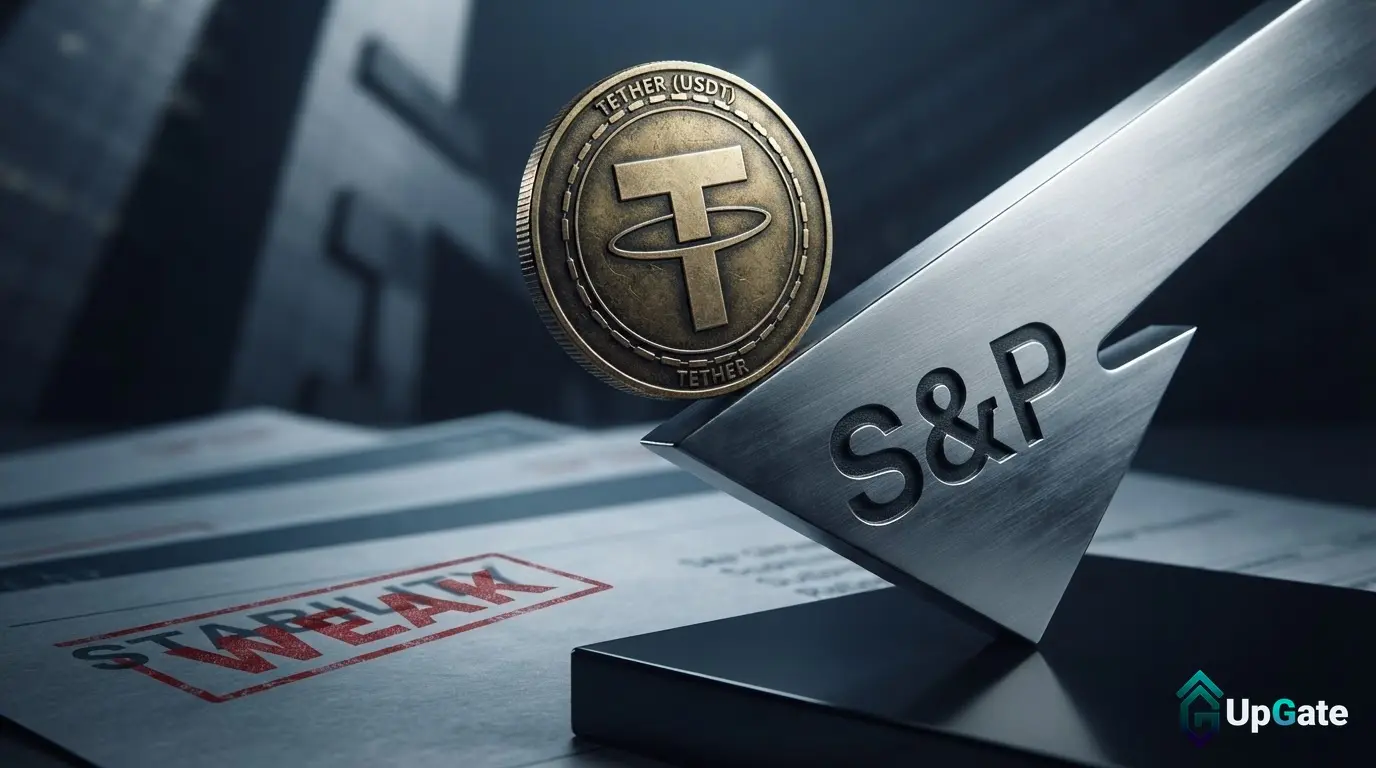
S&P Global Ratings has assigned Tether’s USDT a stability assessment of ‘weak’ (5), citing an increase in higher-risk assets within its reserves. As of September 30th, these assets constituted 28% of USDT in circulation, up from 24% a year prior. While Tether maintains a backing ratio of 104.3%, S&P has expressed concerns regarding the composition and transparency of these reserves.
Reserve Composition and Changes
According to S&P, Tether held $191.5 billion in reserves against $183.5 billion in USDT circulation as of September 30th. The composition of these reserves shows a shift in asset allocation. Short-term US Treasury bills and Treasury-backed overnight reverse repurchase agreements accounted for 72% of the collateralization, a decrease from 75% in the previous review. Concurrently, Tether increased its gold holdings to approximately $19 billion, representing 10% of USDT in circulation, up from $12.9 billion a year earlier. Public equity investments also saw an addition of $4.2 billion, making up 2% of circulation, while Bitcoin exposure declined to $8.4 billion from $9.9 billion in the same period last year.
Transparency and Regulatory Concerns
S&P noted that significant declines in the value of these higher-risk assets could potentially leave USDT undercollateralized, particularly given the limited information available about some underlying investments. The agency highlighted gaps in transparency surrounding reserve management, including the creditworthiness of custodians, counterparties, and banking providers. Although Tether publishes quarterly reserve reports and obtains third-party attestations, S&P pointed out that this reporting frequency is less than the monthly reporting typically provided by other stablecoin issuers. Furthermore, the issuer completed its first full independent financial statement audit in 2026, but the audited statements have not been made publicly available.
Regulatory and governance concerns also contributed to the assessment. S&P considers El Salvador’s digital asset regulatory framework less robust than those in the US and Europe, specifically noting that it does not require reserve assets to be segregated from the issuer’s other assets. Limited disclosure regarding the separation of Tether’s wider business activities from USDT reserve management was another area of focus.
Market Position and Redemption Limitations
Direct redemptions for USDT are restricted to verified customers with a minimum of $100,000 and additional fees, which means some holders may rely on secondary markets for liquidity. Despite these concerns, USDT has maintained its dollar peg through periods of market stress and remains the largest stablecoin by circulation, which rose from approximately $158 billion in September 2025 to $184 billion a year later.
Uncertainties remain regarding the composition and creditworthiness of “other holdings,” which include corporate bonds, secured loans, and precious metals, as well as the creditworthiness of custodians, counterparties, and banking providers. The full details of Tether’s 2026 financial statement audit also remain undisclosed.
Why This Matters
S&P Global Ratings’ assessment of Tether’s USDT as ‘weak’ (5) highlights potential risks stemming from an increased proportion of higher-risk assets in its reserves and ongoing transparency concerns. This evaluation impacts the perceived stability of a major stablecoin, influencing investor confidence and market dynamics.
Broader Context
The assessment by S&P Global Ratings underscores the ongoing scrutiny of stablecoin reserves and regulatory frameworks. The ‘weak’ rating, driven by factors such as the composition of reserves and transparency issues, places Tether under continued observation within the broader cryptocurrency market.