Sun Yuchen Seeks Sanctions Against WLFI and Lawyers, Alleging Concealment of UAE Residency and Attempt to Move Case Out of Federal Court
Published
Justin Sun, the founder of Tron, has asked a California federal court to sanction World Liberty Financial (WLFI) and its legal team, alleging the Trump-family-backed cryptocurrency company deliberately delayed revealing its United Arab Emirates (UAE) nationality for months after litigation began.
MissedBlock Desk · 5 min read
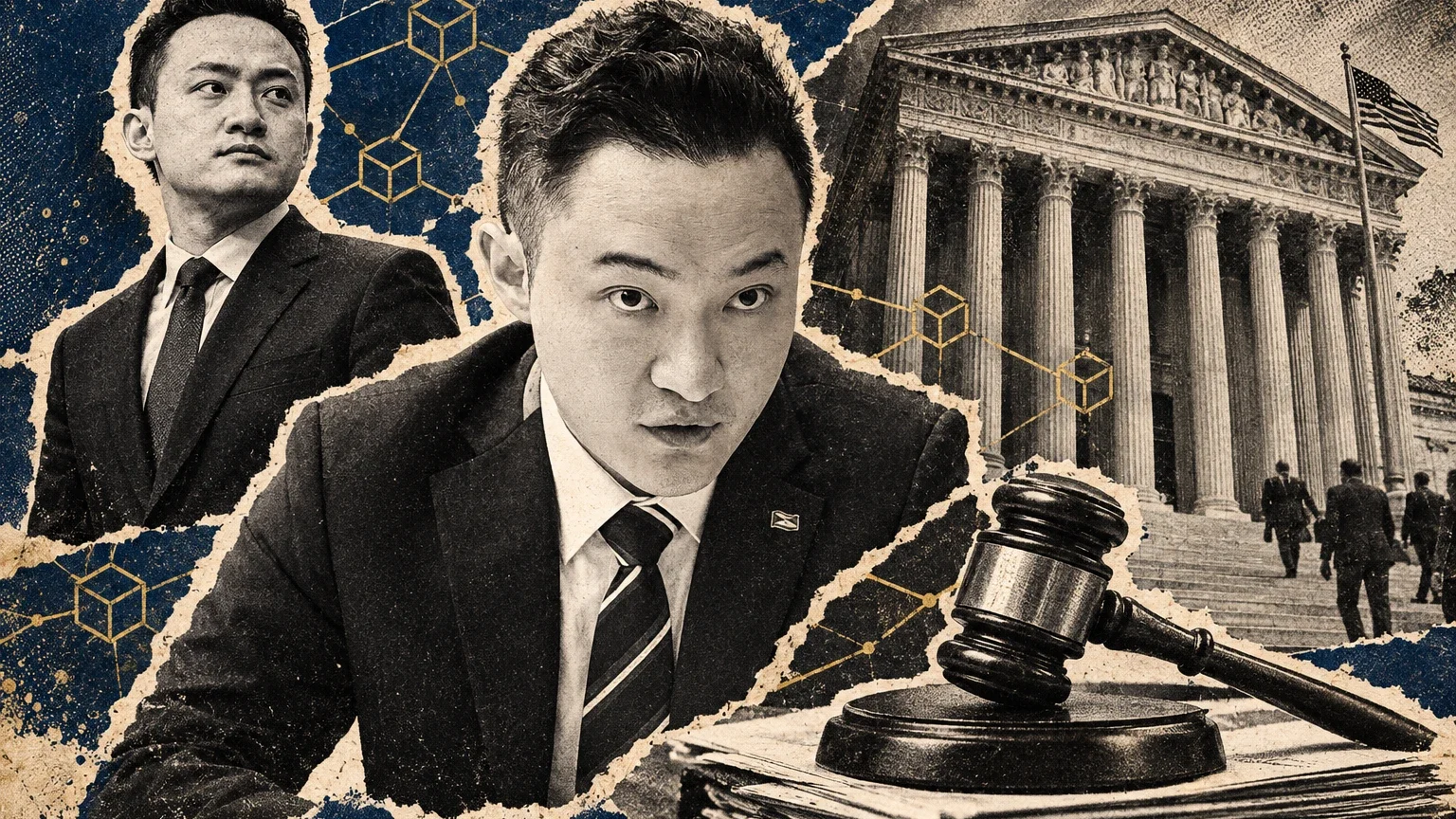
Tron Founder Accuses Trump-Linked Crypto Firm of Jurisdictional Gamesmanship
Justin Sun, the founder of Tron, has asked a California federal court to sanction World Liberty Financial (WLFI) and its legal team, alleging the Trump-family-backed cryptocurrency company deliberately delayed revealing its United Arab Emirates (UAE) nationality for months after litigation began. Sun claims this tactic was intended to undermine the federal court’s jurisdiction.
Legal Battle Over Jurisdiction Escalates
The dispute between Sun and WLFI, a cryptocurrency project associated with the Trump family, has moved from arbitration to a battle over jurisdiction. This week, Sun filed a motion with the California federal court seeking sanctions against WLFI and its lawyers. His argument centers on the company’s belated disclosure of its UAE citizenship in corporate filings, which occurred months after the lawsuit was initiated. This late revelation, Sun contends, could lead to the entire case being dismissed from federal court.
Sun explained on X (formerly Twitter) that WLFI initially listed itself as a Florida citizen when it filed with the California federal court. Months later, and shortly after a judge ruled that some of his claims could proceed in open court rather than being relegated to secret arbitration, WLFI amended its disclosure to include the UAE as a place of citizenship.
From Investment to Litigation
The relationship between Sun and WLFI began auspiciously. Sun was one of WLFI’s earliest and largest investors, initially agreeing to purchase $30 million worth of WLFI tokens in November 2024, later increasing his total investment to $45 million. The partnership soured in April 2026, leading Sun to sue WLFI in California federal court. He accused the company of fraudulently inducing him to invest and subsequently freezing his tokens, preventing him from accessing his purchased assets. WLFI publicly defended its decision to freeze the tokens at the time.
A Strategic Shift in Disclosure
The pivotal moment arrived in August. Following a hearing that month, the court ruled that some of Sun’s claims would remain in open court, while others would be subject to arbitration. Less than a week after this decision, WLFI revised its corporate disclosure. Previously stating it was solely a Florida citizen, the company now listed 22 entities along its ownership chain and asserted citizenship in Florida, Delaware, Puerto Rico, and the UAE.
The Jurisdictional Hurdle
The significance of this detail lies in the threshold for U.S. federal court jurisdiction. Federal courts generally lack the authority to hear cases where all parties involved are foreign citizens. WLFI is now leveraging this principle to argue that the court lacks jurisdiction. Sun’s position is that foreign holdings should have been disclosed from the outset, rather than allowing his legal team to spend months and hundreds of thousands of dollars fighting an arbitration claim, only for the opposing party to suddenly remember its UAE ties when facing public scrutiny.
Sun’s statement was blunt: “When WLFI was selling tokens, it was proudly an American company.” He further asserted that the company only discovered its UAE roots when it needed a way to escape the U.S. federal court system. He is demanding that the court hold WLFI and its lawyers accountable for what he deems a misleading filing. Should his sanctions request be granted, Sun plans to refile the lawsuit in a California state court.
According to Sun, WLFI’s lawyers claim they were unaware of the UAE citizenship until after the initial filing. WLFI has not responded to requests for comment on the latest allegations. Currently, these claims remain contested by both sides, and the court has not determined that WLFI intentionally concealed information.
Broader Implications of UAE Ties
Looking at the timeline, this is not merely a simple investor dispute. WLFI’s UAE connection surfaced in February of this year when the Royal Family of Abu Dhabi acquired a 49% stake for $500 million, prompting senators to call for a national security review. In August, the UAE again became involved, acquiring a 49% stake in the Trump family’s trust bank. Previously, these developments were viewed through the lens of political controversy and regulatory questions. Now, they have entered civil court as evidence of a calculated timing strategy.
For WLFI, moving the case to state court is not a victory but an extension of the battle. With the arbitration request largely dismissed in August, public proceedings will expose more internal documents and decision-making processes. This comes at a critical time as the company is promoting its USD1 merchant payment system and trust bank license, relying on a narrative of being “regulatable and highly compliant.” If the court finds the disclosure misleading in the sanctions request, it will not only undermine the defense in this lawsuit but also damage the company’s reputation.
Regulatory Scrutiny Intensifies
From a regulatory standpoint, Sun’s actions provide a timeline for previous concerns. The controversy surrounding foreign investment was previously confined to abstract questions of national security risks. Now, there is a new lead, with a counterparty providing testimony: the same company emphasized its U.S. identity when selling tokens and its foreign identity when sued. Such discrepancies are often harder to explain than any courtroom questioning.
Future Outlook
Two key points will be observed moving forward. First, the success of the sanctions request. The threshold for sanctioning lawyers is typically high, requiring proof of misleading statements that caused substantial costs. Sun’s claim of hundreds of thousands of dollars in legal fees is the figure he is working to substantiate. Second, the trajectory of the case once it is refiled in state court. California state courts are not bound by federal jurisdictional limitations. However, moving the same case to a different court will necessitate recalculations of statutes of limitations, discovery scope, and potential damages. Whether this move by WLFI proves to be an escape or a detour will depend on rulings in the coming months.