Trump Confirms Iran Air Strikes, US Offers $20M for Nuclear Intel
Published
President Donald Trump confirmed that U.S.
MissedBlock Desk · 6 min read
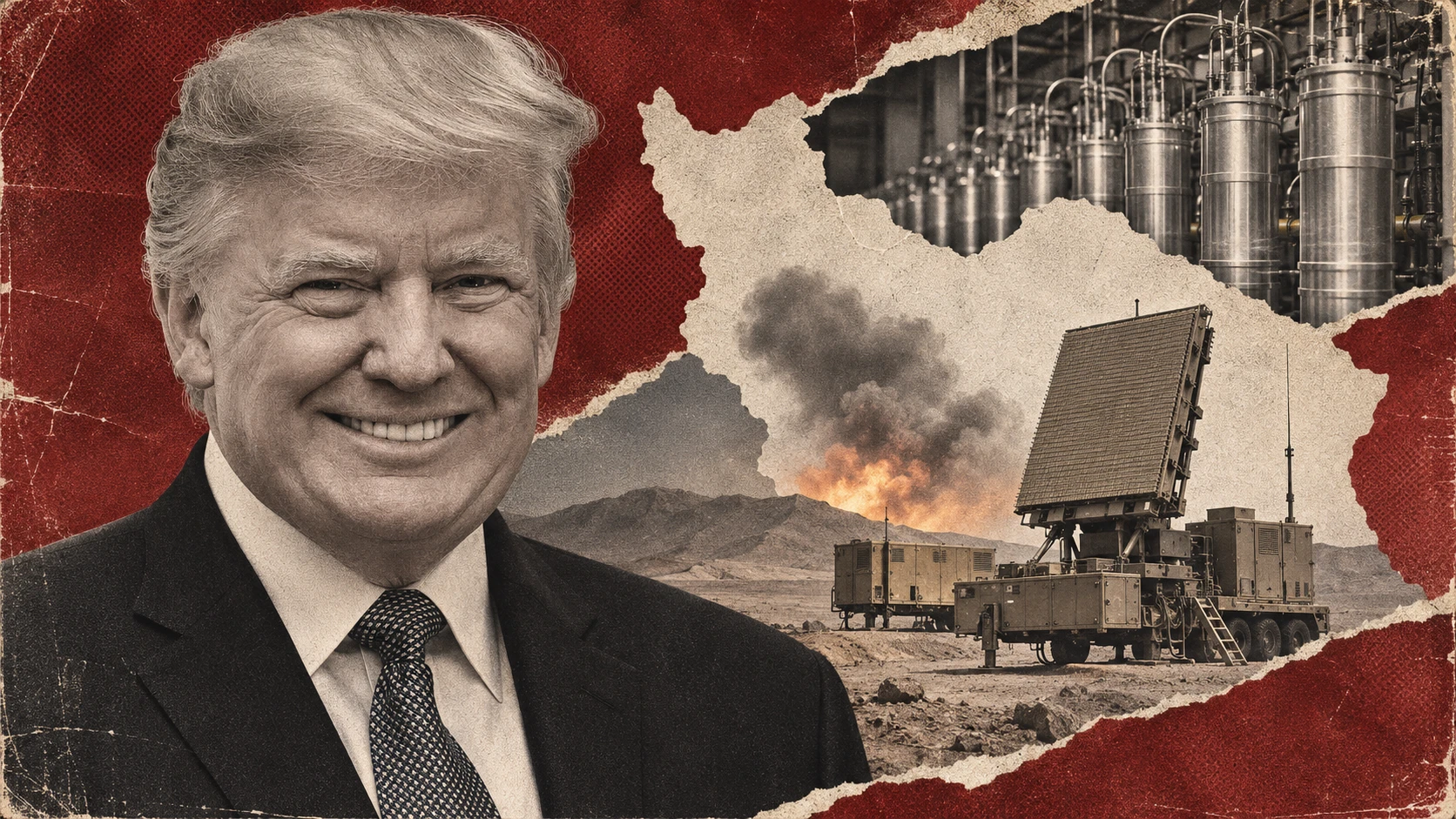
US Strikes Iran, Offers $20 Million Reward for Nuclear Program Intel
President Donald Trump confirmed that U.S. forces carried out a limited strike against Iran on November 6th, targeting a small air defense installation. Trump described the operation as swift, stating it was destroyed in approximately 5 to 15 minutes. The U.S. Central Command also announced on the same day a reward of up to $20 million for intelligence on Iran’s nuclear program, including potential resettlement for informants.
Trump, speaking to reporters in West Palm Beach, Florida, on Friday evening (early Saturday Taiwan time), confirmed the strike. “They built a small air defense device, and we took it out in about 15 minutes, maybe 5 minutes,” he said, characterizing the action as “small scale” without providing further details on the target.
Iranian state media reported two explosions in the Suza area of Qeshm Island. U.S. officials had previously indicated that most of Iran’s air defense systems were destroyed or severely damaged in Israeli airstrikes in June 2025 and early in the current conflict. The U.S. has assessed that Iran would attempt to gradually rebuild its air defense systems and other military facilities.
This strike follows a “defensive strike” conducted by the U.S. military on Monday, November 2nd, which reportedly caused explosions on Qeshm Island, Hengam Island, and in the port city of Bandar Abbas. The November 6th strike marked the first U.S. military action against Iran since the Republican Party lost control of both the House and Senate in the midterm elections on November 3rd. The Associated Press noted that voter dissatisfaction with Trump’s handling of the war and rising oil prices were contributing factors to the Republican losses.
U.S. Central Command, responsible for military operations in the Middle East, posted on X (formerly Twitter) on Friday evening (early Saturday Taiwan time). The command announced that the U.S. was offering “up to $20 million and potential resettlement” for intelligence on Iran’s nuclear program. The call for information includes nuclear facilities, equipment, and related personnel, such as scientists, as well as their movements.
The post included a link to the U.S. State Department’s Rewards for Justice program. The program’s webpage states that Iran has not fulfilled its safeguards obligations to the International Atomic Energy Agency (IAEA), preventing the agency from continuously tracking the production and inventory of key components like centrifuges. Tips can be submitted via Signal, Telegram, and the Tor browser.
According to The Jerusalem Post, the Rewards for Justice program arranges relocation for informants and their families, referred to as “resettlement,” on a case-by-case basis. Current rewards range from less than $1 million to a maximum of $25 million, making the $20 million offer close to the upper limit. The program, established in 1984, has paid out over $250 million to more than 125 recipients.
Earlier on November 6th, Trump told reporters, “We are talking to Iran, we are always talking.” The White House declined to comment on a proposal put forth by Qatar. Citing two government officials from Middle Eastern countries, the Associated Press reported that Iran is reviewing a proposal from Qatar, a key mediator, aimed at resolving differences with the U.S. over its nuclear program.
One official emphasized that Iran remains unwilling to negotiate its nuclear program with the Trump administration until the U.S. agrees to several core conditions. These include lifting the blockade on Iranian ports, lifting sanctions, unfreezing assets, compensating for war damages, and ending regional hostile actions, which also encompass Israeli military operations in Lebanon. The Associated Press pointed out that Trump has previously rejected these demands, and the nuclear program remains the most intractable issue in the conflict, which has lasted over eight months.
Regional officials revealed that Qatar has proposed a transitional plan requiring both sides to take several confidence-building measures within two days. On the first day, the U.S. would lift the blockade and release some frozen Iranian funds, while Iran would allow IAEA inspectors access to nuclear facilities bombed by the U.S. and Israel. On the second day, Iran would reopen the Strait of Hormuz according to a revised agreement negotiated with Oman, but not yet approved by the U.S.
Following these measures, the U.S. and Iran would then engage in broad negotiations to address Iran’s stockpile of highly enriched uranium and other aspects of its nuclear program. The IAEA estimates that Iran possesses 440.9 kilograms of uranium enriched to a purity of up to 60%. This purity level is only a short technical step away from the 90% required for nuclear weapons.
Diplomatic efforts are also accelerating. According to the Qatari government, Trump spoke with the Emir of Qatar on November 6th. Defense Secretary Pete Hegseth also discussed the latest developments with Qatari Defense Chief Saoud bin Abdulrahman Al Thani on the same day.
Iranian Foreign Minister Abbas Araghchi held separate calls with his counterparts from Iraq and Tunisia on November 6th. According to the Iraqi News Agency, he discussed Tehran’s ideas for resuming U.S.-Iran negotiations with Iraqi Foreign Minister Fuad Hussein. Egyptian Foreign Minister Badr Abdelatty also spoke with Araghchi twice this week.
Abdelatty posted on X on November 6th, stating that “flexibility” from both sides is crucial to reach a “compromise solution” and avoid a new wave of escalation in the region. As of the time of the Associated Press report, Iran was still reviewing Qatar’s proposal.
What Intelligence is the US Seeking with its $20 Million Reward on Iran’s Nuclear Program?
U.S. Central Command announced on November 6th that the State Department’s Rewards for Justice program is offering up to $20 million and potential resettlement for intelligence on Iran’s nuclear facilities, equipment, related personnel, and their movements.
Where Did the US Strike Iran on November 6th?
President Trump stated that U.S. forces destroyed an air defense device built by Iran in approximately 5 to 15 minutes. Iranian state media reported two explosions in the Suza area of Qeshm Island, marking the first U.S. strike on Iran since the midterm elections.