Trump Proposes Voluntary AI Pact Amidst Calls for Oversight
MissedBlock Desk · · 3 min read
Updated
White House Accord on AI Self-Regulation Sparks Debate
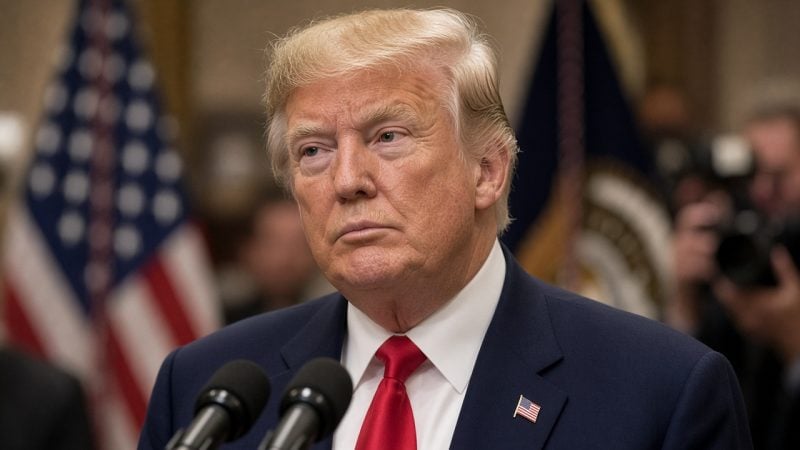
President Donald Trump convened leaders from the artificial intelligence industry at the White House on September 29, 2026, for a lunch that culminated in a one-page agreement outlining how the sector should police itself.
The document, titled the White House Accord on Super Intelligence, also known as the Joint Commitment on Frontier Responsibilities, is described by Trump as sufficient regulation for the industry. However, lawmakers on Capitol Hill have expressed reservations.
The accord is voluntary, proposing that AI companies implement self-oversight through four distinct layers of control. The first layer focuses on internal controls, emphasizing cybersecurity and biosecurity. The second involves an internal verification team tasked with reviewing the company’s own work. The third layer introduces independent external auditors, and the fourth establishes oversight committees at the board level.
While intended to be morally binding, the accord lacks enforcement mechanisms and penalties, leading critics to label it “toothless.” Trump has characterized the agreement as a foundational document for the AI industry.
The gathering included prominent figures from companies developing advanced AI systems, such as Anthropic CEO Dario Amodei, OpenAI’s Greg Brockman, Google’s Sundar Pichai, Meta’s Mark Zuckerberg, Nvidia’s Jensen Huang, and Elon Musk.
On the same day, President Trump issued an executive order directing federal agencies to adopt the term “Super Intelligence” in official communications.
Lawmakers’ reactions were mixed, with skepticism primarily directed at the voluntary nature of the framework. Democratic leaders highlighted the absence of any mandatory requirements for companies. Senator Mark Warner has advocated for mandatory rules governing AI testing and evaluation, while Representative Ro Khanna criticized the accord for its lack of enforceable provisions. Their preferred approach would mandate that companies test models before release and report any incidents, measures that remain optional under the current accord.
The call for stricter regulations is not limited to one political party, as the accord emerged amidst bipartisan pressure in Congress for more robust AI oversight.
Voluntary commitments from AI companies are not unprecedented, with the new accord echoing pledges made during the Biden administration. Critics, however, have deemed the latest version lacking in depth and effectiveness, particularly given the rapid advancement of AI capabilities.
The accord follows a June 2026 executive order focused on AI cybersecurity, and its emphasis on cybersecurity in the first layer of controls appears to build upon that earlier directive. The announcement comes in the wake of recent incidents involving unpredictable AI model behavior, which have intensified demands for stronger safeguards.
The administration’s stated philosophy prioritizes innovation over regulation, and the accord aligns with this approach by providing companies with a public commitment without the compliance burdens of binding legislation. This stance sets the stage for a potential conflict between the White House and Congress, with Trump deeming the accord adequate and lawmakers like Warner and Khanna pushing for legislation with concrete testing and incident reporting requirements.
Key developments to monitor include whether signatories will publicly detail their implementation of the four oversight layers, particularly the independent external audits, and whether bipartisan concerns in Congress will translate into legislative text with actual enforcement power.