Trump Urges Nvidia Board to Reappoint Huang CEO for US Benefit
Published
Former U.S.
MissedBlock Desk · 6 min read
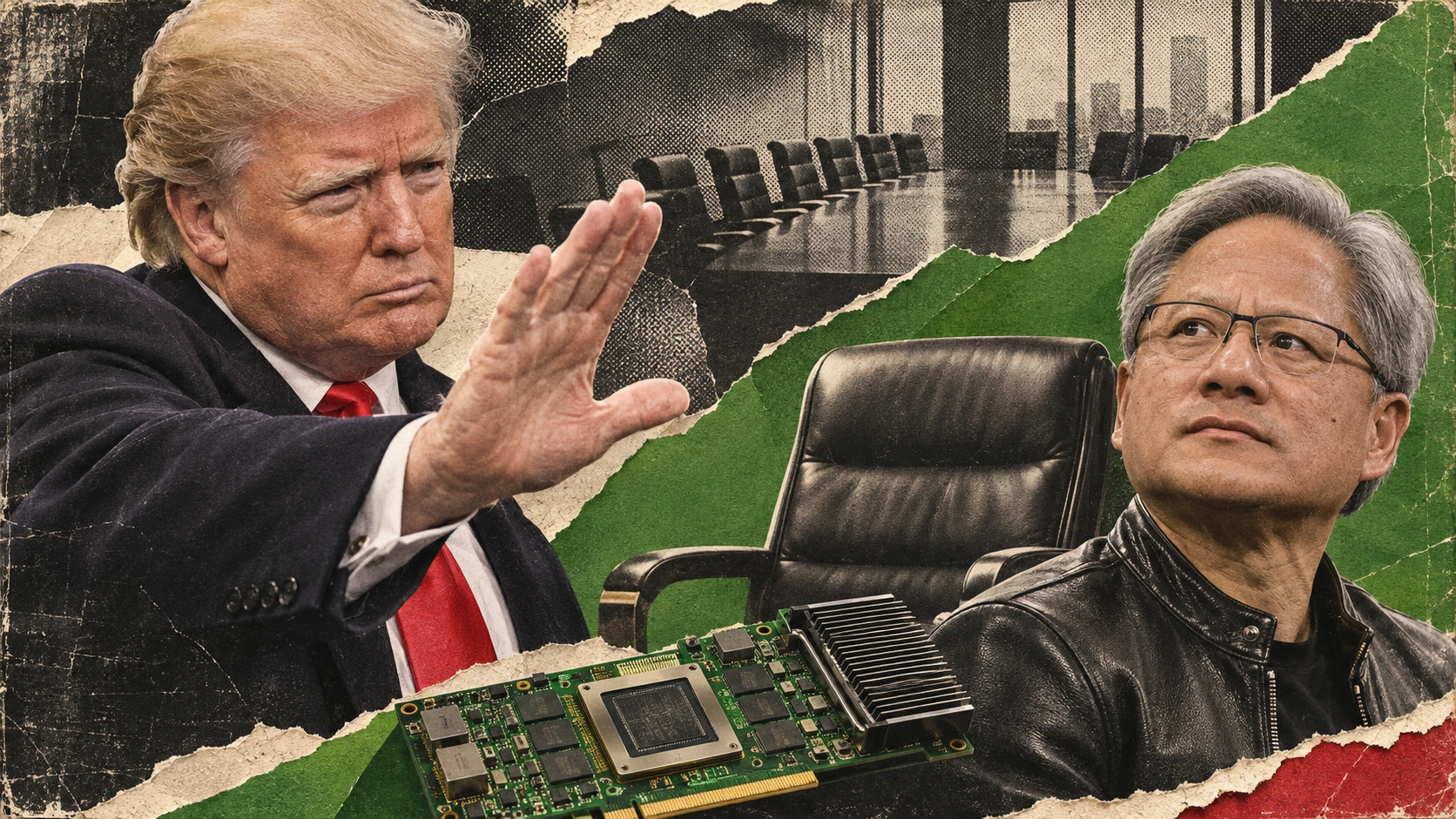
Trump Renews Call for Jensen Huang’s Return as NVIDIA CEO
Former U.S. President Donald Trump on Monday reiterated his call for Jensen Huang to return as CEO of NVIDIA, stating on his Truth Social platform that it would be the best outcome for both the company and the United States.
NVIDIA’s board of directors, however, has previously indicated no intention of reinstating Huang, announcing on November 17 that they had initiated a search for a successor. Chief Financial Officer Colette Kress is currently serving as interim CEO. U.S. Treasury Secretary Scott Bessent, in a Sunday interview, declined to take a definitive stance, emphasizing the need to first clarify responsibility for export control compliance. Bessent’s demand for a ten-day explanation from NVIDIA has only three days remaining.
The prediction market Polymarket currently places the probability of Huang returning to NVIDIA by the end of 2027 at approximately 37%.
This is not the first time Trump has publicly weighed in on NVIDIA’s executive leadership. Following his Asia trip last Friday, Trump told reporters that he hoped the NVIDIA co-founder would “apologize properly and go back,” praising Huang’s leadership for keeping the U.S. a decade ahead of its competitors. He even mentioned discussing Huang with Chinese President Xi Jinping during his visit to Shenzhen, noting that Xi also described Huang as “very outstanding.” By bringing this same appeal to his social media post, Trump is directly addressing the board.
NVIDIA’s board has maintained a cool response. During the company’s November 17 earnings call, the board stated it had unanimously accepted Huang’s resignation, had no intention of bringing him back, and had hired an executive search firm to find a new CEO. While CFO Colette Kress is serving as interim CEO, the board is not entirely unified, with reports indicating at least three directors still advocating for Huang’s return, even as the successor search proceeds.
In contrast, Treasury Secretary Scott Bessent has adopted a more reserved position. While he previously called for a “major overhaul” of the board and an external search for new leadership, he avoided directly answering whether Huang should return during a Sunday interview on CBS’s “Face the Nation.” Bessent stated that the focus must first be on “where the responsibility ultimately lands,” referring to NVIDIA’s potential violations of U.S. export controls.
The market is pricing this executive uncertainty. On the prediction market Polymarket, contracts betting on Jensen Huang returning to NVIDIA by December 31, 2027, have fluctuated between 28% and 37% in the past day, with the latest quote around 30%. Within the same market, the probability of him returning by the end of this year is in the single digits. Meanwhile, Bessent’s November 15 demand for NVIDIA to explain within ten days how its chips may have flowed into China through shell companies has a deadline of only three days remaining, with the company yet to provide its response to the government.
The core issue is that NVIDIA is no longer just a chip company but a foundational element of America’s AI strategy. The Trump administration is incorporating companies like NVIDIA, OpenAI, and Anthropic into its vision of a “national AI team,” and Huang’s future is being discussed within the framework of national competitiveness. Trump’s linking of “best for the company” with “best for America,” and his use of Xi Jinping’s positive remarks as validation, underscore this perspective: in his view, a CEO who can keep America a decade ahead in AI is a strategic asset, not merely a corporate personnel matter.
Another critical thread involves export controls and accountability. The controversy surrounding chips allegedly flowing into China via Singaporean shell companies and Senate inquiries into the Commerce Department’s approval of over 800,000 AI chips have turned the question of who is responsible into a political issue. Bessent’s remark about “where the responsibility ultimately lands” is arguably closer to the heart of this executive dispute than Trump’s calls. If responsibility ultimately rests with the board or management, the door for Huang’s return is likely closed. If it falls on lower levels, the board may find a way to concede. This also explains why the more pressure the President exerts, the more hesitant the board might become.
NVIDIA is one of TSMC’s most crucial clients. The unresolved question of its CEO selection impacts more than just Silicon Valley office politics. For Taiwan’s supply chain, the most immediate risk is a decision-making vacuum. New product roadmaps, advanced packaging capacity, and capital expenditure rhythms are typically decided by the CEO. The longer an interim CEO remains in place, the greater the uncertainty for clients and suppliers. The Taiwanese stock market has already experienced significant volatility due to NVIDIA-related news, including sharp intraday gains that were later erased and multiple AI supply chain stocks hitting their lower limits, highlighting the market’s sensitivity to the company.
Separately, the Taiwanese industry has shown a clear preference for Jensen Huang, with Taipei 101 illuminating in his honor and technology industry figures funding a two-night light display of slogans. This support reflects the supply chain’s reliance on familiar faces. However, in the face of Washington’s export controls and national security reviews, personal sentiment has limited impact. NVIDIA’s cessation of H200 shipments to China and the exclusion of Chinese data center revenue from its financial forecasts are the true underpinnings of this controversy.
The first signal lies in the board’s timeline. NVIDIA reported third-quarter revenue of $11.58 billion and provided strong guidance for the fourth quarter, suggesting its fundamentals are temporarily stable. However, the company is also facing an accounting investigation by the Securities and Exchange Commission (SEC) and potential profit clawbacks from California prosecutors. If the board allows Huang to return before the investigations become clearer, it would be trading governance risks for the founder’s prestige. If they continue to maintain the status quo, it remains to be seen whether Trump will escalate pressure from social media posts to policy actions.
The second signal comes from the fluctuations in Polymarket odds. The approximately 30% probability suggests the market sees a possibility, but not a mainstream scenario. Bets on a return by the end of this year are even lower, in the single digits, indicating that most traders still believe the investigation results will be a key variable. If the odds for longer-term contracts significantly increase in the coming weeks, it would typically signify a substantial shift in the direction of the investigation or the board’s stance. If they continue to decline, it would suggest that this tug-of-war between the White House and the board will ultimately be resolved by the determination of legal responsibility.