UK Banks Complete First Real Customer Payments with Tokenized Pound Sterling Deposits via Quant Technology
MissedBlock Desk · Sep 28, 2026 · 3 min read
Updated Sep 28, 2026
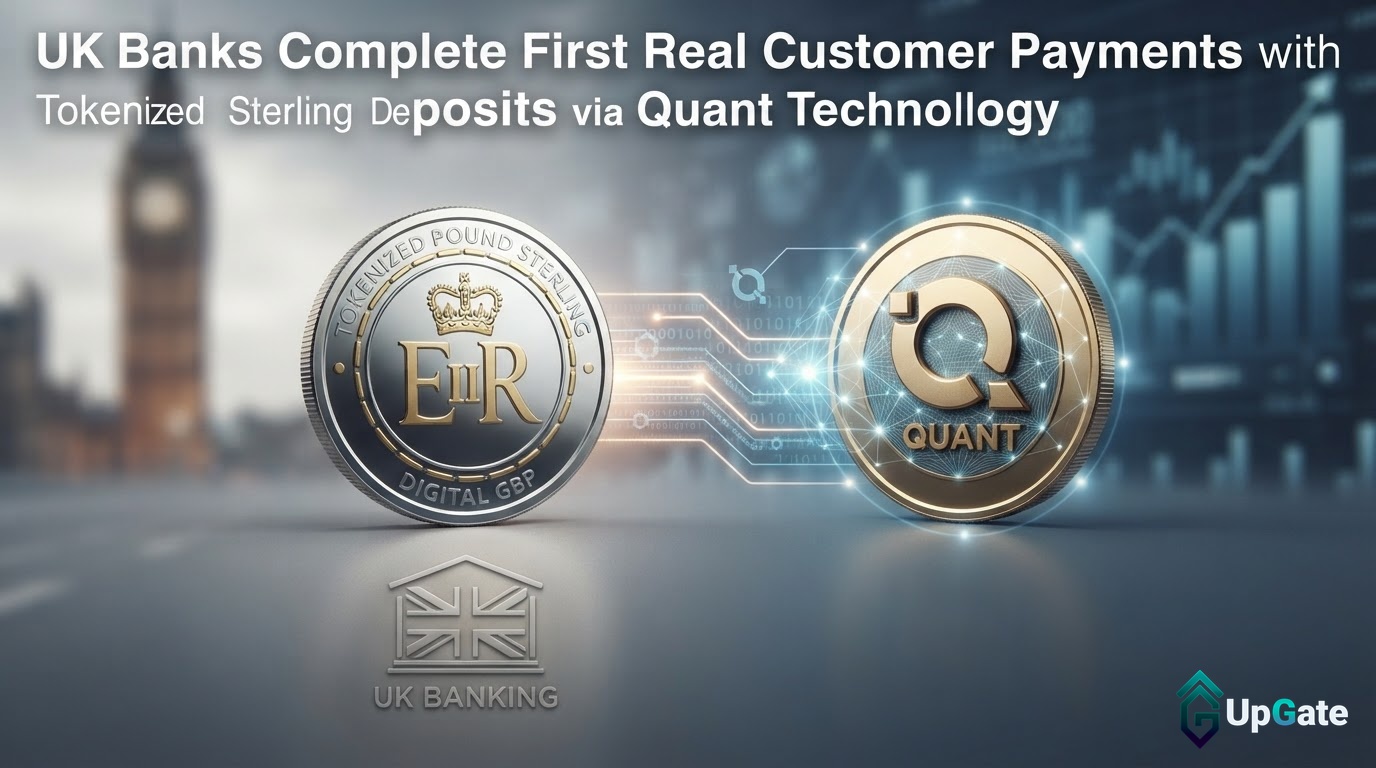
Seven major British banks have successfully completed the first real customer payments using tokenized pound sterling deposits, leveraging Quant’s technology for interbank settlements. The transactions, which took place on September 26th, mark a significant advancement in the integration of blockchain technology within traditional financial infrastructure.
Quant, a key technology provider for this initiative, facilitated these payments through its Overledger platform. The Clearing House (TCH), a major player in the US banking system responsible for clearing and settling over $2 trillion daily, announced Quant as the technology provider for its On-Chain Money Initiative on September 24th. This initiative aims to integrate blockchain for more efficient interbank settlements.
From Proof-of-Concept to Production
The successful execution of these real customer payments represents a move from proof-of-concept to production for tokenized deposits. This development is seen as a crucial step in the global transformation towards programmable money, allowing banks to utilize their existing technology stacks while enabling seamless communication and transactions between different systems.
Tokenized Deposits vs. Stablecoins
A key distinction highlighted in this development is between tokenized deposits and stablecoins. Tokenized deposits are bank liabilities, issued by regulated commercial banks, and are protected by deposit insurance. In contrast, stablecoins are issued by non-bank institutions and are not bank deposits. The Clearing House’s preference for promoting tokenized deposits over stablecoins underscores the banking sector’s inclination towards regulated, bank-backed digital assets.
Quant’s Overledger acts as an interoperability layer, coordinating clearing and settlement across various bank systems and maintaining compatibility with existing payment rails. This approach allows banks to upgrade their infrastructure with blockchain technology rather than replace it entirely, a path favored by the banking system.
Broader Ecosystem and Future Outlook
Canton, a privacy-preserving institutional blockchain developed by Digital Asset, is another entity mentioned in this evolving landscape, with participants including DTCC, Goldman Sachs, and HSBC. JPMorgan’s JPMD tokenized deposit has been executed on Canton and is slated for launch in January 2026. Chainlink provides essential infrastructure services, such as oracles and cross-chain messaging, to Canton and was also a core technology provider in Swift’s tokenized asset settlement pilot, positioning it as a key enabler for the broader adoption of blockchain in traditional finance.
The banking system’s preferred path of upgrading existing infrastructure with blockchain technology, as exemplified by TCH’s choice of Quant, suggests a more integrated approach to digital asset adoption. This contrasts with narratives focused on replacing traditional payment networks, implicitly placing pressure on alternative solutions.
While the successful implementation of tokenized deposits is a notable development, uncertainties remain regarding the long-term impact of regulatory stances and the success of specific blockchain models, such as Canto’s deflationary fee model. The current trend, however, indicates a significant move towards leveraging blockchain for core banking functions.
Why This Matters
The materials describe a narrow update: Quant’s token QNT surged approximately 300% after The Clearing House (TCH) announced Quant as the technology provider for its On-Chain Money Initiative. Whether Canto’s deflationary model (fee burning) will outpace its inflationary model (validator and developer rewards).
Broader Context
Source materials place the factual news in this context: Quant (QNT) has surged 300% due to a partnership with TCH, focusing on bank deposit tokenization.