US CPI Data Release: Potential Impact and Uncertainties for Bitcoin Treasury Stocks
Published
The upcoming release of the US Consumer Price Index (CPI) data is anticipated to influence Bitcoin treasury stocks, whose performance is closely tied to Bitcoin's movement as a macro asset sensitive to inflation data.
MissedBlock Desk · 4 min read
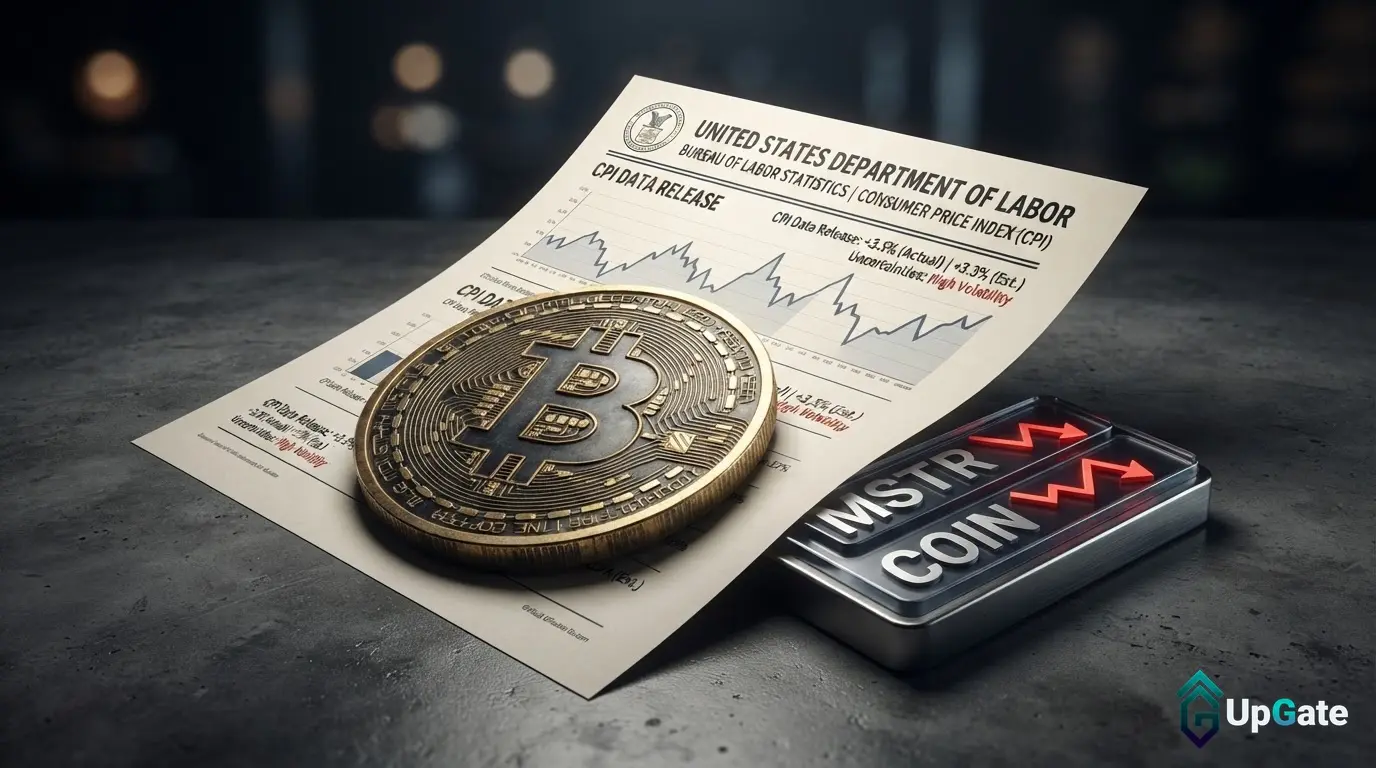
The upcoming release of the US Consumer Price Index (CPI) data is anticipated to influence Bitcoin treasury stocks, whose performance is closely tied to Bitcoin’s movement as a macro asset sensitive to inflation data. While consensus forecasts suggest a cooling print for the October CPI, the precise market reaction remains uncertain.
Why This Matters
The materials describe a narrow update: The article discusses the anticipated impact of the US Consumer Price Index (CPI) data release on Bitcoin treasury stocks. The exact CPI print for October.
Broader Context
Source materials place the market analysis in this context: Bitcoin treasury stocks are set to react sharply to Tuesday’s US CPI release, as these companies’ share prices track Bitcoin closely and Bitcoin has grown more sensitive to inflation data as a macro asset.
CPI Data and Market Sensitivity
The CPI, a key measure of inflation, is closely watched by markets and the Federal Reserve. Sustained readings above the Fed’s target of approximately 2% can influence interest rate decisions, liquidity, and overall risk appetite. The October CPI data is scheduled for release on Tuesday, November 10, at 8:30 a.m. ET. Consensus estimates point to a month-over-month increase of around 0.2% to 0.3% for headline CPI, and a similar 0.2% for core CPI, which excludes volatile food and energy prices. Year-over-year projections from models like the Cleveland Fed’s nowcast suggest headline CPI around 3.7% and core CPI near 2.5%. These forecasts are attributed to moderating energy prices and softer goods prices.
Potential Market Reactions
A CPI report that aligns with or falls below these expectations would likely be interpreted as ‘dovish,’ potentially supporting expectations of easier monetary policy or a pause in further tightening. Such an environment typically benefits Bitcoin and broader risk assets by reducing the opportunity cost of holding non-yielding assets and improving liquidity conditions. Historically, Bitcoin has demonstrated increased sensitivity to CPI data since the 2022 hiking cycle, with cooler-than-expected prints often leading to positive short-term price movements, while hotter-than-expected data has triggered swift sell-offs.
Bitcoin Treasury Stocks in Focus
Bitcoin treasury stocks, which hold significant amounts of Bitcoin or are involved in its mining, tend to amplify the price swings of the cryptocurrency. Companies like MicroStrategy (MSTR), Mara Holdings (MARA), and Strive (AAST) are closely monitored in this regard.
- MicroStrategy (MSTR): Holding approximately 849,000 BTC, MSTR recently traded near $129. Its technical indicators suggest a short-term bearish bias, with support levels identified between $125-$126 and a stronger floor around $120. Resistance is noted in the $131-$134 range. A positive CPI outcome could potentially drive MicroStrategy towards its resistance levels, while a negative print might test its support bands.
- Mara Holdings (MARA): A miner with over 35,000 BTC, MARA was trading around $6.30-$6.35, exhibiting mixed to bearish technicals. Immediate support is seen at $6.20-$5.90, with resistance at $6.50-$6.80. A favorable CPI release could lead to a bounce towards the higher end of its resistance, whereas a disappointing print might see the stock fall towards the mid-$5 range.
- Strive (AAST): Holding over 40,000 BTC, AAST recently traded at $21.45. Its technical signals have been mixed, with its Relative Strength Index (RSI) fluctuating. Support for AAST is located in the high teens to low $20s, with resistance in the mid-to-upper $20s. This stock is expected to follow Bitcoin’s lead, with a dovish CPI potentially providing recent price movement.
Navigating the Uncertainty
It is important to note that these treasury stocks are generally more volatile than Bitcoin itself. The actual impact of the CPI data will depend on the deviation from consensus expectations and Bitcoin’s subsequent reaction. The precise short-term price movements remain uncertain, and market participants should be aware of the speculative nature of these correlations and the limitations of predicting market outcomes based on a single economic data release.