USDC Surges in EU Euro Trading Volume Amidst MiCA Regulatory Shifts, Overtaking USDT
MissedBlock Desk · · 3 min read
Updated
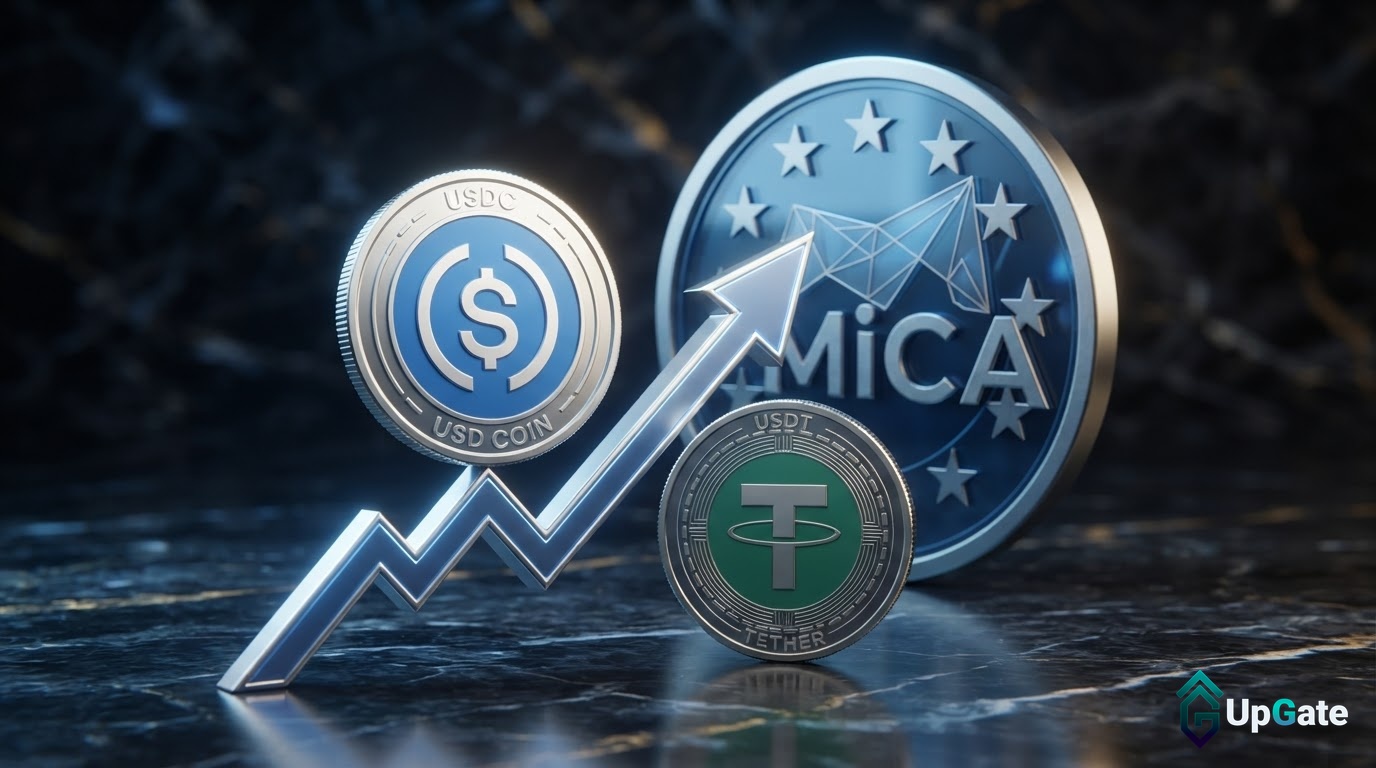
Circle’s USD Coin (USDC) has significantly increased its share of stablecoin trading volume against the euro, now accounting for 56%, a substantial rise from 10% in January 2024. This shift is largely attributed to the European Union’s Markets in Crypto-Assets (MiCA) regulations, which have coincided with restrictions on Tether’s USDT on European exchanges. According to Kaiko, USDC now leads USDT in euro-paired stablecoin trading.
Broader Context
Source materials place the factual news in this context: The European Union’s Markets in Crypto-Assets framework, better known as MiCA, has been a primary driver.
MiCA’s Impact on Stablecoin Markets
The MiCA framework, designed to establish a unified regulatory approach for crypto assets across EU member states, implemented its stablecoin rules on June 30, 2024. These regulations require stablecoin issuers to meet stringent authorization, reserve, and oversight standards to be offered on regulated platforms within the bloc. Consequently, European exchanges have begun restricting or delisting USDT to comply with these new rules, pushing trading activity towards compliant alternatives like USDC.
USDC’s Regulatory Upgrade and Oversight
USDC’s regulatory standing in the EU has also been formally upgraded. On October 14, 2026, it was recognized as the EU’s first ‘significant’ e-money token (EMT). This designation brings USDC under the direct supervision of the European Banking Authority (EBA), which will begin overseeing its reserves and liquidity on November 12, 2026. While this offers USDC a regulatory advantage and access to licensed European venues, it also subjects Circle to closer scrutiny.
USDT’s European Market Challenges and DeFi Presence
In contrast, Tether’s USDT, despite remaining a dominant global stablecoin, faces challenges within the regulated European market. While exchanges are restricting its availability, USDT continues to see significant usage in decentralized finance (DeFi) protocols, which operate outside the direct reach of MiCA’s current framework. This creates a bifurcated market where compliant tokens thrive on centralized exchanges, while non-compliant assets maintain a presence in DeFi.
Exchange Adaptations and Future Uncertainties
Platforms are actively adapting to these regulatory changes. Coinbase, for instance, plans to automatically convert USDT and 13 other non-compliant tokens for users in the European Economic Area (EEA) on or after October 30, 2026. This move by Coinbase and similar actions by other venues indicate a prioritization of regulatory standing over offering every popular asset.
Despite these shifts, euro-backed stablecoins currently represent less than 8% of total EUR trading volume. Looking ahead, several uncertainties remain. It is unclear whether USDC’s increased market share will persist as exchange conversions take full effect. The practical implications of EBA supervision for Circle are yet to be seen, and the potential for euro-denominated stablecoins to capture a larger portion of the overall EUR trading volume remains an open question. The market is observing how these regulatory developments will continue to shape the stablecoin landscape in Europe.