Vitalik Buterin Re-frames ETH Valuation, Shifting Focus from Fee Burning to Store of Value
Published
Vitalik Buterin, a co-founder of Ethereum, has proposed a significant shift in how Ether (ETH) should be valued, moving away from the narrative of a fee-burning, deflationary token towards a perspective that emphasizes its role as a store of value.
MissedBlock Desk · 5 min read
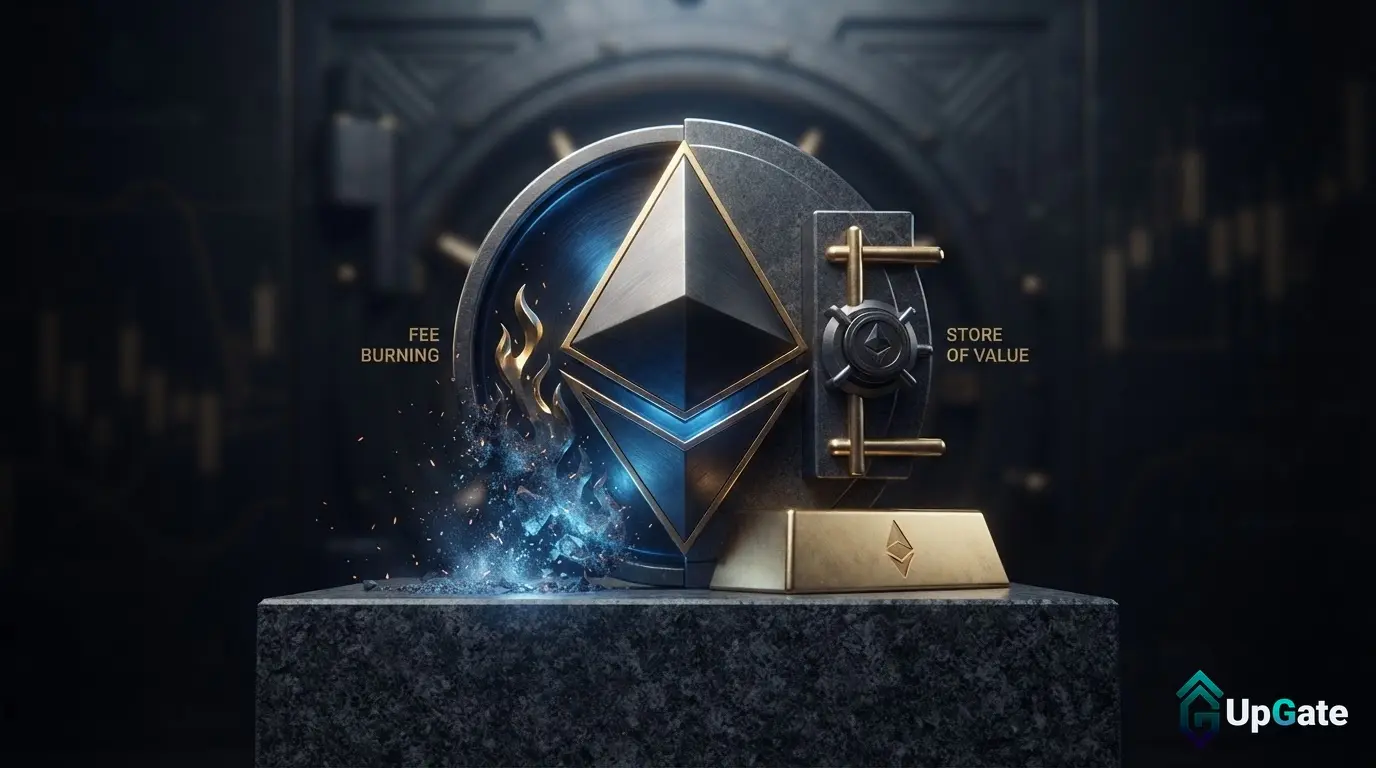
Vitalik Buterin, a co-founder of Ethereum, has proposed a significant shift in how Ether (ETH) should be valued, moving away from the narrative of a fee-burning, deflationary token towards a perspective that emphasizes its role as a store of value. In a post on X (formerly Twitter) on November 8, 2026, Buterin suggested that ETH holders should not be concerned if fee destruction consistently falls below a 10% break-even point, as the token’s value is derived from other fundamental factors.
This perspective marks a departure from the popular ‘ultrasound money’ narrative that gained traction in the ecosystem since 2021, particularly following the implementation of EIP-1559 in the London upgrade, which burns a portion of transaction fees. Buterin acknowledged that fee burning is a positive mechanism and should be retained, but argued that it should not be the primary basis for ETH’s valuation. He stated that the model of token market capitalization being equal to the annual burn amount divided by a discount rate is not a stable floor for ETH, especially when relying on internal crypto use cases.
Critique of Fee-Burning Valuation
Buterin elaborated that the fee-burning mechanism, while beneficial, is not a sustainable source for establishing a valuation floor. He pointed to events like the Yuga Labs Otherside metaverse land sale in May 2022, which resulted in substantial fee burning, as an example of a temporary surge rather than stable cash flow. He also noted that optimizing for fee burning could necessitate continuous, interventionist decisions, which he believes is incompatible with Ethereum’s goals of being anti-fragile and decentralized. Furthermore, he suggested that prioritizing high gas prices to increase fee burning could potentially drive users away from the network.
Emphasis on Fundamental Utility
Instead, Buterin emphasized that ETH’s value stems from its core properties: decentralization, censorship resistance, open source nature, privacy, and security – encapsulated in his proposed CROPS acronym. He believes that the growth of the tokenized real-world assets (RWA) market and other assets on Ethereum’s base layer can provide external support for ETH’s value, acting synergistically with its store of value narrative.
Data from the FactSheet indicates a significant decrease in ETH burned year-to-date compared to 2022. In 2022, approximately 1.48 million ETH were burned, valued at about $3.6 billion. From January 1 to November 8 of the current year, around 19,200 ETH were burned, valued at approximately $43 million, representing about 1.3% of the burn volume seen in 2022. This contrasts with ETH’s current market cap of approximately $273.3 billion, trading at $2,236.
Ecosystem Sustainability and Foundation Funding
Buterin also touched upon the financial sustainability of the Ethereum ecosystem. He drew a comparison to L’Oréal, suggesting that if Ethereum operated like a company of similar market capitalization, its research and development costs would be prohibitive. This highlights the ongoing question of how the Ethereum Foundation will fund its estimated annual R&D expenses, which could be around $1 billion, without relying on selling ETH. The Foundation has stated its intention to become a ‘smaller ship’ and sell less ETH, but the path forward for funding remains an uncertainty.
Industry Reactions and Future Outlook
The community’s reaction to Buterin’s post has been largely positive. Anatoly Yakovenko, co-founder of Solana, agreed with Buterin’s assessment. Gabriel Shapiro described the post as a ‘healing moment,’ and Simon Dedic of Moonrock Capital believes positioning ETH as a store of value is its strongest bull case for institutional capital.
This shift in narrative comes after the withdrawal of controversial proposals like EIP-8363, which had suggested burning more validator rewards as staking increased to protect ETH’s monetary role. The postponement of the Glamsterdam hard fork and the anticipation that the upcoming Hegota upgrade might be the last ‘normal’ fork also suggest a move towards greater protocol stability.
While Buterin’s re-framing offers a new perspective on ETH’s long-term value drivers, uncertainties remain. Key among these are how the Ethereum Foundation will secure funding for its operations and whether the proposed CROPS metrics and the growth of RWA will sufficiently validate ETH’s claim as a robust store of value. For investors, particularly in markets like Taiwan, the focus may increasingly shift from burn rates to RWA issuance and staking rate reforms as indicators of ETH’s future value.
Why This Matters
The materials describe a narrow update: Vitalik Buterin posted on X (formerly Twitter) to re-frame the valuation of ETH, arguing that it should be viewed as a store of value rather than a deflationary token driven by fee burning. Whether the Ethereum Foundation can fund its annual R&D expenses (estimated at over $1 billion) without selling ETH.
Broader Context
Source materials place the factual news in this context: Vitalik Buterin’s post on X (formerly Twitter) on November 8, 2026.